
Blog

  • Hyundai reveals battery suppliers of its EV models amid fire concerns

    Hyundai reveals battery suppliers of its EV models amid fire concerns

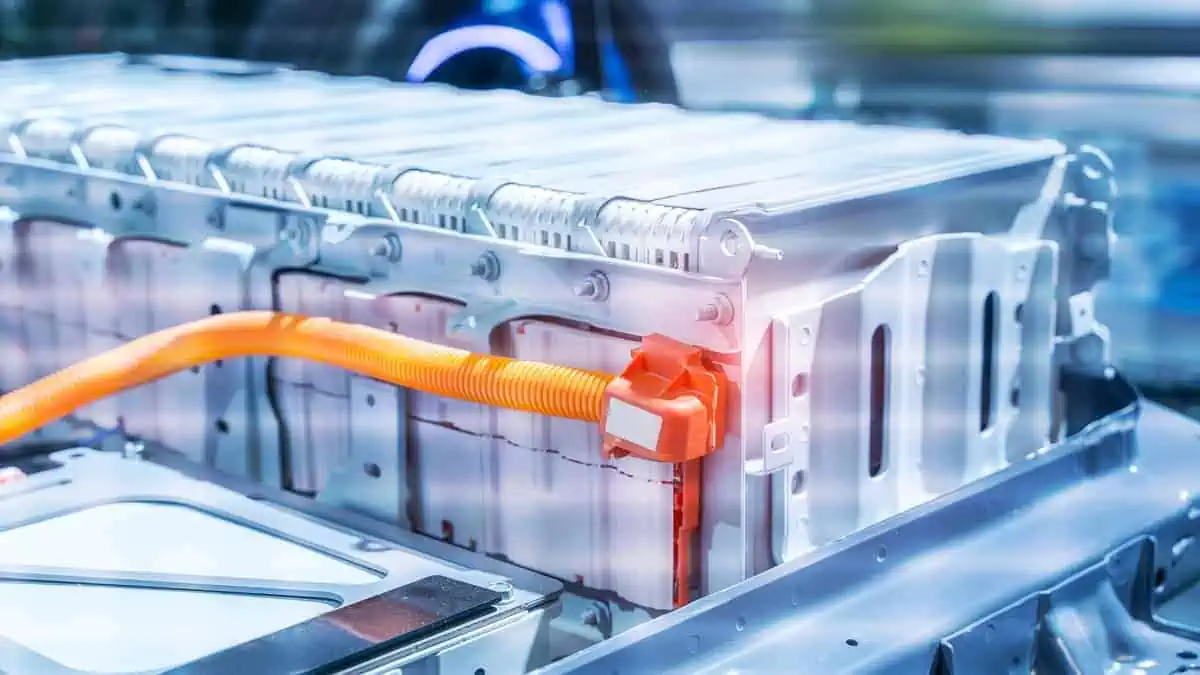
    South Korean legacy automaker Hyundai Motor Group has just disclosed the names of its battery suppliers as electric vehicle fire concerns rise in its home country, The Korea Herald reports.

    Hyundai names battery sources as safety fears rise

    Hyundai has officially taken several measures to alleviate the public’s growing concerns over electric vehicle fires in South Korea, including the disclosure of the battery suppliers of its models and the introduction of enhanced safety features.

    Presented below are the battery cell manufacturers per model:

    Vehicle ModelBattery Cell Manufacturer
    Ioniq 5 NESKO
    Ioniq 5 NE PESKO
    Ioniq 6 (CE)LGES (23.6-)
    GV60 (JW)SKO
    G80 (RG3 EV)SKO
    GV70 (JK EV)SKO
    Kona (SX2 EV)CATL
    ST1 (TSD-A01)SKO
    Casper (AX EV)LGES
    Kona OS EVLGES
    Ioniq (AE EV PE)LGES
    Ioniq (AE EV)LGES
    Porter (HR EV)SKO

    As you can observe, the Hyundai Kona Electric is currently the only model using batteries from China’s CATL. Most of its offerings feature batteries from South Korea’s LG Energy Solution (LGES) and SK On.

    Hyundai’s other efforts to improve EV safety

    Apart from disclosing the names of its battery suppliers, Hyundai and Kia also committed to collaborating with local governments to further improve the safety of its electric vehicle technologies.

    For instance, Hyundai plans to launch new safety features like avoiding fire risks associated with overcharging of batteries, such as follows:

    • an overvoltage diagnosis system
    • a battery monitoring system

    In effect, customers’ apprehensions to join the shift to electric mobility will gradually diminish.

    South Korea to conduct emergency meeting to address EV fire concerns

    Both foreign and local electric vehicle players in the South Korean market are gearing up to manage similar safety concerns at the set safety inspection meeting organized by the Ministry of Land, Infrastructure, and Transport on August 13.

    Reuters noted that the meeting will revolve around fires involving electric vehicles, including a fire incident that caused extensive damage, and determine solutions to avoid such incidents.

    The initiative comes after a recent fire incident involving a Mercedes-Benz EV in an underground parking lot in Incheon, which reportedly damaged 140 vehicles, displaced approximately 800 residents, and compromised the facility’s electrical and plumbing systems. The EV in question apparently uses a nickel-cobalt-manganese battery cell from China’s Farasis.

    The Ministry of Land, Infrastructure, and Transport’s request for transparency by revealing battery suppliers extends to both local and foreign brands that rely on imports. However, the latter will likely take some time to respond to the request as they still need input from their overseas headquarters.

    “The decision to reveal parts suppliers isn’t ours to make — it’s up to our headquarters. We’ve communicated the urgency of the situation here, but the final say rests with them.”

    Unnamed official from an import car brand in South Korea

    Hyundai’s move to take a proactive approach aligns with the ministry’s efforts to alleviate the growing public concerns about electric vehicle safety. As the South Korean EV industry wrestles with this issue, both local and foreign players will likely receive intensified scrutiny and pressure to focus on safety in their EV technologies.

  • Uber boss casts doubt on Tesla’s Robotaxi vision

    Uber boss casts doubt on Tesla’s Robotaxi vision

    The Chief Executive Officer of the established ridesharing company Uber stimulated some buzz when he questioned the viability of Tesla’s Robotaxi plans in a popular talk show on Friday.

    Tesla’s Robotaxi business model

    Tesla plans to establish its own autonomous vehicle fleet with its Robotaxi, which CEO Elon Musk calls “Cybercab.”

    CEO Musk explained that the business model combines the concept of rental accommodations company Airbnb and ride-hailing service Uber.

    “Tesla will be some combination of Airbnb and Uber. At any time, they can have the car come back to them, like Airbnb for cars.”

    Tesla CEO Elon Musk

    It will basically allow owners to “add or subtract their cars from the fleet whenever they want.” They can also decide who can book their Tesla cars, such as friends, families, 5-star users, or anyone.

    CEO Musk claims that Tesla owners could earn up to $30,000 a year from this business, excluding Tesla’s 25%-30% cut from those rides.

    The company plans to integrate the ride-hailing service into the Tesla app.

    Tesla’s Robotaxi plans under scrutiny as Uber CEO expresses doubts

    Uber CEO Dara Khosrowshahi guested on the Logan Bartlett Show on YouTube on Friday, with the episode revolving around autonomous vehicles.

    Intriguingly, the Uber boss shared his doubts about Tesla’s Robotaxi plans. CEO Khosrowshahi asserted it “wasn’t clear” to him that Tesla owners would want their cars “be ridden in by a complete stranger.”

    CEO Khosrowshahi also noted that peak ride-sharing times will likely overlap with the times Tesla owners need to use their cars.

    “Probably the times at which you’re going to want your Tesla are probably going to be the same times that ridership is going to be at a peak.”

    Uber CEO Dara Khosrowshahi

    In comparison, Khosrowshahi explained that Uber can easily increase the number of part-time drivers to adhere to demand, especially during rush hours.

    The Uber boss also expressed doubts about the people’s readiness to adopt self-driving vehicles.

    “Logic would dictate that if robots are twice as good a driver or three times as good as drivers as humans, that’s good for society going forward, but I honestly don’t know if society’s ready to accept that.”

    Uber CEO Dara Khosrowshahi

    In addition, CEO Khosrowshahi pointed out that Elon Musk might be underrating a crucial part of the ridesharing business. He emphasized the significant difference between launching a ridesharing fleet and a carmaking business.

    “It’s a really, really different business you know, as well as talking about hardware, to build a $20,000 or $50,000 piece of hardware from driving over 30 million transactions every day that on a revenue basis you make $2 off of. It’s just a very, very different business.”

    Uber CEO Dara Khosrowshahi

    CEO Khosrowshahi also outlined the additional platforms that aspiring companies need to develop to prepare for worst-case scenarios in a ridesharing vehicle.

    After outlining his numerous apprehensions about Tesla’s Robotaxi plans, CEO Khosrowshahi hinted at Uber’s interest in partnering with the electric vehicle giant to bypass the major challenges he mentioned.

    “It’s taken us 15 years. It’s taken us tens of billions of dollars of capital, and we can provide that instantly to a partner. Hopefully, Tesla will be one of those partners.”

    Uber CEO Dara Khosrowshahi

    Tesla Robotaxi debut

    Tesla originally planned to debut its Robotaxi on August 8, 2024. However, CEO Musk delayed the unveiling event to October 10, 2024.

    According to the Teska boss’ announcement, the delay would enable the company to “make some important changes” to further refine the highly anticipated Robotaxi and “show off a few other things.” CEO Musk also specified that he requested several front design changes.

    It would be interesting to see if Tesla would take CEO Khosrowshahi’s suggestion to partner instead of establishing its own ridesharing platform, potentially enabling it to bypass major challenges that Uber already encountered and solved.

    Presented below is the full interview with Uber CEO Dara Khosrowshahi:

  • Tesla secures direct sales license in Kentucky

    Tesla secures direct sales license in Kentucky

    Electric vehicle giant Tesla has finally received the necessary direct sales license from Kentucky authorities, eliminating previous constraints in its local operations.

    Tesla expands direct sales model reach with Kentucky being the latest state

    Tesla has secured a direct sales license in Kentucky after state authorities banned it from certain sales, according to Tesla Owners of Kentucky.

    At the time, Kentucky regulators contended that the Musk-led company’s direct-to-consumer model violates particular legislation that mandates vehicle sales to occur only in a franchised dealership.

    The renewed list of automotive dealers Kentucky released on Friday backed the claims that Tesla has finally received a sales license in the state. As you can see in the document, Tesla is located at 11701 Gateworth Way in Louisville. It would not be surprising if Tesla decided to build an actual store and service hub in Kentucky soon.

    Tesla breaks down dealer barriers

    Kentucky officials previously limited Tesla’s operations in the state despite allowing it to sell its vehicles directly to customers.

    For instance, the electric automaker faced constraints on vehicle leasing and certain service operations.

    The restriction basically deterred the Musk-led company from leasing its electric vehicle models to customers. It also prevented Tesla from conducting service operations in the state, forcing owners to go to other states to get the service they needed.

    With the attainment of an official direct sales license, Tesla has broken down these barriers that used to impede its sales in the state.

    Hiring underway

    As you can see in the Tesla Owners of Kentucky’s X post, Tesla has also been conducting recruitment in Louisville.

    Open positions include the following:

    • Tesla Sales Advisors
    • Vehicle Readiness Specialists
    • Sales Managers
    • Service Technicians

    Tesla outlined in the job advertisement that successful candidates for the Tesla Sales Advisor position will be responsible for “consistently delivering an educational, immersive, and exciting experience to both current and potential customers.”

    Tesla’s attainment of a direct sales license in Kentucky is undoubtedly a significant feat, potentially enabling the brand to further expand its footprint in the state. Tesla may launch physical stores and service hubs in the state soon, bringing its products closer to local customers. With hiring underway for various positions, Tesla is indeed capitalizing on this new opportunity.

  • CATL launches showroom of EV models powered by its batteries in China

    CATL launches showroom of EV models powered by its batteries in China

    Chinese battery giant CATL has just launched an “innovative new energy experience center” in China to showcase electric vehicles featuring its cutting-edge battery technologies.

    CATL opens world’s first EV experience center in China

    According to the press release, CATL formally opened the world’s first-ever new energy experience center in Chengdu, Sichuan Province, on August 10, 2024.

    CATL cited the crucial role of automakers and the local government in establishing the “NING Space,” which enables customers to “view, select, use, and learn” electric vehicles in the facility.

    CATL believes this new experience center will help accelerate the shift to electric mobility. CATL Vice Chairman offered a speech at the opening ceremony to emphasize the initiative’s main goal, which is to “create a bridge between automakers and consumers” amid the shift to electric mobility.

    The NING Space

    CATL developed the NING Space to aid electric automakers in expanding their reach to customers by displaying their products effectively. It also offers assistance to buyers in choosing the model suitable for them.

    The 13,000 m² experience center displays almost 100 models powered by its batteries from 41 car brands, including a full array of the most popular cars:

    CATL also assigned electric vehicle experts to answer customers’ questions and even offer suitable advice based on their preferences and needs. In addition, the NING Space also introduces customers to EV history and development, presents the latest battery technologies, and conducts science workshops.

    NING Service and WeChat mini-program

    CATL also introduced “NING Servive,” which is the after-sales service brand, at the launch event on Saturday.

    NING Service boasts a network of 112 professional service stations and a training system to offer customers high-quality services, including the following:

    • battery maintenance
    • health checks
    • mobile rescue, etc.

    Moreover, the Chinese battery giant also initiated a WeChat mini-program to further improve customer experience by offering the following services:

    • charging station searches
    • navigation
    • selection assistance
    • usage tips for EVs
    • science workshops about new energy

    Indeed, CATL’s new NING Space will establish a deeper connection between electric automakers and customers in China. It will significantly contribute to the promotion of electric mobility, enabling interested customers to explore innovative EV models all in one go. Excitingly, CATL reportedly aims to launch similar showrooms in more Chinese cities next.

  • Tesla Semi to hit European roads

    Tesla Semi to hit European roads

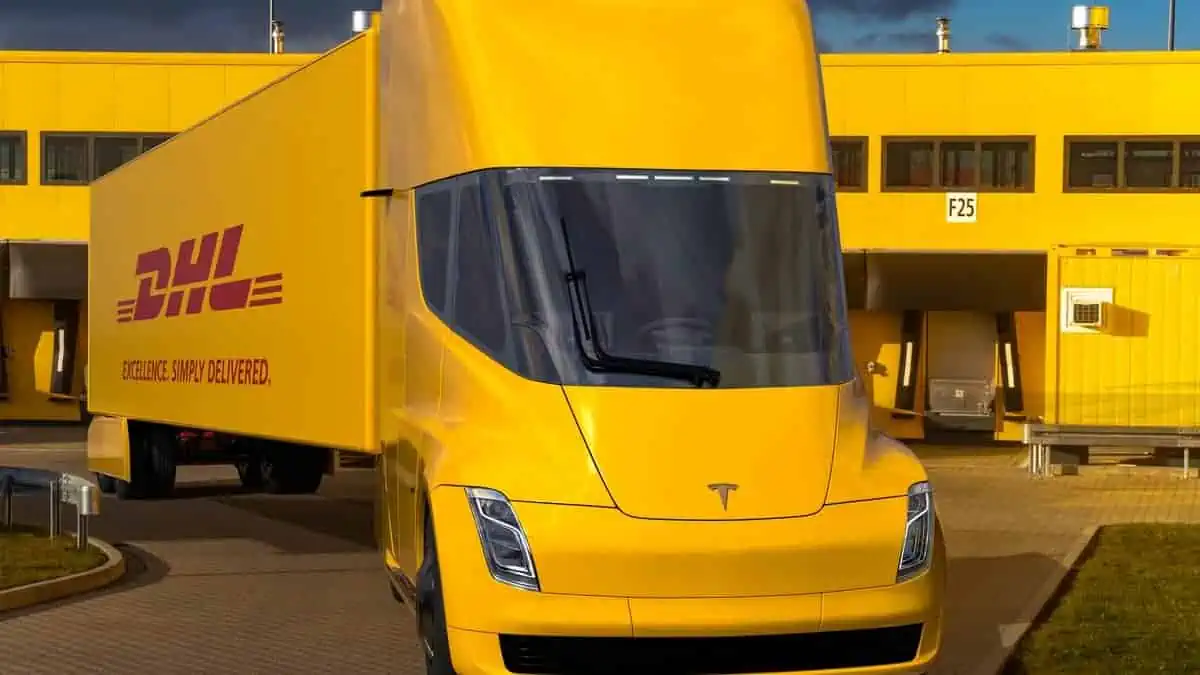
    Electric vehicle giant Tesla is gearing up to launch the Semi Class 8 electric truck in Europe, as confirmed by a company executive and recent job listings.

    https://twitter.com/MuskElon8188/status/1822289690197639391

    Tesla Semi head of biz dev announces European market entry

    Tesla’s Business Development Head for the Semi program announced that the Musk-led electric automaker is now “taking steps” to launch the Semi in the European market.

    “We are taking steps to bring the Tesla Semi to Europe, and I’m looking for someone with industry experience in electrification to help us develop this exciting new market. This is a groundbreaking product that meaningfully advances Tesla’s mission, and the team behind it is world-class. Let the wild rumpus begin.”

    Graham Carroll, Head of the Semi’s Business Development in the US

    Notably, Tesla has already started deploying a limited number of Semi trucks to very few customers in the United States, including PepsiCo, Costco, and Walmart, among others. However, it has yet to introduce the innovative Class 8 electric truck to foreign markets.

    With the Semi’s European market launch now confirmed, Tesla will likely launch a production line at Giga Berlin. This aligns with Chief Executive Elon Musk’s remarks during his brief visit to the said factory in March 2024.

    “I think it makes sense to produce the Semi truck in Europe at Giga Berlin.” 

    Tesla CEO Elon Musk

    Job listings

    Apart from Mr. Carroll’s confirmation, Tesla also recently posted a new job listing on its Careers website.

    As you can see in the job advertisement, Tesla is seeking a “Head of Business Development – Semi Truck EMEA (Amsterdam or Berlin).” The job responsibility will mainly focus on the Tesla Semi’s deployment in the European market.

    “Tesla is seeking a Business Development Manager in Europe to build / maintain customer relationships and plan for Tesla’s future Semi Truck deployments. This person will regularly meet with prospective European Semi customers to understand their use cases, needs, and duty cycles.”

    Tesla
    https://twitter.com/alexandrei64/status/1821879397403496675

    Tesla Semi’s potential to dominate in Europe

    Tesla is highly optimistic that the all-electric Semi is a groundbreaking innovation, surpassing the capabilities of all other models in its category.

    The Semi has already demonstrated its strong potential to lead the European electric truck market in real-world tests at the Run on Less event, showcasing its all-electric range, charging efficiency, and performance advantages.

    In addition, the European Commission outlined that the average Semi tractor-trailer in the region traveled about 141.3km (~88mi). In comparison, the Tesla Semi offers a range of about 800km (500 mi). Therefore, the Tesla electric truck could undoubtedly complete several trips back and forth even without stopping/charging.

    Tesla has already kicked off the construction of the new Semi Factory beside Giga Nevada in Texas. The EV giant expects the facility to come online in late 2025 and achieve large-scale production sometime in 2026. On the other hand, Tesla has yet to announce more details about CEO Musk’s previous remarks about a potential Semi production at Giga Berlin.

    The Tesla Semi can revolutionize the trucking industry with its 500-mile driving range on a single charge even with a full load. The potential integration of Tesla’s FSD can also make it easier for truck drivers to complete their daily trips.

  • XPeng’s MONA M03 enters mass production ahead of launch

    XPeng’s MONA M03 enters mass production ahead of launch

    Chinese player XPeng Motors has finally kicked off the mass production of its AI-centric model, the MONA M03, ahead of its official launch by the end of August 2024.

    MONA M03 rolls off production line

    XPeng Founder, Chairman, and Chief Executive He Xiaopeng announced in a recent Weibo post that the company is already mass-producing the MONA M03 in China.

    As mentioned, XPeng plans to officially launch the new offering under the MONA lineup later this month. For context, MONA stands for “Made of New AI.” The M03 hatchback coupe is expected to feature most of the XPeng’s latest electric vehicle technology when it hits the market.

    According to the XPeng boss, the company’s “front-line partners” are striving to accelerate the manufacturing processes so it can start customer deliveries at the same time as its market launch.

    What’s currently known about the MONA M03?

    Recent regulatory filings in China revealed that the MONA M03 will offer two separate single-motor variants that yield peak powers of 140 kW or 160 kW, respectively.

    The MONA M03 utilizes lithium iron phosphate batteries from FinDreams Battery, which is BYD’s battery division. Additionally, the EV can deliver a top speed of 155 km/h.

    The upcoming MONA M03 is 4,780 mm long, 1,896 mm wide, and 1,445 mm tall. Additionally, it has a wheelbase of 2,815 mm. It boasts a drag coefficient of 0.194 Cd, essentially making it the “most aerodynamic all-electric hatchback sedan” in the world.

    When XPeng debuted the MONA M03 on July 3, it outlined that the new model is “meant to give respect to Tesla’s Model 3.” It will have a wide range of smart driving features to suit different customer needs.

    Availability and pricing

    Xiaopeng confirmed that the MONA M03 will cost at least RMB 200,000 ($27,900), offering competitive pricing to attract a younger demographic of customers.

    XPeng officially opened the pre-order books for the MONA M03 on August 8 for an RMB 99 ($13.81) deposit fee. Reservation holders can benefit from a discount of RMB 3,000 ($419) upon the purchase.

    XPeng expects the new MONA M03 to further boost its competitiveness in the electric vehicle market after selling a total of 63,173 EVs (up 20.46% YoY) so far this year. We can expect to learn more about the new MONA EV when it hits the market later this month.

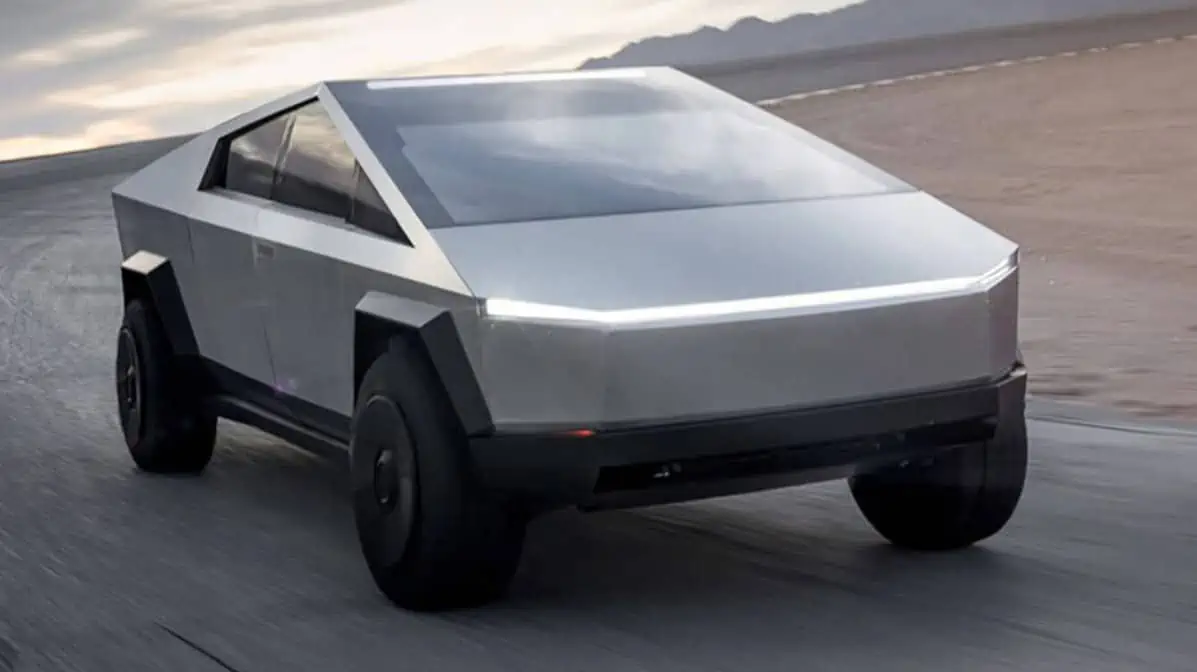
  • Tesla Cybertruck rolls into Canada with a hefty price tag

    Tesla Cybertruck rolls into Canada with a hefty price tag

    Electric vehicle giant Tesla has finally launched the Cybertruck in the Canadian market with a very hefty price tag – $137,990.

    Tesla Cybertruck arrives in Canada

    Tesla started emailing Cybertruck reservation holders in Canada on Thursday to encourage them to convert their reservations into orders, finally enabling them to configure their electric pickups.

    Like in the United States, the stainless steel electric pickup comes with two configurations in Canada:

    • Cybertruck AWD Foundation Series
    • Cyberbeast Foundation Series

    The Musk-led company expects to initiate deliveries to Canadian customers between October and November 2024.

    Cybertruck comes at a premium

    As expected, the highly in-demand futuristic Cybertruck comes at a premium. In fact, the prices may push interested customers to think twice before actually buying the electric pickup they have wanted for years.

    The Cybertruck AWD Foundation Series in all-wheel drive configuration starts at a whopping $137,990 CAD.

    Meanwhile, the Cyberbeast Foundation Series in all-wheel drive configuration is more expensive at $165,990 CAD. These prices are before other fees, such as destination & doc fees, etc. Refer to the image attached to the X post below:

    Key specs and features

    Presented below are the technical details of the Canadian-spec Cybertruck:

     Cybertruck AWD Foundation SeriesCyberbeast Foundation Series
    Price$137,990 CAD$165,990 CAD
    Range512 km (estimated)484 km (estimated)
    Acceleration 0-100 km/h4.3 seconds2.7 seconds
    Top Speed180 km/h209 km/h
    Horsepower600 HP845 HP
    Torque10,080 Nm13,960 Nm
    Towing Capacity4,990 kg4,990 kg

    The Tesla Cybertruck comes standard with the following features:

    FeaturesDescription
    PowerShare OutletsFive onboard outlets, including a 240V outlet in the bed.
    Home Backup CapabilityPower your home for over three days with included Universal Wall Connector and Gateway V3.
    Stainless Steel ExteriorUltra-hard, dent-resistant, and corrosion-resistant.
    Cyber Wheels and CoversIntegrated 20” Cyber Wheels with 512 km estimated range.
    Decor OptionsWhite Décor or Tactical Grey Decor with an 18.5” front display and a 9.4” rear display.
    Full Self-Driving CapabilityVehicle can drive and park itself with upcoming over-the-air updates

    Customers who want an extra range can acquire the $22,000 CAD Range Extender for 755+ km total.

    Tesla is expected to start accepting orders for the standard version of the Cybertruck, except for the RWD version, by the end of 2024.

    Tesla basically offers the Cybertruck for the same prices in the United States converted to Canadian dollars despite the high exchange rate. While the Cybertruck is undoubtedly an enticing electric pickup, its hefty pricing may discourage many customers in Canada. It must be noted that the abovementioned prices exclude additional fees, including destination & doc fees, among others.

  • ChargePoint simplifies EV charging with new ‘Omni Port’ tech

    ChargePoint simplifies EV charging with new ‘Omni Port’ tech

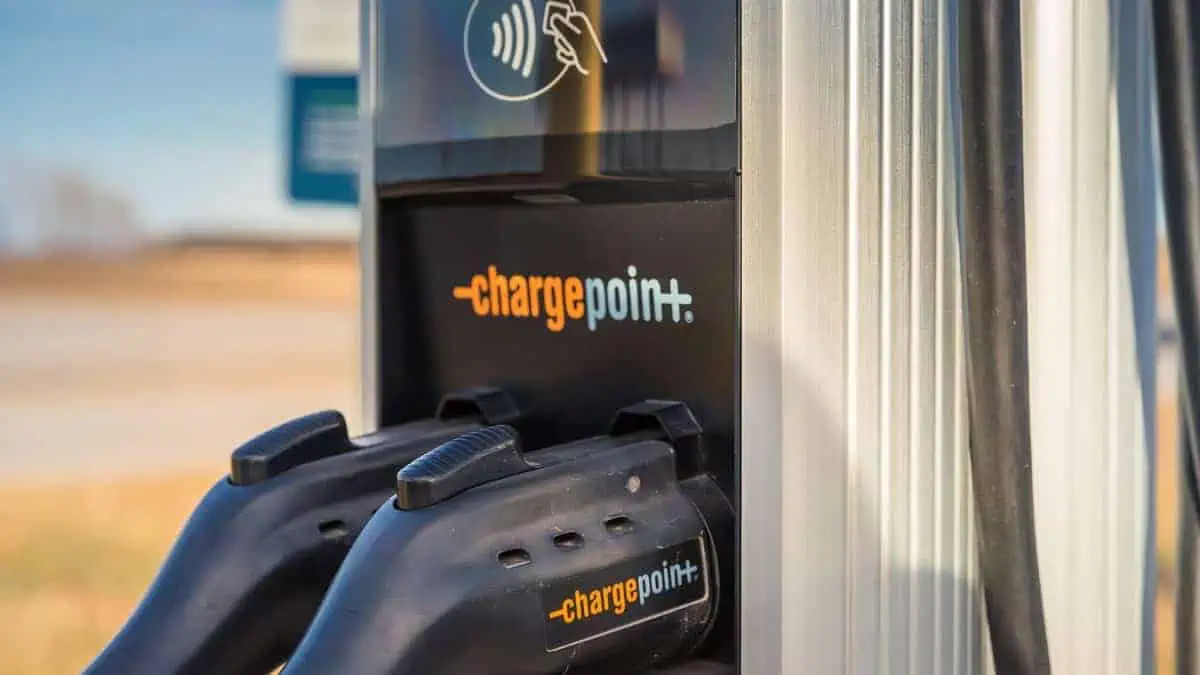
    American charging network ChargePoint has just introduced a new innovative electric vehicle charging technology that offers the most common connector types into a single unit, enabling Tesla and other EVs to use the stall even without adapters in North America.

    ChargePoint’s Omni Port can charge any EV

    According to the press release, ChargePoint’s new Omni Port is a one-size-fits-all electric vehicle connector solution that will make charging easier for owners in the North American region.

    The Omni Port basically offers the Level 2 SAE J1772 plug, the Combined Charging System (CCS1) plug, and Tesla’s proprietary North American Charging Standard (NACS) plug in a single unit, allowing any electric vehicle model to charge in any parking space without an additional cable. 

    “Across hardware and software, ChargePoint is bringing to market innovative solutions that ensure all drivers who need to charge are able to do so.”

    Rick Wilmer, ChargePoint CEO

    How does it work?

    ChargePoint outlined that electric vehicle owners must only enter their car’s make and model in the ChargePoint app and then tap to charge. After that simple process, the system will manage the rest.

    For those who do not use the app, they can also select the correct connector on the screen.

    ChargePoint’s Omni Port automatically installs an adapter to the connector’s tip before initiating the charging process.

    Alleviating EV drivers’ headache

    Omni Port cuts the need for owners to bring their own adapters and dedicated parking spaces to one connector type.

    ChargePoint claims that the Omni Port has no incremental cost as it is a standard feature of its applicable chargers.

    This groundbreaking charging tech makes it easier for EV owners to navigate in a “multiple connector environment,” potentially accelerating the shift to electric mobility in North America.

    “With Omni port, ChargePoint solved the challenges associated with a multiple connector environment, ensuring Tesla and non-Tesla drivers can continue to expect a world-class driver experience. We are giving drivers and site hosts assurance that ChargePoint will continue to meet all their charging needs now and in the future.”

    Rick Wilmer, ChargePoint CEO

    ChargePoint aims to start deploying Omni Port across its new charging locations and existing AC and DC stations later this year, including those with 800-volt charging. The company also confirmed that the new tech could also reach existing ChargePoint CP6000 and Express Plus Power Link 2000 models at a nominal cost.

  • Jeep Wagoneer S faces torture test in the snow before launch

    Jeep Wagoneer S faces torture test in the snow before launch

    Jeep has brought its first electric vehicle model, the Wagoneer S, to the freezing and rugged terrains of New Zealand for testing ahead of market launch.

    Wagoneer S undergoes rigorous testing before hitting the market

    In a LinkedIn post on Thursday, Jeep CEO Antonio Filosa announced plans to finally launch the 2024 Wagoneer S  in the United States and Canada later this year, with global shipments following in 2025.

    Before the official market launch, the iconic American brand decided to put the Jeep Wagoneer S through New Zealand’s tundra. This initiative will determine if the model fulfills the rugged SUV brand’s standards.

    Per CEO Filosa, Jeep engineers are “perfecting the incredible vehicle dynamics and performance of the all-new Jeep Wagoneer S.”

    The shared images display a bright blue Jeep Wagoneer S on a cloudy winter day. The extreme weather condition in New Zealand at the time of the testing makes it a perfect testing location for the Wagoneer S to challenge its all-electric capabilities.

    As the Jeep boss noted, the Wagoneer S offers the iconic 4xe capability, exclusive Selec-Terrain traction control system (Auto, Snow, Sport, Eco, and Sand), and sleek aerodynamic design.

    “We want to ensure that our customers feel confident when they get behind the wheel of their Jeep Wagoneer S and that it responds the way they expect.”

    Alison Rahm, Chief Engineer of Jeep Wagoneer S.

    Jeep Wagoneer S design

    Jeep CEO Antonio Filosa proudly asserts that the Wagoneer S electric SUV is “distinctively a Jeep and 100% electric.”

    The Wagoneer S features the brand’s iconic rugged design elements with contemporary elements for the electric vehicle era.

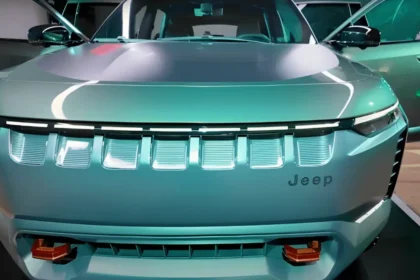
    For instance, it has a redesigned seven-slot grille and ambient cast lighting. It also features a closed grille, enhancing its sporty front appearance.

    Inside, the new Jeep electric SUV offers the brand’s latest technologies and software, including the “best-in-class” display with 45″ of space.

    Power and performance

    The 2024 Jeep Wagoneer S rides on the STLA Large platform. It yields a maximum output of 600 horsepower and  617 lb-ft of torque.

    It can reportedly accelerate from  0 to 60 mph in just 3.4 seconds, like the Tesla Model Y Performance.

    In addition, the electric SUV features a large 100 kWh battery that can deliver a driving range of more than 300 miles. It can also support fast charging of 20%-80% in just 23 minutes.

    The 2024 Jeep Wagoneer S Launch Edition’s base price is definitely not cheap at $71,995. The American brand also announced plans to launch an off-road-focused Trailhawk edition to challenge the likes of the Rivian R1S.

    The Wagoneer S is expected to arrive at US dealerships this fall, potentially attracting customers from competitors. Jeep admitted it targets “Tesla… but there are many others.”

    After launching the Wagoneer S, Jeep seeks to further expand its EV lineup with the introduction of the Wrangler-inspired Recon.

  • Archer Aviation to launch eVTOL air mobility network in Los Angeles

    Archer Aviation to launch eVTOL air mobility network in Los Angeles

    American electric aircraft developer Archer Aviation has just declared plans to launch an electric vertical take-off and landing (eVTOL) air mobility network in Los Angeles, California.

    Archer Aviation’s electric air taxi service to arrive in LA

    On Thursday, Archer Aviation announced it will introduce a groundbreaking air mobility network to replace “one-to-two-hour drives with 10-20 minute” eVTOL aircraft flights.

    According to the press release, the proposed air mobility network includes vertical take-off and landing locations (vertiports) at strategic areas like the following:

    • Los Angeles International Airport (LAX)
    • Orange County
    • Santa Monica
    • Hollywood Burbank
    • Long Beach
    • Van Nuys
    • University of California (USC)

    Archer also revealed ongoing negotiations with the Los Angeles Rams for proposed exclusive vertiports at Woodland Hills and Hollywood Park, an almost 300-acre district centered around the SoFi Stadium.

    “We are excited about the opportunity to bring Archer’s game-changing technology to Hollywood Park. This underscores our commitment to enhancing the guest experience as we continue to build this transformative global destination for sports and entertainment.”

    Los Angeles Rams President Kevin Demoff

    In addition,  Archer will also collaborate with USC to convert the school’s existing heliports for Midnight and other eVTOL aircraft.

    “This is a big moment for Archer. Establishing our LA network ahead of the global events that are coming to the region over the next four years is a milestone that will put Midnight on display for the whole world to see. LA is known for its horrendous traffic—our goal is to offer a safer, faster and sustainable alternative travel option.”

    Adam Goldstein, CEO of Archer

    About Midnight eVTOL aircraft

    Archer Aviation’s Midnight is a four-passenger electric eVTOL aircraft, which promises to deliver “sustainable, low-noise, and safe alternative” transportation to passengers.

    It boasts a top speed of 150 miles per hour, making hour-long ground transportation into just several minutes in the skies.

    Archer Aviation also boasts that Midnight can support back-to-back flights of 20-50 miles with only minimal charges in between. Moreover, it is apparently a hundredfold quieter than a helicopter at cruising altitudes.

    Midnight can carry up to four passengers and a pilot, excluding carry-on luggage.

    The Midnight eVTOL aircraft has already secured a Part 135 certification from the FAA en route to bonafide commercial flight operations.

    Governor Gavin Newsom expressed his delight with Archer Aviation’s initiative, emphasizing California’s potential for technological innovations.

     â€śCalifornia is showing the world what’s possible when you embrace innovation, entrepreneurship and clean energy to help solve your biggest challenges. Homegrown companies like Archer Aviation are pioneering the next generation of zero-emission transportation that will help California cut pollution, clean our air and reduce traffic.”

    Governor Gavin Newsom

    Archer aims to kick off the electric air taxi service operation in Los Angeles as early as 2026, ahead of the surge of visitors across the world for the 2028 Olympic Games.