
Tag: Europe

  • Stellantis and Toyota expand their partnership with Large Commercial Van

    Stellantis and Toyota expand their partnership with Large Commercial Van

    Stellantis and Toyota announced an agreement for new commercial vans targeted at the European market, including an electric version of the vehicle. 

    On Monday, Stellantis and Toyota Motor Europe (TME) announced the expansion of their partnership with a new agreement on large commercial vans that will also include a battery-electric version.

    Accordingly, Stellantis will supply TME with the new vehicles for sale in Europe under the Toyota brand. The van will be produced at Stellantis plants in Gliwice, Poland, and Atessa, Italy.

    Carlos Tavares, CEO of Stellantis, said: “With this third successful engagement, Stellantis is further demonstrating its expertise in the commercial vehicle segment and in developing battery-electric technology built to support a full range of needs. This agreement strengthens our leadership in the EU30 for LCVs and low emission vehicles and moves us a step closer to realizing our Dare Forward 2030 goal of becoming the undisputed global light commercial vehicle leader, in terms of technology, manufacturing, market share and profitability.”

    The vehicle is planned to be released in mid-2024. The large-sized vans will also mark TME’s first entry into the large-size commercial vehicle segment.

    Matt Harrison, President, and CEO at Toyota Motor Europe, said: “We are pleased that we can extend this successful partnership through the introduction of a new large-size commercial van. It represents an important addition and completes our light commercial line-up for Toyota’s European customers. The new LCV will represent a key contribution to Toyota’s growth targets for its overall LCV line-up, alongside the Hilux pick-up, Proace and Proace City, enabling Toyota to provide a mobility solution in all segments of the LCV market,”

    Stellantis and Toyota have been producing commercial vehicles for a decade now. The new van will complete a full LCV line-up under the partnership. The initial mid-size LCV is made in France, followed by a compact-size LCV produced in Spain, and the now large-size LCV announcement completes the line-up in Europe.  

  • Volvo Car App makes EV charging convenient in Europe

    Volvo Car App makes EV charging convenient in Europe

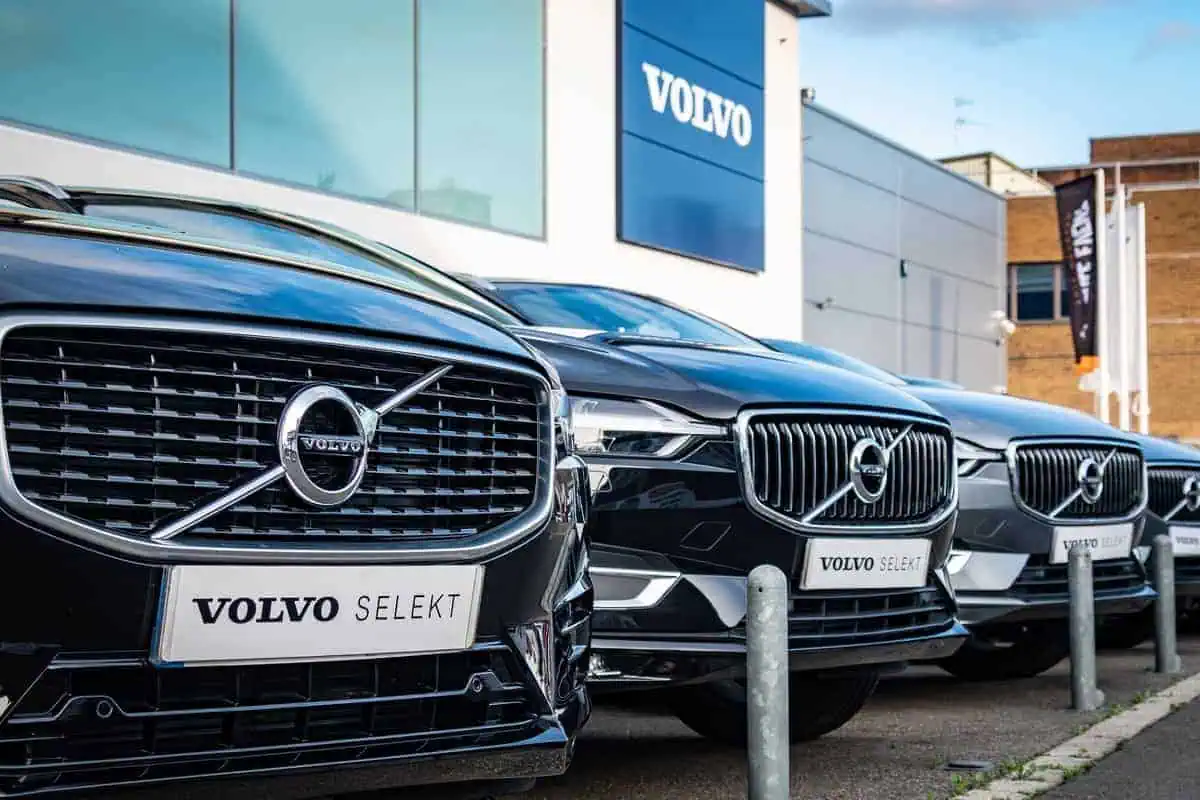
    Volvo Cars are turning its app into an easy-to-use “one-stop shop” for its electric Volvo drivers. 

    Volvo EV owners now have access to more than 270,000 EV charging sites across Europe. Its users can now get real-time information on the availability of the charging stations and pay for the charging session through a single portal with the Volvo Cars app’s upgraded features.

    https://twitter.com/Plugsurfing/status/1527324893326364673

    Arek Nowinski, Head of EMEA at Volvo Cars, said: “Creating premium fully electric products is only one part of a much wider ecosystem when it comes to enabling consumers to make the switch to a fully electric car. We recognise the frustration that many of our customers have in carrying around multiple cards and having to install different apps to access individual chargepoints.”

    He added, “By enhancing the mobile charging experience, we are supporting our customers across Europe in their own fully electric journey, which means access to more networks inside and outside their country of residence all through our digital platform – the Volvo Cars app.”

    The new Volvo app features Plugsurfing‘s Developer Platform and Drive API, which directly links charging information to the Volvo Cars App and resulting in a smooth and easy experience.

    https://twitter.com/Plugsurfing/status/1527324893326364673

    “Drive API is the evolution of our commitment to our partners, with this integration, Volvo Cars can evolve its own products and services to meet its goal of becoming a purely electric company by 2030. We’re proud to be the partner that helps make this a reality.” said Tatu Kulla, Plugsurfing CEO.

    The new features are currently available in Switzerland and Italy and will be launched in other European markets by the end of the year.

    As Volvo continues to roll out more EVs, it is also investing in public charging networks in areas of strategic importance around Europe.

    In the U.S., the new Volvo Cars App is expected to be launched before the year ends. According to the automaker, the app is designed to build on the already successful ChargePoint in-car app for US-based Volvo Recharge customers. It allows its users to search, navigate and pay for charging across over 25,000 charger locations.

  • Ford joins petition to the EU for EV-only sales from 2035

    Ford joins petition to the EU for EV-only sales from 2035

    Ford of Europe joins 27 other companies and has petitioned the European Union to ensure that all cars and vans are zero-emission from 2035.

    Ford of Europe, along with 27 other companies, has appealed to the European Union (EU) to ensure that all new cars and vans in Europe are zero-emission from 2035. They also wanted to establish mandatory targets for charging infrastructure in Europe.

    “At Ford in Europe, we believe that freedom of movement goes hand-in-hand with caring for our planet and each other,” said Stuart Rowley, chair, Ford of Europe. “That’s why we are targeting all Ford vehicles to be zero-emission by 2035. To successfully achieve this, EU policymakers must also establish mandatory national targets for a seamless electric charging infrastructure that lives up to the growing demand for electric vehicles.”

    Ford is currently in the process of an all-electric future in Europe. They will be introducing nine new electric vehicles by 2024 and plans to sell more than 600,000 EVs in Europe by 2026.

    The Climate Group organization organized the appeal, stating that eliminating fossil-fuel-burning automobiles from the road is critical to Europe meeting its target of net zero emissions by 2050 and avoiding the worst effects of climate change on people and the environment.

    Currently, the EU is deciding on new clean car rules, including a proposal by the EU commission that only zero-emission new cars and vans should be sold EU-wide from 2035.

    The European Union’s climate law targets net-zero emissions by 2050. The law also includes reducing carbon dioxide emissions by 55% of 1990 levels by 2030.

    More about the petition letter here.

  • EV Market Share increased in Europe

    EV Market Share increased in Europe

    During the first quarter of 2022, the market share of electric vehicles in the European Union has increased, according to data from ACEA.
    Battery operated vehicles almost doubled their market share in the European Union in the first quarter of 2022, data shows on Thursday. –as reported by Reuters.

    There has been an increase in battery electric vehicles’ total registration in the first three months of this year. Battery electric vehicles now account for 10% of market shares and surpass plug-in hybrids with an 8.9% share.

    Here is the market share for New Passenger Cars by fuel type in the EU:

    Hybrid Electric Vehicles account for at least a quarter of the market. However, Diesel and Petrol cars still make up at least half of the market share, with a total of 52.8%.

    Meanwhile, here is the comparison from Q1 2021 and Q1 2022 for Alternative Fuel Type vehicles:

    There is a total of 224,145 units of BEVs sold during the first quarter of 2022, showing an almost double increase from last year. For PHEVs, there are 199,107 and 563,030 for Hybrid Electric vehicles.

    *All data are based on, https://www.acea.auto/files/20220505_PRPC-fuel_Q1-2022_FINAL.pdf

  • VW, BP Announce Plans to Roll Out 8,000 EV Chargers Across Europe

    VW, BP Announce Plans to Roll Out 8,000 EV Chargers Across Europe

    They announced their plan to build 8,000 EV chargers across Europe for the next two years.

    Automaker Volkswagen, along with BP-a British oil company—has launched their strategic partnership to boost the adoption of Electric Vehicles in Europe. They will roll out 8,000 EV fast chargers across Europe. Their first charging unit is now open to the public in Dusseldorf, Germany, according to a report by E and T

    BP will use Volkswagen’s innovative Flexpole 150kW charging units, which feature two charge points and have an integrated battery storage system. The battery will quickly charge the EVs without the need for high-powered grid connections. The Flexpole units can be directly connected to a low-voltage grid, eliminating the need for a substation and reducing installation time while still providing faster charging speeds up to 150kW. This will allow users to charge and drive in as little as 10 minutes, depending on the model of your electric vehicle.

    BP aims to have up to 8,000 charge points by 2024. The first phase of the roll-out will present 4,000 charge points in Germany, the UK and other European countries over the next 24 months.

    BP’s chief executive officer Bernard Looney said in a statement: “EV charging is one of the key engines driving BP’s transformation to an integrated energy company.” He added, “That’s why we’re so excited by our partnership with Volkswagen. When you bring together one of the world’s leading carmakers and one of the world’s leading energy companies – the opportunity is huge. This is a significant step forward on our journey to accelerate the electrification of transport in Europe.”

    BP’s charging networks will be integrated into the dashboard navigation of VW, Cupra/SEAT and Skoda vehicles, so that the drivers can locate the charging points. Volkswagen’s charging application, Elli, would also help EV drivers can find the nearest charger easily. However, all EV drivers will be able to use the chargers in BP pulse and Aral pulse network. 

  • 22% Of New Cars in Europe Are Electric

    According to data, the plug-in vehicle shares all over European market was 22%

    The European passenger plugin vehicle market is still growing significantly (+10% in March), which is remarkable considering it’s been declining and last month showed a 10% slight increase. 

    The number of plugin vehicles increased by 24% in the first quarter, with over 565,000 registered. Around 250,000 plug-in vehicles were registered last March. Last month, BEV vehicles increased 47% from last year’s growth, while PHEVs crashed significantly. Pure electric vehicles are dominating the hybrid market and have gained 3 percentage points in share.

    The market share of the plugin vehicle is rising quickly because the overall market is decreasing. As the European auto market becomes more and more electric, plugin vehicles will take up a larger percentage of total vehicle sales. Plugin vehicles will soon take up a share of 21%, or 12% for BEVs only.

    According to Cleantechnica, here is the list of the Plug-in Vehicle Sales in the European Market as of March 2022:

    In the list, 80% of the listed EVs are fully electric. 

    At the top of the list is the Tesla Model 3, with sales of 23,198. It’s been a great month for the Tesla Model 3 and its shipments were at least 20% higher than any other model.

    Next is the Tesla Model Y, with a registration of 19,500 units, its main markets are Germany, Norway, and Sweden.

    Third to the list is the Fiat 500e with 6,554 units delivered in March. Fourth is the Kia Niro EV, Kia continued to be a sure value in the EV arena. This unit was Britain’s favorite model (1,900 units), followed by France (584 units) and Germany (533 units). Volkswagen ID.4 secured the fifth spot with 5,070 units. It scored its best performance in Norway with 1,111 registrations; it also took fourth place in Germany with 973 and third in Sweden with 906 registrations.

    Best Sellers in the European Market:

    Countries where PHEV are the best sellers:

    CountryPreferred PHEV Model
    BelgiumVolvo XC40 PHEV
    The Netherlands
    FinlandVolvo XC60 PHEV
    Poland
    PortugalBMW 3 Series PHEV
    DenmarkFord Kuga PHEV
    ItalyJeep Compass PHEV

    BEV Best Sellers in European Countries: 

    Country Preferred BEV Model
    GermanyTesla Model 3
    France
    Spain
    Poland
    Switzerland
    United KingdomTesla Model Y
    Norway
    Denmark
    Finland
    Austria
    Portugal
    ItalyFiat 500e
     RomaniaDacia Spring
    Belgium Audi Q4 e-tron
    The NetherlandsSkoda Enyaq
     IrelandHyundai Ioniq 5
    HungaryKia EV6
    SwedenKia Niro EV