Tag: Li Auto

  • Li Auto’s super luxe Li MEGA “Cybervan” hits the Chinese market with a base price of $78K

    Li Auto’s super luxe Li MEGA “Cybervan” hits the Chinese market with a base price of $78K

    Li Auto, the Chinese new energy vehicle maker, has finally launched its inaugural all-electric vehicle model, “Li Mega,” in China. Interestingly, it somehow looks like a van version of the Cybertruck electric pickup.

    The multi-purpose vehicle (MPV) sells at a base price of nearly RMB 560,000 ($77,800), as per the press release.

    Power and performance

    Li Auto released the full video of the Li Mega launch event on its Weibo page on Friday.

    The entry-level trim Max has a base manufacturer’s suggested retail price (MSRP) of RMB 559,800 ($77,782), making the EV the brand’s highest-cost model to date.

    Li Auto prioritized the Mega’s aerodynamics, delivering a 0.215 drag coefficient. It features a large 102.7 kWh battery pack from CATL’s Qilin batteries, enabling it to deliver a CLTC-rated range of 710km (441 miles).

    It supports fast charging speed, adding 500 km (311 miles) of driving range from only a 12-minute DC charge.

    In addition, it employs dual motors with a combined output of 400 kW and 542 Nm of torque. It also accelerates from 0 to 100 km/h (0-62 mph) in just 5.5 seconds. 

    Design and other features

    Apart from the remarkable power and performance of the new Li Mega, it also comes with a unique design that enables remarkably low energy consumption and low drag coefficient.

    https://twitter.com/ShanglongA92710/status/1764547467415286052

    It features a waterdrop front, a unique “Aero Blade,” a fastback roof, and flawless bodywork. As for the dimensions, it is 5,350 mm long, 1,965 mm wide, and 1,850 mm tall. Meanwhile, it has a wheelbase of 3,300 mm.

    The model also offers enticing features such as the following:

    • reclining captain chairs
    • fold-flat seats
    • a rear fold-down movie screen
    • a tiny refrigerator
    • intelligent, fresh air system
    • a 17-inch OLED flagship screen
    • a platinum audio system

    “We are confident that the Li Mega will be the first choice for families priced above RMB 500,000 yuan. It will be the number one seller in that price range, regardless of energy form, regardless of body style.”

    Li Auto

    Li Auto’s progress in EVs

    Li Auto has been a strong player in China’s NEV market since its foundation less than a decade ago. It has launched four offerings in the country in the past five years, but they are not battery-powered models.

    In a significant development, Li Auto recently added extended-range electric vehicle models to its portfolio. Last year, reports suggest that the Chinese automaker was developing its first-ever BEV offering.

    In September 2023, the first spy photos of the new model while driving around the country’s public roads emerged. It revealed a distinctive van-like shape, nearly similar to Japan’s Toyota Prius. The company officially revealed the Mega EV at the Guangzhou Auto Show in November 2023, receiving over 10,000 pre-orders in the initial two hours.

    Li Auto expects the new electric luxury minivan to dominate the market, potentially aiding its sales target of 800,000 units in 2024 alone. For comparison, the company only sold 376,030 units in 2023. Nonetheless, it successfully beat its annual target of 300,000 units despite the intensifying price war in the world’s largest auto market.

  • Li Auto debuts its new people mover Li Mega

    Li Auto debuts its new people mover Li Mega

    Chinese electric vehicle startup Li Auto unveiled its new seven-seater people mover, Mega, at the Auto Guangzhou 2023 on November 17. 

    What’s currently known about the Li Mega?

    Li Auto stated in the press release that the new Li Mega will serve as the brand’s high-tech flagship family MPV.

    Design

    The Li Mega has an exterior appearance that makes it look like a cast from the next Robocop movie, Drive asserted.

    It incorporates the petrol-powered Hyundai Staria MPV with Tesla’s Cybertruck. It has a length of 5.3 meters, width of sub-2 meters, and a wheelbase of 3.3 meters. CarNewsChina.com also noted that the model sports retractable door handles, sophisticated roofline, and aerodynamic wheel covers. It has a front LED running light strip and high beams. Its rear has a smoked taillight and roof spoiler. Inside, its seat configuration supports 7 people for a 2+2+3 layout. 

    Li Auto also boasts that Li Mega redefines MPVs’ design aesthetics.

    “Li MEGA revolutionizes the conventional and formulaic appearance design inherent in traditional MPVs, leading the new aesthetic trend of family MPVs. The design based on aerodynamics balances space and a high-capacity battery, enabling ample cabin space with a low drag coefficient.”

    Li Auto

    Technical details

    Li Mega features a 155kW front and a 245kW rear electric motor, generating a total output of 400 kW. It also claims to be capable of accelerating from 0 to 100km/h in 5.5 seconds.

    It features CATL’s battery pack with 102.7kWh capacity, enabling a maximum CLTC-estimated driving range of 700km. Its battery can also support a charging speed of up to 552kW.

    Li Auto started accepting pre-orders for the Li Mega on November 17. Impressively, it collected more than 10,000 reservations in the first 2 hours of opening. As for the retail price, the brand estimates the Li Mega will sell for below RMB 600,000. It will hit the market in December 2023, with showroom deliveries starting in January 2024. Customer deliveries are set in late February next year.

  • Li Auto exceeds analyst revenue expectations with more than 105,000 EV sales in Q3 2023

    Li Auto exceeds analyst revenue expectations with more than 105,000 EV sales in Q3 2023

    Chinese automaker Li Auto has just released its  Unaudited Third Quarter 2023 Financial Results yesterday, showcasing quite impressive results. Li Auto even managed to beat the industry analyst forecast.

    Revenue: Result vs. analyst forecasts

    Li Auto’s Q3 2023 revenue reached 34.7 billion yuan ($4.8 billion), up 271% year-on-year. It also indicates a 21% quarter-on-quarter growth in the same period.

    According to Bloomberg, this revenue result surpassed analyst forecasts of 33.7 billion yuan.

    Notably, Li Auto expected that its EV deliveries would hit at least 100,000 to 103 units in the third quarter.

    Other financial highlights

    Li Auto’s net income increased to 2.81 billion yuan in Q3 2023, indicating a notable recovery from its net loss of 1.65 billion in the same period last year due to COVID-19 pandemic-induced lockdowns.

    Its gross profit also grew 546.7% YoY to RMB7.64 billion (US$1.05 billion) in the third quarter of the year. It enabled the company to record a gross margin of 22%, up from just 12.7% in the same period in 2022.

    Meanwhile, its income from operations reached RMB2.34 billion (US$320.6 million) compared to its loss of RMB2.13 billion in Q3 2022. The non-GAAP income from operations recorded RMB2.99 billion (US$410.3 million), a recovery from the RMB1.72 billion non-GAAP loss from operations in the same period last year.

    Presented below are the key financial results of Li Auto:

     September 30,
    2022
    June 30,
    2023
    September 30,
    2023
    YoY % Change5QoQ % Change5
     RMBRMBRMB  
    Vehicle sales9,045.927,971.933,616.1271.6%20.2%
    Vehicle margin12.0%21.0%21.2%9.2%0.2%
          
    Total revenues9,342.328,652.734,679.5271.2%21.0%
    Gross profit1,182.06,235.37,644.5546.7%22.6%
    Gross margin12.7%21.8%22.0%9.3%0.2%
          
    (Loss)/income from operations(2,129.7)1,625.92,339.4N/A43.9%
    Non-GAAP (loss)/income from operations(1,724.4)2,043.32,993.8N/A46.5%
          
    Net (loss)/income(1,645.7)2,310.12,812.9N/A21.8%
    Non-GAAP net (loss)/income(1,240.4)2,727.53,467.3N/A27.1%
          
    Operating cash flow(508.3)11,112.414,506.5N/A30.5%
    Free cash flow (non-GAAP)(1,958.6)9,621.413,224.8N/A37.5%
          

    EV deliveries

    The report also indicated that Li Auto’s deliveries exceeded 105,000 electric vehicles in Q3 2023, indicating a notable increase from just around 26,500 in the same period last year. 

    In October alone, Li Auto’s deliveries were 40,422 units, up 302.1% YoY.

    “Each of our three Li L series models recorded over 10,000 monthly deliveries for three consecutive months since August, maintaining our position as the sales champion among SUVs and NEVs priced over 300,000 yuan in China.”

    Founder and Chairman Li Xiang

    The Chinese automaker also disclosed its plans to develop and launch four new models next year, including the extended-range SUV L6.

    Li Auto’s impressive results strongly demonstrate the advantage of Chinese automakers over other foreign brands, particularly in offering more affordable models. Considering the impressive third-quarter results, it now expects its vehicle deliveries to reach between 125,000-128,000 units in Q4 2024. Li Auto’s stock surged 3.8% in Hong Kong yesterday, increasing more than 140% over the last 12 months.

  • Li Auto achieves 500,000-unit production milestone

    Li Auto achieves 500,000-unit production milestone

    Chinese automaker Li Auto proudly announced the successful production of its 500,000th electric vehicle model at its Changzhou factory on September 25.

    The jubilee car is the Li L7 model, CnEVPost reports.

    Li Auto’s production progress

    Li Auto’s first-ever production car, Li One, departed the production line in November 2019. That said, the automaker took a total of 47 months to produce its first half-million model.

    In hindsight, Li Auto also reported its 400,000th production milestone a hundred days before the latest announcement. 

    According to the report, Li Auto sold 34,914 units in August. It boosted the brand’s total sales to 465,499 units.

    Li Auto reportedly aims to beat the 40,000-unit delivery target in Q4 2023 with its L-series EREV models.

    Product portfolio

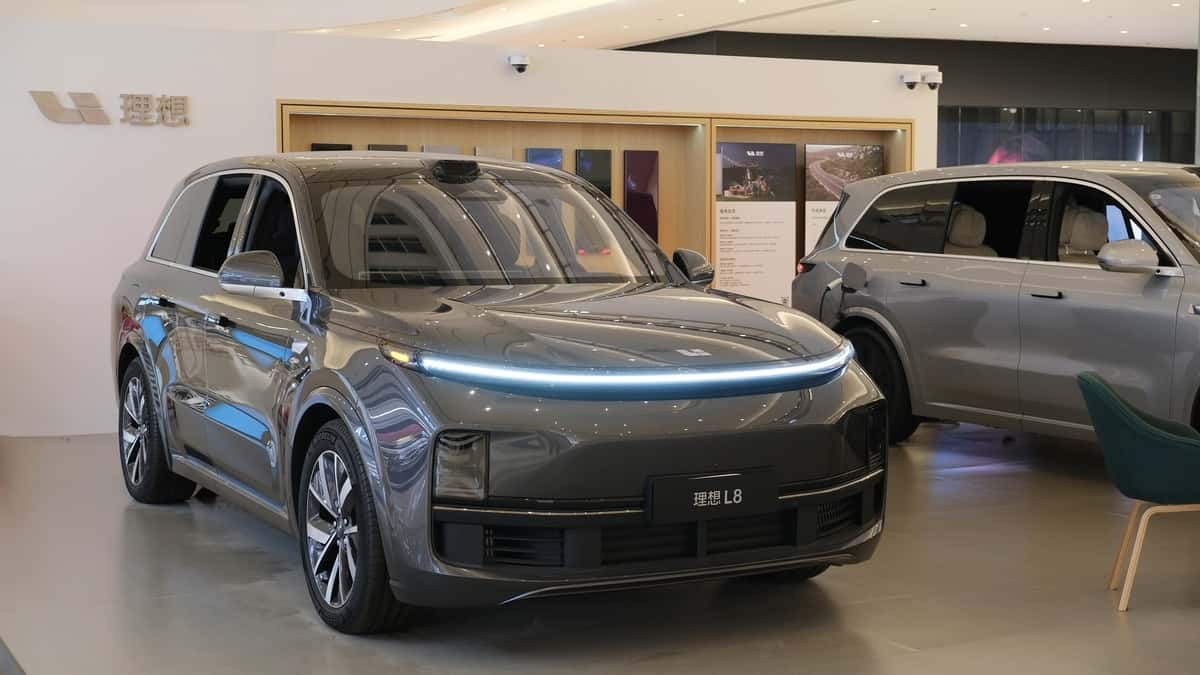
    Li Auto currently has a handful of electric vehicle offerings, including the five-seat Li L7, and the six-seat Li L8 and Li L9. These models are extended-range electric vehicles (EREVs) or plug-in hybrids.

    Notably, Li Auto initially developed and produced its maiden car, Li One EREV. However, the automaker phased out the model in 2022 with a total of more than 210,000 unit sales.

    Meanwhile, Li L9 debuted under the L-series on June 21, 2022. The Li L8 followed on September 30, 2022, while the Li L7 launched on February 8, 2023.

    Li Auto to launch its first BEV model

    Li Auto aims to expand its portfolio with its first all-electric model, Li Mega, in December. The brand expects the model to dominate its sales records when it arrives in the market. It will have a base price of more than 500,000 Chinese yuan ($68,400), Li Auto hints.

    Excitingly, the new BEV model’s display units will land in dealership stores in January 2024. Meanwhile, deliveries will begin the following month.

    Li Auto plans to produce the new Li Mega at its production plant in Beijing. In fact, it already started the trial production at its headquarters.

    However, the company has yet to disclose the official specifications of the new all-electric model.

    See Also:

    Apart from product portfolio expansion, Li Auto also aims to boost its Supercharging network in its home market, with plans to launch 300 new stations by the end of the year.

  • Li Auto plans to launch its first BEV model in December

    Li Auto plans to launch its first BEV model in December

    Chinese automaker Li Auto has just officially disclosed the launch date of its maiden battery-powered vehicle during the first day of the Chengdu Auto Show. According to the announcement today, Li Mega will arrive in the domestic market as early as December 2023. 

    Meanwhile, the model’s launch in stores will begin in January 2024. Customer deliveries will begin in February.

    Li Mega details

    Li Auto claims that the all-electric Li Mega will advance as the top-selling car in the world’s largest auto market. It will have a base price of 500,000+ yuan ($68,630) for all energy types and body styles.
    The new Li Mega will undergo production at Li Auto’s factory in Beijing. The automaker also announced that it has already begun the model’s trial production at its headquarters in China’s capital.

    It is also worth noting that the company has already finished the development of its Beijing factory. It will finally become operational by early 2024, Li Auto said.

    For context, Li Auto’s initial offerings were only EREV models, including the five-seater Li L7, six-seater Li L8 and Li L9.

    See Also:

    Li Auto also plans to expand its Supercharging network to support its growing NEV lineup. It aims to deploy a total of 300 Supercharging stations by the end of 2023.

  • Li Auto files to build 3 existing EREVs at new Beijing factory amid capacity shortage

    Li Auto files to build 3 existing EREVs at new Beijing factory amid capacity shortage

    Chinese automaker Li Auto plans to produce all three of its current vehicle offerings in its new Beijing production plant as capacity shortages substantially impede the company’s sales growth.

    Li Auto’s Li L7Li L8, and Li L9 successfully got into China’s Ministry of Industry and Information Technology (MIIT) latest batch of models with the opportunity to sell in the country on Friday. The public can proffer their comments about the list of models from July 14 to July 20.

    CnEVPost reported that Li Auto did not change and key specifications of the three models from the initial versions. The only apparent change was only the production location, indicating the Shunyi district of Beijing. 

    It is worth noting that the Li Auto trio are all extended-range electric vehicles (EREVs). The company initially produced them at its Changzhou factory. According to the company CEO, Founder, and Chairman, the factory has six-day production and one-day maintenance weekly.

    It apparently supported a weekly production rate of 7,500, which will increase to 8,000 units starting from the second week of this month.

    About the new Beijing plant

    The new production plant in Beijing was initially Hyundai’s first factory in China. Li Auto started developing its facility at the site in October 2021.

    The 6 billion yuan project is expected to begin production by the end of this year, as per the government announcement at that time.

    The announcement noted that the new factory could potentially have an annual production rate of 100,000 pure-play all-electric vehicles. On June 15, the MIIT published a document that shows Li Auto’s Beijing plant was allowed to build all-electric EVs and EREVS.

    On June 17, at its first Family Technology Day, the company also revealed that its maiden EV would have the name Li Mega.

    Li Auto’s sales performance

    Li Auto sold 32,575 units in June alone, topping the 30,000-unit milestone for the first time. 

    CnEVPost cited 36kr’s report that Li Auto demanded its supply chain to increase its sales forecast for H2 2023 to approximately 240,300 units on July 5.

    It must also be noted that the company is set to beat its 300,000 sales target in early 2023, with a potential 380,000 unit sales for the full year.

    Even more, Li Auto announced plans to attempt to hit the 40,000-unit delivery target in Q4 2023. That said, the company is now improving the Changzhou plant’s operational efficiency to guarantee timely deliveries.

    See Also:

    Li Auto’s decision to build its current EREVs offerings to a new plant may aid the company in achieving its delivery target of 40,000 units in Q4 2023. It will also enable the automaker to increase its production capacity, boosting its sales performance in the quarters to come.

  • Li Auto’s 800 V high-voltage superchargers were spotted in China

    Li Auto’s 800 V high-voltage superchargers were spotted in China

    Li Auto is reportedly starting to devise its 100% electrification strategy. However, all of its existing models are famous extended-range electric vehicles (EREVs).

    Chinese media outlet CnEVPost reports, citing an image shared in the local auto media outlet community Xchuxing, that Li Auto’s under-construction 800 V charging station is located at a highway service area in China.

    Li Auto’s charging station to open this March 2023

    The charging station is at the Mayong service area on the Guangzhou-Shenzhen Highway. The project overview sign discloses some relevant information, despite being wrapped.

    Apparently, it is an HPC (High Power Charging) supercharger, part of Li Auto’s energy service company in Dongguan, Guangdong.

    The charging station’s construction began on November 28, 2022, and is scheduled to be done on March 31, 2023, with four charging piles.

    All of Li Auto’s existing models are EREVs, primarily PHEVs with a battery range of nearly 200 kilometers longer than conventional PHEVs.

    Li Xiang, Li Auto’s founder, chairman, and CEO told a media communication last week that the company will allow two technology paths to develop in parallel. It includes maximizing range extender effectiveness and advancing pure electric vehicle technology.

    Li Auto’s product uses the 800 V silicon carbide high-voltage platform. Li said they would supposedly offer a range comparable to regular models with 100 kWh packs and cost roughly the same as EREVs.

    “By 2025, we will accumulate 3,000 supercharging stations, and the total cost will be RMB 10 billion ($1.45 billion).” 

    Li Xiang, Li Auto’s founder, chairman, and CEO

    After being spread out over five years, these costs are lower than one might think for a company with annual revenues of RMB 100 billion, CEO Li said.

    Li Auto confident of their charging station

    China has been encouraging car companies to build supercharging stations in the country since last year. That said, Li Auto is very optimistic about the coverage of supercharging piles along highways, per its CEO.

    According to Li, the company’s supercharging stations will be available to other models made on the 800 V platform, guaranteeing that each peer brand can charge efficiently.

    “Based on the normal price charged, the supercharger system will certainly not lose money after a smooth operation, and it still depends on its operations as to how much money it will make.”

    Li Xiang, Li Auto’s founder, chairman, and CEO
  • Li Auto to start beta testing AD Max assisted driving system, aims to be top AI firm

    Li Auto to start beta testing AD Max assisted driving system, aims to be top AI firm

    Li Auto reported that City NOA’s real-time HDMapNet-based road framework awareness algorithm could detect and make real-time decisions based on its surroundings, just like a human.

    Later this year, Li Auto will begin enabling some customers to participate in beta testing of its Tesla FSD-like developed assisted driving feature, becoming one of the first local car companies to offer the part.

    The extended-range electric vehicle (EREV) maker announced the plan on Wednesday at the launch of its new SUV, the Li L7, saying it will begin user testing of City NOA (Navigate on Autopilot) in the fourth quarter.

    AD Max assisted driving system

    The test will be conducted on automobiles with AD Max, Li Auto’s intelligent driving system that employs in-house sensing, decision-making, planning, and control software.

    Notably, the AD Max assisted driving system, which includes two NVIDIA Orin X smart driving chips and a LiDAR, is found in the Max versions of Li Auto vehicles.

    The Li L7 and Li L8 are currently available in Air, Pro, and Max versions, with the Air version, first revealed at yesterday’s launch and the company’s flagship SUV, the Li L9, currently available only in Max.

    Meanwhile, the company’s Pro version includes the AD Pro assisted driving system, the first automated driving system to have Horizon Robotics’ Journey 5 chip.

    Interestingly, the company claims that Li Auto’s City NOA is based on HDMapNet’s real-time road structure awareness algorithm, which can sense and make real-time decisions based on the surrounding environment, just like a human.

    Furthermore, Li Auto stated that the methodology liberates assisted driving systems from an over-reliance on high-precision maps, which is the valid technological path that will lead to the rapid expansion of City NOA and, in the future, fully autonomous driving.

    Supercomputing cluster with 1,000 PFLOPS

    Li Auto vehicles have driven over 510 million kilometers of intelligent driving, including 87.89 million kilometers of highway NOA navigation-assisted driving.

    According to the company, the Li L8 and Li L9 have gathered 160 million kilometers of active learning after delivery, totaling 7.2 million hours of active learning.

    Furthermore, Li Auto stated that it had built a supercomputing cluster with 1,000 PFLOPS of computing power and an automated labeling capacity of up to 35,000 clips per day to accelerate the development of autonomous driving technology.

    The company’s automated annotation effectiveness has increased 2,635 times over manual annotation efficiency, according to a 200-person annotation team.

    The supercomputing cluster outperforms XPeng’s self-driving computing center “Fuyao” and Haomo’s MANA OASIS by 600 PFLOPS.

    Li Auto to become top AI company in 2030

    Li Auto is the latest company to show ambition in building a developed assisted driving technology, intending to become the world’s top artificial intelligence company by 2030.

    City NOA, based on BEV sensing and Transformer models in EV storage, can be skilled end-to-end without relying on high-precision maps. The technology will be accessible by the end of 2023, according to Li Auto founder, chairman, and CEO Li Xiang in a January 28 all-staff letter.

    Li Auto claimed that this would be a crucial starting point for the transition of the physical world by software 2.0.

    XPeng’s automated driving system

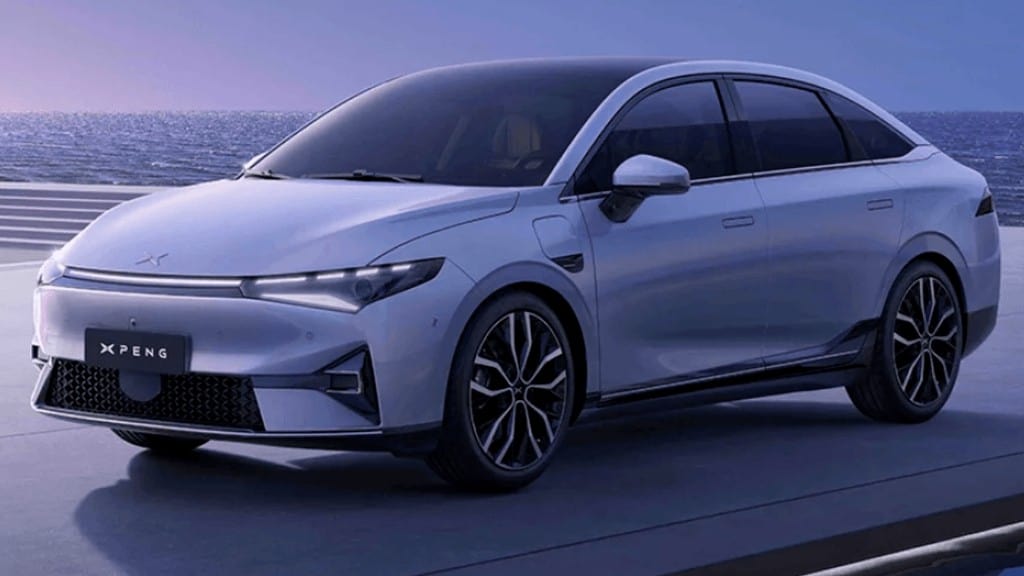
    XPeng is the Chinese electric vehicle company making the most progress in autonomous driving.

    On September 17, 2022, XPeng announced that its City Navigation Guided Pilot (City NGP) feature would be available on a trial basis in Guangzhou, the company’s headquarters. It became the first Chinese carmaker to introduce advanced driver assistance system (ADAS) features to the mass market for complex urban traffic conditions.

    At the time, some XPeng P5 buyers in Guangzhou could access City NGP via an OTA update.

    On October 21, XPeng made City NGP accessible to all qualified P5 sedans in Guangzhou, including those with LiDARs and XPilot 3.5 software.

    NIO announced NAD (NIO Autonomous Driving), its Tesla FSD-like software package, at the ET7 sedan launch on January 9, 2021, at the NIO Day 2020 event.

    Although the software is not yet available, the complete feature package of NAD will be available via subscription for RMB 680 per month.

  • Li Auto starts delivering Li L8 vehicles

    Li Auto starts delivering Li L8 vehicles

    On November 10, Li Auto reported that it had started to deliver the premium six-seater SUV Li L8. The Li L8 deliveries have begun a few days earlier than scheduled, as per CnEVPost.

    Li ONE’s successor or Li L9’s scaled-down version

    The Chinese electric vehicle startup’s first production model, the Li ONE, will be succeeded by Li L8, which takes after the classic SUV’s layout and interior space. Remarkably, it provides families with a six-seater luxury and comfortable alternative.

    In a post on WeChat, the automaker proudly reported the progress. It is worth noting that the Li L8 is basically a scaled-down version of its flagship SUV, the Li L9. Nonetheless, the automaker persists in marketing the SUV as the Li ONE’s successor.

    This approach avoids the use of the word “discontinued,” which has drawn criticism from current owners.

    Li L8’s progress

    In fact, Li Auto stated in its report that the number of orders is steadily rising. However, it did not specify the precise number of orders or delivery made yesterday.

    Since its debut, the Li L8 has gotten overwhelmingly favorable customer reviews and appreciation.

    On November 5, the Li L8 was made available for test drives at the first 116 Li Auto retail stores. On November 15, the company anticipates the other retail stores to start giving test drives.

    Pricing and deliveries

    The automaker disclosed then that the starting price of the SUV is RMB 359,800 ($49,700). The Pro and Max variants of the Li L8 start at RMB 359,800 and RMB 399,800, correspondingly. As for the deliveries, the automaker stated that they would start by late November.

    In retrospect, Li Auto held an event on September 30 to formally introduce the Li L8.

    Plans

    The Chinese automaker also announced at the event that the Li L7 is also set to accept pre-orders. It is reported to officially launch at the Guangzhou auto show in November.

    In December, the Li L7 will start visiting Li Auto outlets all around China. In February 2023, it will also start permitting customers to lock in their orders and prompt deliveries.

    Furthermore, the Guangzhou auto show’s organizing committee has disclosed that the event has been postponed because of the COVID-19 issue in Guangzhou. The dates of November 18 through November 27 were set aside for it. Records from local health officials reveal that on November 9, there were 2,507 asymptomatic cases and 500 confirmed cases of COVID-19 in Guangdong.

  • Chinese EV stocks declined after Li Auto and Xpeng reported sharp fall in August deliveries; Nio acquired growth

    Chinese EV stocks declined after Li Auto and Xpeng reported sharp fall in August deliveries; Nio acquired growth

    Following the significant decline in August deliveries announced by Xpeng and Li Auto, Chinese electric vehiclestocks were reported to have plummeted last Thursday. Meanwhile, according to CNBC, NIO saw an increase in August deliveries compared to the previous record in July.

    For the record, Li Auto’s deliveries in August declined by 56% to 4,571 vehicles from July’s deliveries of 10,422, a significant drop to 51% year-on-year. At the same time, Xpeng’s August deliveries decreased by 16% to 9,578 vehicles from 11,524 in July, yet that amount represents a gain of 33% over the previous year. Fortunately for NIO, its August deliveries climbed by 6% to 10,677 from 10,052 vehicles in July, reflecting an increase of 81.6% compared to the same month last year.

    Due to the resurgence of COVID19 in China and the nation’s challenging economic environment, EV players continue to experience supply chain interruptions which caused these significant deliveries to decline. For instance, Shenzhen, China’s tech hub, has just implemented COVID restrictions, while Chengdu, China’s largest city, went under lockdown on Thursday.

    Bill Russo, CEO at Shanghai-based Automobility, told CNBC that the numbers are “reflective of lingering supply chain issues as well as the fact that they’re on the premium end of the price range and with the weakening economy, people are looking toward affordability and that’s squeezing some of the higher priced models.”

    In the third quarter of the year, Xpeng announced last month that it envisioned delivering between 29,000 and 31,000 electric vehicles, which disappointed investors, especially with the significant drop in August deliveries compared to July. 

    In response, Xpeng President Brian Gu explained that the industry is approaching a “relatively slow season” as fewer people are visiting stores due to the COVID19 crisis. 

    The COVID outbreak has “severely affected” Li Auto’s supply chains, according to its president Yanan Shen, who also mentioned that there are still “disruptions and issues” on a recent earnings call. Moreover, Shen claimed that sales of the company’s flagship Li One sports utility vehicle had been disrupted.

    On the other hand, Bill Russo concluded, “Li has major new product launches with the L9 and L8 which is also impacting consumer demand for Li One. When new products come out, demand for the older model often suffers.”

    China announced last month that it would extend the tax exemption for the purchase of new energy vehicles through the end of 2023 in order to boost demand. Having said that, China’s EV market is becoming increasingly competitive. Along with the new electric vehicles from Li Auto, Xpeng intends to start shipping its new G9 SUV in October and introduce two additional vehicles the following year.