Tag: Battery Recycling

  • Daimler Truck North America teams up with Li-Cycle for EV battery recycling

    Daimler Truck North America teams up with Li-Cycle for EV battery recycling

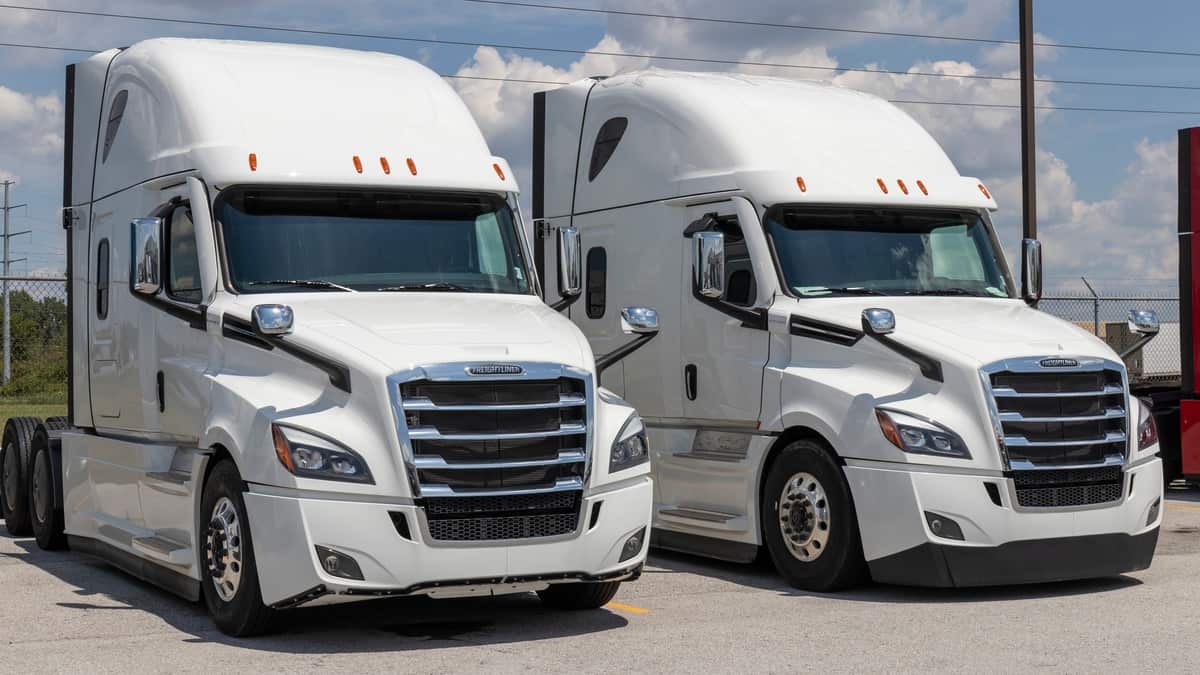
    Daimler Truck North America, the German commercial automaker, has just announced the new partnership it formed with battery recycling company  Li-Cycle on Thursday.

    DTNA inks deal with Li-Cycle to recycle EV batteries

    According to the press release, DTNA and Li-Cycle seek to establish a comprehensive circular economy throughout the electric truck maker’s operations to cut carbon footprint.

    Li-Cycle will closely work together with DTNA to recycle the latter’s li-ion batteries that have already achieved the end of their life cycle. They will focus on “repairing, remanufacturing, repurposing, and recycling” li-ion battery materials.

    The partnership is a crucial part of DTNA’s efforts to maximize electric vehicle battery lifespans and diminish material waste. In effect, the company can combat environmental issues worldwide.

    “We are proud to partner with companies such as DTNA to support their sustainability and carbon reduction goals. Our environmentally friendly and safe recycling technologies can recover critical materials to help create a domestic closed-loop battery supply chain, giving new life to these battery materials and helping power the world’s transition to clean energy.”

    Ajay Kochhar, Li-Cycle President and CEO

    Partnership advantages

    With the new partnership with Li-Cycle, DTNA moves forward to ensure that its electric trucks generate a lower carbon footprint throughout their entire lifecycle.

    Li-Cycle’s battery recycling approach enables DTNA to use these recycled materials for battery production rather than mining new minerals, creating a more sustainable closed-loop system.

    It also reduces the need to dispose of used EV batteries, which can be dangerous if not handled properly.

    Li-Cycle’s four pre-processing facilities dubbed “Spokes” are already online in different locations in North America, including Kingston, Ontario; Rochester, New York; Gilbert, Arizona; and Tuscaloosa, Alabama. The Spokes produce an intermediate product called “black mass,” consisting of critical battery materials like lithium, nickel, and cobalt

    The company aims to process the black mass at its future “Hub” facilities into battery-grade end products for potential reuse. However, it announced in October last year that the development of its flagship Hub battery recycling facility in Rochester was suspended to undergo review over liquidity issues.

    Growing focus on sustainability in the electric truck market

    DTNA and Li-Cycle’s battery recycling partnership demonstrates the growing focus on sustainability in the electric truck industry.

    It shows the companies’ dedication to addressing environmental concerns through employing responsible practices. It also highlights the importance of a closed-loop system for electric vehicle battery materials.  

    DTNA reduces waste and their reliance on mining by recovering and recycling critical battery minerals. It could potentially encourage other industry players to invest in similar technologies, accelerating the adoption of efficient recycling strategies.
  • GM steps up EV battery sustainability with Redwood Materials recycling partnership

    GM steps up EV battery sustainability with Redwood Materials recycling partnership

    American legacy automaker General Motors, through its joint venture with LG Energy Solution, has teamed up with Redwood Materials to recycle its battery production scraps at its existing Ohio and Tennessee factories.

    Deal covers GM’s battery production scrap in the US

    According to the press release, Redwood Materials partnered with Ultium Cells LLC to recycle the battery production scrap from its facilities in Warren, Ohio, and Spring Hill, Tennessee.

    https://twitter.com/IamMrDas_/status/1793629027124846770

    The two battery plants are reportedly each 2.8 million-square-foot operations that seek to exceed 80 GWh combined annual battery capacity.

    Redwood will receive the majority of the scrap from the manufacturing process. The material coverage includes both cathode and anode, as well as battery cell scrap.

    Redwood redefines battery material production sustainability

    Redwood plans to recycle Ultium’s scrap and process it into high-quality battery materials. It will then supply the recycled product to battery cell manufacturers as locally produced anode and cathode components.

    Battery cell manufacturing still sees a 5%-10% average scrap rate, which equates to ~10,000 tons of material per year for Redwoon to recycle.

    Redwood boasts that its battery recycling approach is much more sustainable than conventional processes. It sets high-efficiency standards by utilizing 80% less energy, generating 70% less CO2 emissions, and requiring 80% less water.

    Partnership strengthens North American battery supply chain

    With this groundbreaking collaboration, Redwood Materials now has contracts with most of the North American market’s battery cell makers.

    In addition, it aligns with Redwood Material’s objective to establish the region’s solid and sufficient battery supply chain. The American battery recycler and Ultium Cells can also aid the swift shift to electric vehicles and a clean energy economy.

    As car and cell companies continue to boost domestic production, Redwood pledges to support this industry growth with its innovative battery materials process.

  • Tesla co-founder JB Straubel to challenge China’s dominance with new EV battery colossus in Nevada

    Tesla co-founder JB Straubel to challenge China’s dominance with new EV battery colossus in Nevada

    Tesla co-founder and Redwood CEO JB Straubel has established an electric battery “colossus” in western Nevada as he seeks to challenge the strong dominion of China in the global battery industry.

    Initial look inside the Nevada EV battery recycling site

    Redwood CEO JB Straubel toured Bloomberg reporter Tom Randall (@tsrandall) at the company’s electric vehicle battery recycling site in Nevada on Thursday.

    As per the report, Redwood Materials officially launched its first commercial-scale production line for the fine black powder or cathode active material necessary for electric vehicle battery manufacturing.

    This key material apparently accounts for one-third of the overall battery cost. In that sense, the company aims to produce enough cathode active material to support an annual production of 1.3 million+ electric vehicles by 2028. 

    It is indeed a remarkable advancement for the US battery supply chain, considering its heavy reliance on China. China currently dominates 70% of the global lithium refining capacity. Moreover, it controls 95% of total global production for other key EV materials.

    In this sense, Redwood aims to challenge China’s dominance by developing a local supply chain with recycled critical materials.

    “The responsibility weighs on me. I remember feeling it in the early days at Tesla, when the other manufacturers hadn’t done crap yet, and we had a very palpable sense of holding the flag and running out into the field and saying ‘EVs are the future!’ We felt that if we failed, well, nobody’s going to follow. This is a little déjà vu.”

    Redwood CEO JB Straubel

    Constant innovation

    Redwood’s remarkable battery recycling progress attracted researchers from Stanford University. The company authorized them to access its data over the past two years to analyze the sustainability of its battery recycling process.

    One of the Standford researchers, Will Tarpeh, shared their discovery that the company is constantly changing its battery recycling process by the time they conclude analyzing part of the process.

    “Month to month, they were always tweaking. That made it challenging but was fantastic to see. They are navigating very well through a world where everything is shifting very quickly.”

    Will Tarpeh, chemical engineering assistant professor and one of the senior authors

    Revolutionizing battery production

    Impressively, Standford researchers discovered that Redwood’s battery recycling and refining processes can actually reduce CO2 emissions by a whopping 70% compared to the conventional recycling approach. It also yields a 40% reduction in CO2 emissions compared to competitors’ recycling processes.

    Redwood’s process does not waste any materials from the scrapped batteries. Moreover, it does not release any water from the facility apart from the sanitary waste. The facility is also 100% reliant on electricity, cutting the need for gas lines.

    In addition, Redwood built the facility for scale to support rapid disassembly of assorted batteries without manual sorting.

    “Once we’ve changed over the entire vehicle fleet to electric, and all those minerals are in consumption, we’ll only have to replace a couple percent each year that’s lost in the process. It will become obvious to everyone that it doesn’t make sense to dig it out of the ground anymore.”

    Colin Campbell, Redwood CTO, and ex-Tesla Powertrain Engineering Head

    In hindsight, CEO Straubel departed from Tesla in 2019 as he worried that the current supply of key battery materials could not match the surging demand for electric vehicles. Fortunately, he managed to establish Redwood as the largest lithium battery recycler in North America, making his decision to leave Tesla worthwhile.

  • Battery recycler Redwood Materials leads sustainable battery manufacturing in the US

    Battery recycler Redwood Materials leads sustainable battery manufacturing in the US

    American battery recycler Redwood Materials is making progress in its sustainable battery production push at its Nevada campus in the United States. 

    It marks a significant advancement in its goals to establish a closed-loop battery materials supply chain to sufficiently support the growing number of electric vehicles on the road.

    Redwood shares major advancements at its Nevada campus

    As Redwood Materials announced on social media platform X, its innovative hydrometallurgical facility is the first-ever commercial-scale nickel “mine” to launch in the US in years. Moreover, it is also the sole new source of lithium supply in the country in recent decades.

    Its ground-breaking hydrometallurgical process has a lithium recovery rate from retired batteries of a whopping 95%. Redwood Materials refines the extracted minerals and utilizes them to produce cathode-active materials. This process enables the company to reduce the environmental impact of battery production, potentially solidifying the country’s local supply chains.

    40% reduction in CO2 emissions compared to competitors

    Redwood also asserted that its reductive calciner has an annual processing rate of over 40,000 metric tons or about 15-20 GWh of battery materials. It also shared that Stanford University researchers found that its li-ion battery recycling processes reduce 40% carbon emissions compared to other battery recycling companies.

    Its closed-loop system also significantly reduced the environmental impact associated with mineral extraction and transport in traditional mining.

     “In conventional mining cycles, extraction and transport typically account for over 30% of the environmental footprint of mined cathode materials. Our recycling process significantly reduces this impact to less than 5%, demonstrating the efficiency of our circular supply chain.”

    Redwood Materials

    Utilizing 80% less energy compared to mining

    Moreover, Redwood indicated in its X post that its cutting-edge battery recycling process employs 80% less energy and 805 less water than traditional mining. In effect, it cuts 70% of the total C02 emissions of mining.

     “Compared to traditional methods of processing mined ore into battery-grade materials, our approach is significantly more sustainable. We use 80% less energy, generate 70% less CO2 emissions, and require 80% less water, setting new standards in resource efficiency.”

    Redwood Materials

    Redwood Materials’ significant progress in battery recycling in the US paves the way for more sustainable practices in battery materials production in the US. Moreover, it can also aid the government in cutting its heavy reliance on China for critical minerals.

  • Volvo, CATL partner to recycle old electric vehicle batteries

    Volvo, CATL partner to recycle old electric vehicle batteries

    Swedish automaker Volvo has just formed a new partnership with Chinese battery giant CATL on battery recycling and critical material reuse, CnEVPost reported.

    This new partnership is crucial for the companies’ goal of cutting electric vehicles’ carbon footprint and accelerating the shift to sustainable mobility. It came after a long-term agreement the two companies signed in 2019 for li-ion battery supply for Volvo and Polestar EVs.

    Volvo and CATL’s new partnership

    Volvo and CATL formally inked a memorandum of strategic cooperation on Tuesday to co-recycle electric vehicle batteries. 

    For context, EV batteries use a wide range of non-renewable metal components. Mining and processing these metals generate significant carbon emissions, which reduce the sustainability of electric vehicles.

    The two major industry players aim to lessen the CO2 emissions in electric vehicles’ entire life cycle by recycling and reusing old batteries.

    The partnership will leverage the old batteries from Volvo’s electric vehicles and those discarded during factory production. Then, its certified suppliers will disassemble these batteries to collect over 90% of the key minerals like nickelcobaltlithium, etc.

    CATL will then utilize these recycled battery minerals to make new batteries for the Swedish company’s new electric vehicle models.

    According to the battery giant’s marketing system co-president Tan Libin, Volvo & CATL’s agreement marks a significant advancement in establishing battery recycling, the closed-loop business model in China.

    Volvo’s electrification push

    Volvo is one of the first legacy automakers to join the electric vehicle drive. In a significant advancement, the Swedish company produced its final diesel-powered model in March. Now, it seeks to focus on developing and launching new electric vehicle models.

    Volvo Chief Executive Jim Rowan asserted that 2023 was a “key milestone” for the brand. Its battery-electric vehicle sales exceeded 113,000 units last year, representing a 70% year-on-year growth.

    In the same year, EVs hit a 16% share in the brand’s overall vehicle sales. These considered, Volvo expects this year to deliver a “tremendous growth.” CEO Rowan believes the new model launches, including the low-cost EX30, will propel Volvo’s sales growth in 2024.

    Starting at $34,950 in the US and €36,590 in Europe, it has already boosted the brand’s electric vehicle sales this year. In March, Volvo sold a total of 18,021 EVs. It indicates a notable increase from just 12,621 units in the same period last year.

    Volvo aims for 30% recycled material use in its portfolio by 2030

    The new partnership with CATL can help Volvo achieve its target of using an average of 30% recycled materials across its entire electric vehicle portfolio by the end of the decade. It will rise to at least 35% in the years succeeding 2030.

    In addition, Volvo also aims to hit carbon neutrality by 2040. In order to achieve this 2040 target, it strives to have its electric vehicles account for 50% of its total vehicle sales by the end of 2025. That rate will increase to 100% by 2030.

    Volvo and CATL’s partnership in battery recycling demonstrates their commitment to lower electric vehicles’ carbon footprint throughout their life cycle. 

  • VW-backed 24M Technologies achieves a battery recycling breakthrough

    VW-backed 24M Technologies achieves a battery recycling breakthrough

    MIT spinout and battery developer 24M Technologies has just introduced a new direct-material battery recycling process for electric vehicle batteries and battery energy storage systems (BESS).

    SemiSolid li-ion battery design

    Volkswagen-backed 24M Technologies claimed to have streamlined li-ion battery production with its innovative design, reducing the materials and steps to manufacture each battery cell.

    24M Technologies claims that the “SemiSolid” cell manufacturing process and chemistry-agnostic platform cuts manufacturing costs by up to 40%, boosts energy density, and improves safety and recyclability.

    For context, the SemiSolid battery chemistry employs gooey electrodes, eliminating the energy-exhaustive process of drying and solidifying the electrodes in traditional li-ion battery production.

    It also enables the company to cut 80% of the inactive materials common in li-ion batteries in the market today, including copper and aluminum.

    “Unlike the standard lithium-ion process and product, 24M’s SemiSolid cell manufacturing process and platform give rise to a new class of low-cost, high energy density, extremely safe and reliable lithium-ion cells that accelerate the path to a better energy future.”

    24M Technologies indicated in a press release

    “Liforever” battery recycling process

    24M Technologies also officially revealed the battery recycling process “Liforever” on Monday. It has the potential to advance as a game-changer for electric vehicle batteries and BESS, proposing an innovative way to recycle battery materials like lithium iron phosphate (LFP).

    Liforever reportedly paves the way for a more efficient and cost-effective battery recycling process, making it easier for electric automakers and battery makers to ramp up production.

    “Better battery recycling is essential for a sustainable energy future, but the use of binders in conventional cell production has made direct recycling impractical. Liforever solves these challenges by enabling the reuse of nearly every part of the battery cell without requiring the expensive, inefficient, and environmentally challenging processes used in conventional cell recycling.”

    24M Technologies CEO Naoki Ota

    So what?

    Conventional li-ion recycling techniques apparently require intensive procedures that tend to be expensive and toxic, which results in e-waste generation known as “black mass.” 

    The black mass compromises the key battery materials’ structure, making the recycling processes less financially viable, particularly for lower-cost LFP materials. Therefore, companies focus on extracting more expensive materials for reuse.

    In response, 24M Technologies’ Liforever maintains the original form of the active materials, ultimately avoiding black mass generation. As a result, this breakthrough enables the company to recycle all active materials, both from anode and cathode. 

    More impressively, 24M Technologies proudly announced that they developed the Liforever recycling process to adhere to current and future recycling regulations. The SemiSolid process is chemistry agnostic, enabling Liforever to be compatible with next-gen batteries regardless of their chemistry.

    All that said, 24M Technologies’ innovations will undoubtedly aid in accelerating the shift to electric vehicles and sustainable energy adoption through BESS. 

  • Top 20 Companies dominating the Global Battery recycling market

    Top 20 Companies dominating the Global Battery recycling market

    The following are the top 20 leading companies in the global battery recycling industry:

    No.CompanyKey Focus AreasNotable Achievements
    1UmicoreLithium-ion battery recycling, cobalt & nickel refiningClosed-loop battery recycling process, largest European battery recycling plant
    2EcobatLead-acid battery recycling, lithium-ion battery recyclingWorld’s largest lead-acid battery recycler, expanding lithium-ion recycling capacity
    3GlencoreLead & zinc mining, battery recyclingWorld’s largest zinc producer, investing heavily in battery recycling
    4Li-Cycle CorporationLithium-ion battery recyclingSpoke & hub recycling model, North American focus
    5American Battery Technology Company (ABTC)Lithium-ion battery recyclingHydrometallurgical recycling process, joint venture with Redwood Materials
    6East Penn ManufacturingLead-acid battery recycling, lead-acid battery productionLargest single-site lead-acid battery recycler in the world
    7RecycLiCo Battery Materials Inc.Lithium-ion battery recyclingHydrometallurgical recycling process, Canadian focus
    8Ganfeng Lithium Group Co., LtdLithium mining, battery recyclingWorld’s largest lithium producer, expanding into battery recycling
    9Exide TechnologiesLead-acid battery recycling, lead-acid battery productionGlobal leader in lead-acid battery production, growing recycling capacity
    10EnerSysLead-acid battery recycling, lead-acid battery productionGlobal leader in industrial and motive power batteries, strong recycling focus
    11Aqua MetalsLithium-ion battery recyclingAqueous recycling process, focus on rare earth metals recovery
    12Call2Recycle, Inc.Battery collection & recyclingNorth American leader in battery collection and recycling, non-profit organization
    13Retriev TechnologiesLead-acid battery recyclingClosed-loop recycling process, focus on sustainability
    14G & P Service Industries Inc.Lead-acid battery recyclingLarge-scale lead-acid battery recycler in the United States
    15ACCUREC Recycling GmbHLead-acid & lithium-ion battery recyclingEuropean leader in battery recycling, focus on innovation
    16FortumLead-acid & lithium-ion battery recyclingNordic leader in battery recycling, strong focus on sustainability
    17Doe Run CompanyLead-acid battery recyclingLargest integrated lead producer in the United States, strong recycling focus
    18RSR CorporationLead-acid battery recyclingLargest lead-acid battery recycler in Asia, expanding globally
    19Gopher Resource LLCLead-acid battery recyclingLarge-scale lead-acid battery recycler in the United States
    20Battery SolutionsLead-acid battery recyclingLeading provider of battery recycling services in the United States
    Source: Emergen Research, Saurabh Singh
  • Mazda partners with EV battery recycler in Australia

    Mazda partners with EV battery recycler in Australia

    Japanese legacy automaker Mazda, through its Australian arm, has just announced a new partnership with a local battery recycling startup to establish a circular electric vehicle economy.

    Partnership details 

    Mazda tapped Melbourne-based firm Infinitev to secure its help recycling old battery packs just two months after it killed its sole electric vehicle offering in the Australian market, Drive reports.

    Mazda Australia and Infinitev plan to recycle used batteries from the Japanese brand’s electric vehicles into new battery packs for future models.

    https://twitter.com/CarloverJet/status/1625807711215693827

    Mazda officially quit selling a dedicated electric car in the country when it withdrew the MX-30 small SUV from the local market in October 2023. Therefore, the recycling program will only include the brand’s large hybrid CX-60 and CX-90 SUVs.

    “As we continue to expand our lineup with electrified models such as the First-Ever, All-Hybrid Mazda CX-60 and CX-90 that each benefit from sophisticated battery technologies, it’s essential that we maintain a sustainable, multi-solution approach to this important aspect of a vehicles’ life cycle.”

    Mazda Australia marketing director Alastair Doak 

    Recycling process

    Infinitev emphasized that it initially conducts a safety check before starting the recycling process of the old electric and hybrid car batteries under its rigorous protocol.

    According to Manufacturers’ Monthly, it helps the company determine the ideal new application of the used batteries. 

    For instance, A-grade modules can support the production of new batteries for electric vehicle traction. B-grade modules can produce new battery energy storage systems (BESS), while C-grade modules can go to Infinitev’s partners for further material extraction.

    In the case of his new partnership, the recycled batteries can potentially arrive as new battery packs for Mazda’s future electric vehicles.

    “Our innovative reuse approach ensures that the transition to a circular economy is not only sustainable but also reduces waste and preserves valuable resources. Through responsible battery management, we can accelerate the adoption of electric vehicles and build a greener Australia. The holistic recycling process provided by Infinitev will therefore be a key solution in giving valuable ‘second life’ opportunities to the batteries used in our vehicles.”

    Dickson Leow, Infinitev General Manager 


    Mazda aims to only produce and sell battery electric and hybrid vehicles by the end of the decade. In that sense, the Japanese automaker plans to launch a new BEV model in 2025. Mazda North America CEO Tom Donnelly previously told Automotive News that the new model will sport a badge from the current portfolio, potentially the iconic CX-5 nameplate.

    Benefits

    Mazda’s partnership with Infinitev will pave the way for the establishment of the first circular electric vehicle battery economy. It will offer customers sustainable and green options to cut their overall carbon footprint in the EV sector.

    It can significantly alleviate the prevailing environmental issues associated with electric vehicle batteries amid the global shift to sustainable mobility. 

    It can also boost Australia’s electric vehicle push to lower carbon emissions in its transportation sector and to advance in the highly competitive global EV market.

  • Toyota expands partnership with Redwood Materials for recycled battery parts supply

    Toyota expands partnership with Redwood Materials for recycled battery parts supply

    Japanese legacy automaker Toyota announced Thursday the expansion of its partnership with American battery recycling firm Redwood Materials for critical electric vehicle battery parts.

    Agreement details

    According to the press release, Toyota Motor North America (TMNA) will source critical battery parts like Cathode Active Material (CAM) and Anode copper foil from Redwood for battery cells developed at the automaker’s $13.9 billion North Carolina factory that will launch production in 2025.

    Some of the critical battery parts will come from Toyota’s popular Prius model that are slated to reach the end of their lives soon after hitting the market about 20 years ago. Of course, Redwoods will be the one to extract the battery minerals and recycle them for Toyota.

    “Toyota Battery Manufacturing North Carolina’s start of production is right around the corner, and we’re thrilled to be procuring critical battery components and materials to filter into our battery ecosystem. We’ll continue to work toward the sourcing and recycling of battery materials here in the United States to maximize these precious resources and reduce our carbon footprint in the process.”

    Sean Suggs, TBMNC President

    Basically, they will collaborate in giving a second life to retired batteries from Toyota’s electrified models in California at Redwood’s Nevada recycling plant.

    “Today, in collaboration with Redwood Materials, Toyota is making a decisive move toward a sustainable future. They’re not only working to ensure responsible end-of-life management for their electric vehicles but also planning to build their next generation of EVs, in part, by using sustainable and domestically manufactured battery components.”

     Cal Lankton, Redwood Materials’ Chief Commercial Officer.

    Purpose

    The two major industry players seek to establish a circular battery ecosystem in the region, which will enable them to benefit from various federal and state programs that incentivize domestic battery assembly and recycling initiatives.

    In return, it will aid the US in cutting its heavy reliance on Chinese battery components, as noted by AXIOS.

    Toyota also aims to prepare for the anticipated growth of its battery recycling needs in the next few years due to the imminent retirement of the first-gen Prius batteries launched over 20 years ago.

    “Working with Redwood Materials, we are creating a circular supply chain to optimize logistics, expand refining, and ensure that the valuable metals recovered can be reintroduced into our future vehicles. 

    Accelerating our recycling efforts and domestic component procurement gets us closer to our ultimate goal of creating a closed-loop battery ecosystem that will become increasingly important as we add more vehicles with batteries to roads across North America.”

    Christopher Yang, Group Vice President, Business Development, Toyota Motor North America

    Partnership’s foundation

    Toyota and Redwood Material’s partnership builds on the previous pact they initiated in 2022. They primarily focused on piling and recycling Toyata’s retired hybrid and all-electric vehicle batteries.

    According to TechCrunch, Redwood refurbished or recycled end-of-life batteries from Toyota’s hybrid and electrified cars. It extracted critical minerals like copperlithiumcobalt, and nickel for remanufacturing if it cannot refurbish the batteries anymore.

    This partnership will significantly aid Toyota in recycling, remanufacturing, and repurposing almost five million operating units in its battery lifecycle ecosystem. It will also support the automaker’s 2035 goal of achieving carbon-neutral global operations and the 2050 goal of zero-emission vehicles.

  • Stellantis partners with Orano for EV battery recycling

    Stellantis partners with Orano for EV battery recycling

    Multinational automaker Stellantis and French nuclear fuels company Orano officially signed a Memorandum of Understanding (MoU) for a new joint venture for used electric vehicle battery recycling.

    Partnership details

    According to the press release published on Tuesday, Stellantis and Orano’s JV will recycle retired EV batteries and scrap from various gigafactories in Enlarged Europe and North America.

    The newly founded commercial recycling entity is expected to manufacture necessary materials named “black mass” or “active mass.”

    Orano’s upcoming hydrometallurgical factory in Dunkirk, France, will refine these materials to make them reusable for EV batteries. In effect, this process closes the circular economy loop.

    “The United Nations’ Sustainable Development Goals has confirmed the need to find solutions like this one with Orano to meet the challenge of natural resource scarcity and sustainability. 

    Guided by our Dare Forward 2030 strategic plan, Stellantis is committed to shifting its production and consumption model by fulfilling its circular economy commitment.”

    Stellantis Senior Vice President, Circular Economy Business Unit Alison Jones

    Orano’s role

    Orano will leverage its groundbreaking low-carbon technology to extract all the critical minerals from li-ion batteries and produce new cathode materials. 

    As mentioned, Orano’s hydrometallurgical facility will oversee the refinement of “black mass” or “active mass,” essential for reusing these materials.

    Orano’s pre-treatment method and advanced hydrometallurgy technology raise the metal recovery rates beyond 90%. 

    In effect, it allows automakers to achieve the mandated recycling rate levels into EV batteries and establish a sustainable business model.

    “We are delighted with this partnership with a major player such as Stellantis to work together in the recycling of used electric batteries. We are proud to bring our expertise and know-how with our innovative and disruptive process which allows a real closed loop. Orano continues its commitment to developing a low-carbon economy with the recycling of strategic materials for the energy transition and the circular economy.”

    Orano Group Director of Innovation, R&D and Nuclear Medicine, Magnets and Batteries Guillaume Dureau

    Significance

    The new joint venture will enable Stellantis to secure a supply of critical minerals like cobaltnickel, and lithium for electric vehicle battery production. 

    On the other hand, Orano can also benefit from the joint venture by expanding the reach of its innovative hydrometallurgy technology and expertise in recycling batteries. It will also aid the company in achieving its goal of contributing to establishing a low-carbon economy.

    In addition, the new JV will also aid Stellantis’ partners, after-sales network, and other automakers in disposing of their used batteries and scrap from gigafactories

    Production will reportedly commence in H1 2026 on Stellantis’ existing facilities. The automaker’s Circular Economy Business Unit also aims to boost recycling revenues by tenfold and reach €2 billion+ total circular economy revenues by 2030. 

    Notably, Stellantis is progressing well in achieving carbon neutrality across its operations by 2038.