— Mercedes-Benz USAㅤ (@MercedesBenzUSA) July 16, 2024
Mercedes-Benz to bring its 400kW EV chargers to Starbucks
According to the press release, Mercedes-Benz High-Power Charging and Starbucks formally formed a strategic partnership on Wednesday to deliver an “elevated EV charging experience” across the US.
The Mercedes-Benz EV charging unit aims to deploy DC fast charging stalls to more than 100 Starbucks stores nationwide.
Imagine a world where charging your car is as easy as ordering a cup of coffee.
Well imagine no more🔋☕
We’re launching a new collaboration with @Starbucks to install Mercedes-Benz High-Power Charging at over 100 stores across the US. Customers can experience fast,… pic.twitter.com/M2eUz3Yetd
— Mercedes-Benz USAㅤ (@MercedesBenzUSA) July 17, 2024
The first phase of the project will focus on the installation of Mercedes-Benz’s 400-kilowatt electric vehicle chargers at some Starbucks stores along Interstate 5. For context, the I-5 spans the area from Canada to Mexico along the West Coast.
These upcoming fast chargers on Starbucks sites will be available for all electric vehicles regardless of brand.
“The collaboration between two leading brands like Mercedes-Benz and Starbucks will uplift the charging experience for all EV drivers. Together, we seek to infuse delight into this facet of EV ownership through intentional experiences that make drivers genuinely excited to plug in. We envision a future where charging your vehicle is as easy as enjoying your favorite Starbucks.”
Andrew Cornelia, Mercedes-Benz High-Power Charging President and CEO
Partnership details
Starbucks will not contribute any amount to the installation costs. The Seattle-based coffee giant will simply provide the needed space in its parking lots for the charging stalls and other equipment.
“At Starbucks, we have a long history of bringing renewable and clean energy projects to connect communities that lack the infrastructure. Partnering with Mercedes is the next step in expanding our EV charging offerings so our customers can refuel sustainably while they enjoy Starbucks.”
Michael Kobori, Starbucks Chief Sustainability Officer
It is also worth noting that Mercedes will not shoulder the overall costs of this EV charging deployment project under the $1 billion plan to install 2,000 new charging hubs across the globe. American renewable energy giant MN8 Energy will reportedly contribute to 50% of the total funding.
EV charging network expansion
Mercedes-Benz High-Power Charging officially launched its inaugural EV charging site in North America at the company’s headquarters in Sandy Springs, Georgia, in November 2023.
This project is also part of the said $1 billion charging network investment of Mercedes-Benz HPC North America, a joint venture between subsidiaries of Mercedes-Benz Group and MN8 Energy.
Since then, the network has inaugurated a dozen locations with 400 kW EV chargers in various locations, including Texas, Alabama, Georgia, Florida, South Carolina, Tennessee, and Kentucky.
The newly formed partnership with Starbucks is a crucial part of Mercedes-Benz’s efforts to expand its DC fast charging network to almost 50% of US states over the next “12-18” months.
Driving an electric Mercedes includes charging it – and we’re making sure it’s fast and reliable.
Mercedes halts development of MB.EA large EV platform With EV demand slumping, Mercedes will stop developing the MB.EA architecture for future E-Class and S-Class models. Instead, it will continue to refine the existing EVA2 platform.
— Nicklas (MED) 🇸🇪🚗🚀✨ (@NicklasNilsso14) May 15, 2024
Mercedes-Benz abandons MB.EA Large platform
Mercedes-Benz originally planned to utilize the next-gen MB.EA Large platform for the successors of the EQS and EQE. It planned to launch the MB.EA Large platform in 2028.
Mercedes-Benz frena desarrollo de plataforma para eléctricos de lujo Planeada para la próxima generación de los EQS y EQE en 2028, la decisión habría sido tomada debido a las bajas ventas de los actuales modelos.https://t.co/Kh0w7TMNV3pic.twitter.com/NDiScxem4a
However, the local report suggests that the company suspended the development due to weak sales of the current-gen models.
According to four insiders with knowledge of the matter, the project cancelation will yield estimated savings of $4.3 billion to $6.5 billion in development and retooling costs.
Notably, the MB.EA Large platform was only one of the two MB.EA platforms Mercedes-Benz planned to launch. The other one, dubbed “MB.EA Medium,” is still under development. It will soon support the next-gen Mercedes EQC sedan and SUV.
In this sense, the company’s plans to launch the next-gen EQS and EQE sedans and SUVs remain unchanged. However, they may use the upgraded EVA2 platform instead of the now-canceled MB.EA Large platform.
FY 2023 and Q1 2024 sales results
Mercedes-Benz’s electric vehicle sales only reached a total of 43,202 units in 2023. It indicates an astounding year-on-year growth of 248%.
Despite that growth rate, this sales performance remains far from impressive. For reference, electric vehicle startup Rivian overthrew the German legacy brand with more than 50,000 EV sales last year.
In the first quarter of 2024, Mercedes-Benz saw a 4.5% drop in electric vehicle sales to only 8,336 units in the US compared to Q1 2023.
With all that said, it is no longer surprising if Mercedes-Benz had actually ditched the MB.EA Large platform development. The project cancellation might be the appropriate move right now, potentially enabling the German automaker to work on stimulating demand before spending an enormous amount.
Scaling back EV plans
The reported MB.EA Large platform development cancellation occurred after Mercedes-Benz delayed its target of hitting 50% share of electrified cars from 2025 to 2030.
Young, sexy girls totally naked. Good quality. This is great stuff! http://bit.ly/cBfQkH
In addition, the German automaker also scaled back its goal of selling only electric vehicle models by 2030 in select markets.
Mercedes-Benz’s recent backtrack is expected to lead to the development of the successors of today’s seventh-gen S-Class, fourth-gen GLE SUV, third-gen GLE Coupé, and third-gen GLS as ICE-powered cars with plug-in hybrid powertrains. These models will ride on the upgraded version of the MRA platform and hit the market alongside their electric counterparts based on the upgraded EVA2 platform.
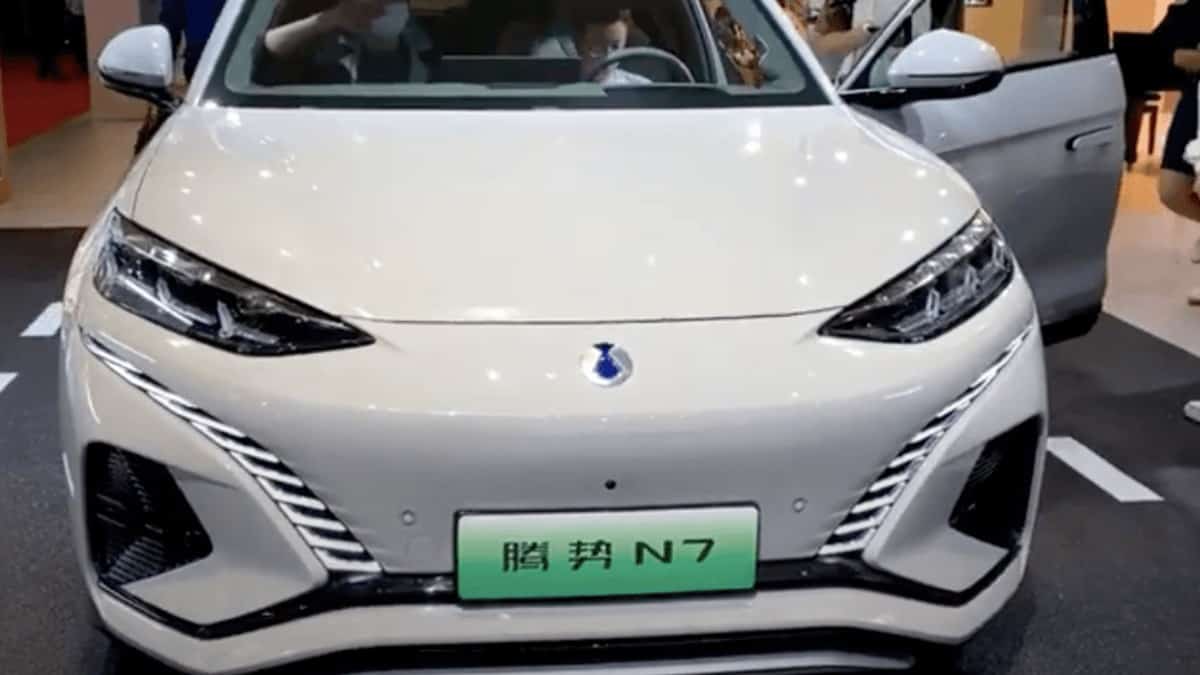
Chinese electric vehicle giant BYD and German automaker Mercedes-Benz are set to introduce a new co-branded luxury electric vehicle under Denza in 2024. Before that, the partners stirred up some interest by releasing a unit for road testing in Stuttgart.
BYD and Mercedes-Benz recently teased their new co-branded luxury electric vehicle, which is expected to make its debut as early as this year.
Denza is conducting tests on its latest model in Stuttgart, Germany, with plans for a market release by the end of this year. Denza is joint venture between BYD Auto Industry and the Mercedes-Benz Group. The sleek design of the vehicle, featuring a family-style front end and… pic.twitter.com/xyuocJgA4y
— DriveGreenLiveGreen (@DriveGreen80167) April 5, 2024
As you can see in the photos attached to the X post, the new Denza EV wears a heavy camouflage. Nonetheless, its sleek and aerodynamic design is very evident.
Denza claims the new model’s clean and streamlined design tops “in electric elegance that is sporty yet luxurious.” This is unsurprising, given that famous car designer Wolfgang Egger led the design of the new Denza EV.
Ex-Audi and Lamborghini brand designer Wolfgang Egger proudly said that the new vehicle’s design is “simultaneously spirited and deluxe.” The new EV also uses BYD’s new energy technology, with Denza marketing it to be “the pioneer in building Chinese new energy luxury sedans into world-class vehicles.”
BYD is also optimistic that the new model will significantly aid Denza’s global expansion push.
About Denza
BYD and Mercedes-Benz (Daimler) formally established the Denza brand in 2010 as a 50:50 joint venture. However, the German automaker has since cut its stake in the JV to just 10%. Therefore, BYD now controls the majority at 90%.
Denza D9: Founded in 2010 as a joint venture between BYD and Mercedes, the Germans reduced their stake from 50 to just 10% in late 2021. The D9 is an all-electric Lexus LM rival which seats seven and will arrive in Europe at some point this year. pic.twitter.com/mMnZtH1LVS
Denza was among the first JVs with a primary goal of cutting vehicle emissions. BYD was a battery giant then, with a significant push to advance as a major automaker.
Mercedes took the chance to team up with the determined Chinese company as China’s auto market started to transition to electric vehicles.
BYD’s Q1 2024 sales
BYD sold more than 300,000 all-electric vehicles in the first quarter of 2024, representing a 13% year-on-year increase. Meanwhile, its plug-in hybrid sales reached a total of 324,284 units in the same period, up 14.5% YoY.
🔥BREAKING: BYD's 300,114 BEV sales for Q1 2024 imply that Tesla has yet again become the world's largest electric vehicle maker in a given quarter. ▫️BYD managed to outsell Tesla only ever in a single quarter (Q4'23). ▫️BYD's numbers rather low sales in Q1'24 may imply BYD's… pic.twitter.com/sH56h9tgaf
As for the BYD and Mercedes-Benz JV, Denza’s new energy vehicle sales reached a total of 10,279 units in March 2024.
In Mar 2024, #Denza delivered a total of 10,279 vehicles, -1.1% YoY, +123.6% MoM. From Jan to Mar, #Denza has accumulated deliveries of 23.9k units, -0.9% YoY. pic.twitter.com/foYu8maes2
BYD and Mercedes-Benz’s new co-branded luxury EV is expected to hit the market by the end of 2024, potentially bolstering their sales performance in the following quarters. We expect to learn more about the model in its debut this year ahead of the market launch.
German legacy automaker Mercedes-Benz plans to launch 25 new or revamped vehicles with affordable price tags in 2024 as it seeks to expand its market reach, BNN Breaking reports.
Mercedes-Benz to balance luxury with affordability
Mercedes-Benz plans to roll out 25 new or updated offerings to its dealerships throughout this year, focusing on cheaper vehicle models.
In that sense, these planned vehicles will be the automaker’s major sales drivers this year instead of more expensive battery-powered electric vehicles.
The move is apparently Mercedes-Benz’s response to the declining economic landscape and rapidly evolving dealership demands.
Customers seem to prefer alternatives to all-electric vehicles partly due to their high prices and other concerns such as lack of charging infrastructures and limited range.
Product portfolio expansion
Mercedes’ updated sales strategy will enable it to execute a diverse powertrain strategy that offers internal combustion engine-powered (ICE), hybrid (HEV), and battery-electric vehicle (BEV) models.
It reflects the recent move by American legacy brand General Motors, which scaled back from its intensified electrification push to bring back its hybrid offerings.
According to the report, Mercedes will cancel its electric vehicle strategy in the US market and shift its focus to ICE and HEV models.
All that said, it seems that customers are not yet ready to fully shift to electric vehicles, prompting automakers to consider what they actually prefer to buy.
“Mercedes is keeping touch with reality instead of trying to alter it. “The past year has shown that you can only fly so high before you become out of touch. Entry-level vehicles allow consumers to get a taste of what is to come – if they can afford to stay within the brand’s family.”
Edmunds Insights Director Ivan Drury
It will be interesting to see which automaker in the US will be the next to shift electrification strategy amid the current market situation, including high inflation and interest rates. These recent moves by major players highlight the need for the electric vehicle industry to continue to strive to make battery-powered models more affordable for most prospective buyers.
The recent press release asserted that Stellantis and Mercedes, along with Total Energies, have launched one of the European automotive sector’s biggest fundraising initiatives in history.
Several banks financing the debt deal include BNP Paribas, ING, Deutsche Bank, and Intesa Sanpaolo. The governments of Germany and France also participated in the fundraising with approximately €1.3 billion share. Italy has not yet allocated any amount to the funds.
“The transition to the electrification of vehicles is still on the way. To meet this immense challenge, our customers must be able to rely on robust and reliable European players like ACC, capable of delivering high volumes of competitive batteries with a low CO2 footprint.
With this world-class financial community supporting us, we see clear evidence of the confidence that is placed in the ACC project. Beyond this operation, we will determine our needs as and when we conclude additional contracts. We are resolutely looking to the future, with a view to achieving our objective of growing our production capacities.”
Yann Vincent, ACC Chief Executive Officer
Planned gigafactories
As of now, ACC produces li-ion batteries in an existing gigafactory in Billy-Berclau, France.
With the fresh funds, the battery joint venture’s battery production will soon expand with a new factory in Kaiserslautern, Germany. There will also be two factories in Termoli, Italy, and one factory somewhere in France.
The company expects the project to generate a total of 6,000 new job opportunities for locals around the area, reports Reuters.
“€4.4 billion secured in one of Europe’s largest-ever debt raisings in this industry to develop 4 blocks of production in addition to the one currently in operation in France.”
As mentioned, the accumulated funds from the debt deal will fund Stellantis-Mercedes battery JV’s production ramp-up with the imminent development of four new gigafactories in the EU in the following years.
It would play a significant role in boosting the region’s electric vehicle industry to compete with China’s dominance and total control over the global battery supply chain.
In 2022, China’s battery-electric vehicle production reached some 5.47 million units. It accounted for over 50% of the global volume, according to Statistica’s data.
In Q4 2023, Chinese giant BYD overthrew American pioneer Tesla with 526,000 unit sales (vs. 484,500). Alarmingly for the European EV industry, China projects to develop 160 new gigafactories by 2030. In contrast, Europe is only expected to have 36 new gigafactories by the same period.
Therefore, the upcoming four new battery gigafactories of ACC will significantly aid the EU in its efforts to catch up with China in both the electric vehicle and battery industry.
ACC aims to invest about €7 billion (about $7.5 billion) in the early stages of its development by adjusting the shareholdings of TotalEnergies SE’s Saft, as per its official website. Stellantis and Mercedes are also expected to boost their respective equity stakes in JV.
According to the press release, the seven major electric vehicle players officially obtained approval from all the relevant regulatory agencies to kick off the IONNA charging network’s operations in North America.
This significant development authorized IONNA to launch in the US market in late 2024, followed by Canada at the later phase of the project.
The charging experience of the future. ⚡
Stellantis and its six automotive joint venture partners launch operations in North America for IONNA, the high-powered electric vehicle charging network, alongside its newly appointed CEO Seth Cutler. Learn more: https://t.co/xhvtrVXkz2pic.twitter.com/6EjWNuUFwi
In addition, the joint venture has also named its first Chief Executive Officer, who is an electric vehicle charging expert. CEO Seth Cutler was initially a former Senior Vice President of Technical Operations at EV Connect, then advanced as the President and COO. He also worked at General Electric and the early emergence of Electrify America.
“I am honored to lead IONNA and work alongside these esteemed automakers in shaping the future of electric mobility. Our shared commitment to creating an extensive, high-powered charging network reflects our dedication to revolutionizing the entire EV charging experience and helping to drive widespread EV adoption.”
IONNA CEO Seth Cutler
About IONNA
IONNA is the official name of the joint venture of seven major OEMs in North America, including BMW, GM, Honda, Hyundai, Kia, Mercedes-Benz, and Stellantis announced in July 2023.
We’re creating an unprecedented new charging network joint venture with six other major global automakers to expand access to high-powered charging in North America and accelerate #EV adoption. pic.twitter.com/EwDGXKpVaq
As EV-a2z reported, the joint venture seeks to install 30,000 high-powered charge points throughout urban and highway sites in the region by the end of the decade.
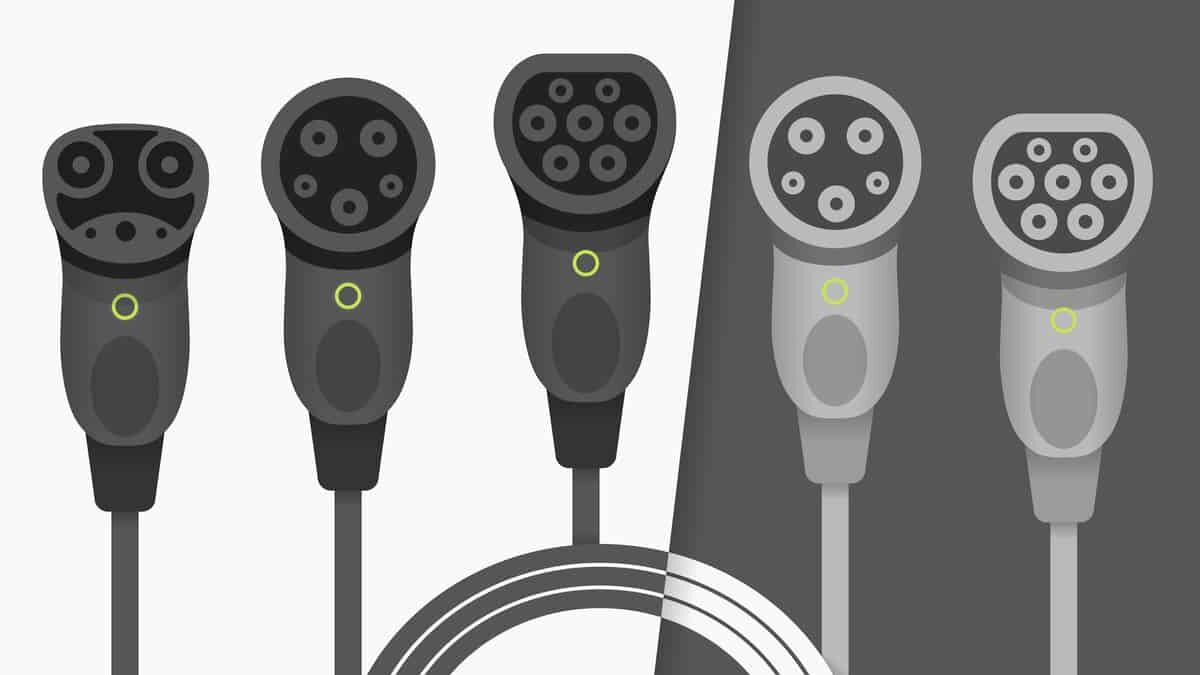
IONNA aims to support all electric vehicle owners regardless of the brand. In addition, it will also feature both the CSS and NACS plugs to access government subsidies.
Benefits
The imminent launch of IONNA’s operation in North America will undoubtedly encourage more drivers to join the shift to electric vehicles without worrying about the lack of charging infrastructure. It will aid in bridging the gap between the surging number of EVs and the number of public charging stations in the region.
In return, IONNA will enable the seven OEMs to compete with Tesla Superchargers in North America, which is currently regarded as the most reliable and enormous charging network. In fact, it is among the key factors that prompt customers to choose Tesla cars over other brands.
It is also interesting to note that six of these players, excluding Stellantis, also committed to adopting Tesla’s North American Charging Standard (NACS) starting this year.
With IONNA, the seven OEMs seek to become North America’s leading high-powered charging provider for electric vehicles, promising to offer seamless, integrated, and “best-in-class experience.”
German legacy automaker Mercedes-Benz has finally launched its first all-electric van, eSprinter, in the US market. According to the press release, the new Mercedes-Benz eSprinter van will offer an “impressive combination of efficiency, range and load capacity” with a wide range of cutting-edge technologies.
Mercedes-Benz launched their new eSprinter EV van in the US with starting price of $72K, 113kWh battery and 273 mile range. pic.twitter.com/qm60OihWHa
Mercedes-Benz officially announced on Monday that interested US customers can now order the all-new eSprinter van at local dealerships for a $71,866 starting price.
The German automaker’s move to bring the eSprinter van to the US is primarily prompted by its goal to promote sustainability and emission-free fleet operation. Apart from that, it will also enable Mercedes to become one of the early entrants in the country’s electric van market. As of now, the US only has a few electric van models, with Ford eTransit leading the market.
“The Mercedes-Benz eSprinter underlines our claim to ‘Lead in Electric’ and kicks off the next stage of our electrification strategy. Its versatility and flexibility make the new eSprinter the ideal vehicle for a wide range of applications.”
Mathias Geisen, Head of Mercedes-Benz’s Van Division
In Europe, the eSprinter features a smaller 56 kWh battery pack for a 59,990 euros base price. It remains unclear if the German automaker plans to also offer the 56 and 81 kWh battery packs in the North American market or if these are exclusive to Europe. Interestingly, the press release indicated that the 113 kWh battery is “the largest battery available” for the electric van.
Apart from the remarkable performance and cargo capacity, the Mercedes-Benz eSprinter also boasts a wide range of in-car technologies.
The all-electric van offers the Mercedes-Benz User Experience (MBUX) as an option, which activates a voice-control assistant (Hey Mercedes) to aid drivers in common tasks such as destination navigation and charging station location.
In addition, it also boasts advanced driver-assistance systems (ADAS), such as the following:
Active Brake Assist
Blind Spot Assist
Attention Assist
Future owners of the new Mercedes-Benz eSprinter can also access more than 85,000 public charging points from its own charging network and other partners, including those of ChargePoint, Electrify America, and EVgo.
Interested buyers can get the Mercedes-Benz eSprinter at US dealerships for a starting price of $71,866. The German automaker also allows leasing for $998 for 36 months. However, the lessee must pay $6,386 at signing.
Electric automakers are experiencing heightened competitiveness as the number of BEVs on Australian roads significantly increased in 2023. As per the Electric Vehicle Council, the Australian market for all-electric vehicles has been chiefly dominated by three models: the Tesla Model Y, Tesla Model 3, and BYD Atto 3. Enclosed below is an exhaustive compilation of presently available electric vehicles, intended to guide those interested in specific automakers. Please note that the driving range provided for all vehicles adheres to the Worldwide Harmonised Light Vehicles Test Procedure (WLTP) standards and may differ in practice due to factors such as individual driving patterns, cargo load, and traffic conditions.
Abarth
The Italian automotive founded by Carlo Abarth in 1949 is renowned for its rich history and passionate pursuit of performance. Abarth as a division of Fiat focuses now on producing electric vehicles. The first EV released is the Abarth 500e Turismo, a front-wheel drive hatchback with a 4-seater capacity. A variant of 500e, that comes with Abarth body side decals, the limited Edition Abarth 500e Scorpionissima is released with only 1,949 vehicles produced and only 219 of them are available in Australia.
Founded in 1995, BYD, a Chinese marque has developed blade batteries for its electric vehicles. Available in Australia, BYD offers electric SUVs, under Atto 3 family, the BYD Atto 3 Superior Standard Range and BYD Atto 3 Superior Extended Range that has a 310Nm maximum torque and 150kW maximum power. Under the ‘Ocean Series’ they produced hatchback variants with FWD drivetrain, the BYD Dolphin Dynamic, BYD Dolphin Premium, and the limited edition, the BYD Dolphin Sport with 1,000 units for sale. Catering sedan body style, three variants are available, the BYD Seal Dynamic, BYD Seal Premium, BYD Seal Performance.
Cupra, an established marque from Spain launched its first fully electric vehicle, the Cupra Born that can deliver a driving range of up to 511km on a full charge. It is a hatchback with a powerful battery of 82kWh, integrated with a driving safety system that controls the driving speed to maintain a safe distance from the vehicle ahead and has a park assist.
Fiat, an Italian marque with classic automobile design shifted to electric mobility as they produced their first ever pure electric vehicle, the Fiat 500e that can travel in a distance of 312km with its 42kWh battery capacity.
Luxury car is what Genesis brand is famous for, and as it entered the automotive market in Australia, it offered competitive SUVs and sedans that redefine the auto luxury experience. Genesis embarked on producing electrified vehicles with its platform, the Electric-Global Modular Platform (E-GMP). The first vehicle under this platform is the Genesis GV60 aerodynamic body and high performed SUV. It has ultra-rapid charging that only takes 18 minutes* to charge from 10-80% and a variant, the Genesis GV60 Performance. Other available luxury electric SUVs are the Genesis G80 and the Genesis GV70 with a maximum power of 272kW and 360kW respectively and 700Nm torque.
Great Wall Motors or GWM has been a significant automaker in Australia since 2009, offering a variety of SUVs, Ute, and hatchbacks. GWM’s first step in the EV era is the production of Ora, a small 100% electric power hatchback with a driving span of up to 420km depending on the variants: GWM Ora Standard Range, GWM Ora Extended Range, GWM Ora Ultra Extended Range, and GWM Ora GT Extended Range. Currently, GWM Ora is one the most affordable EVs in Australia as the offer of a $4000 temporary discount will be available on Ora models ordered and delivered before the 31st of March or till the stocks last.
A Korean marque entered and was established in the Australian automotive industry in the 1980s by providing budget-friendly vehicles in the market. Hyundai, a well-known automaker is now focused on its commitment to crafting electrified vehicles. The award-winning SUV, the Ioniq 5 has a driving range of 454km up to 507km while Ioniq 6 sedan with 614km depending on the variant model. Hyundai Ioniq 5 and Ioniq 6 is a two-wheel drive that has a standard and extended range available. The Hyundai Ioniq 5 Dynamiq and Hyundai Ioniq 5 Epiq AWD have available AWD and 2WD variants that can travel 454km to 476km on a full charge. Hyundai Ioniq 5 N AWD, an all-new member of Hyundai has a variant that has a vision roof and an electric range capability of 625km. There are two variants of Ioniq 6 sedan, the Hyundai Ioniq 6 Dynamiq and Hyundai Ioniq 6 Epiq with available 2WD and AWD options. For sporty styled electric SUV selection, Hyundai offers the Kona Electric version with four available variants that have the capacity to travel 370km – 505km.
Kia is a Korean automotive manufacturing company that’s been with the Australian market since 1997 and has been consistently part of the top brands in the country. Kia has a reputation for producing reliable cars and their commitment to automotive innovation. Kia sells four available grades under EV6, including the longest range, the Kia EV6 Air (RWD) single motor, a modern electric crossover SUV with a 77.4kWh battery that goes up to 528km, and the GT models including Kia EV6 GT-Line RWD single motor, Kia EV6 GT-Line AWD dual motor, Kia EV6 GT AWD dual motor. In addition to the electrified crossover SUV is the Kia Niro which has a lesser battery capacity of 64.8kWh but has an outstanding electric range of 460km (WLTP) available in two different trims, the Kia Niro Electric S and Kia Niro Electric GT-Line. The Kia EV9 is a 7-seater SUV with three variants released, the Kia EV9 Earth and, the Kia EV9 GT-Line both have AWD drivetrain and the rear-wheel drive Kia EV9 Air.
LDV Automotive was founded in the UK and was known as a manufacturing company for vans and trucks. LDV in Australia started in 2014, it offers a range of commercial and passenger cars including pure electric vehicles. The first electric dual cab ute in the country is the LDV eT60 ute that has a capacity of up to five people. LDV eDeliver 9 is an electric large van with two variants the Long wheelbase /Mid roof and LDV eDeliver 9 Long wheelbase /High roof that has a maximum speed of 90km/h and an electric range of 280km and 275 km respectively. A full-sized luxury electric people mover is crafted with a 90kWh battery size that can cover up to 440km on a single charge depending on the variant available including LDV Mifa 9 Mode, LDV Mifa 9 Executive and LDV Mifa 9 Luxe with a capacity of seven passengers.
One of the leading luxury Japanese marques in Australia is Lexus due to its reputation for safety and comfort by incorporating sophisticated driver-assistance systems and introducing innovative comfort features in its vehicles. Lexus offers two electric vehicles consisting of two variants each. Lexus UX300e (Lexus UX300e Luxury and Lexus UX300e Sports Luxury) is a compact SUV integrated with Lexus Safety System+ and high-performance features that can achieve an electric range of 440km with its 72.8kWh battery capacity. Lexus providing a longer electric range, it produced Lexus RZ 450e medium SUV that has two available grades, the Lexus RZ 450e Luxury and Lexus RZ 450e Sports Luxury, both can reach 470km on single charge.
Established in 1920 in Japan, Mazda is famous for producing small to large SUVs and LCV range. Now, Mazda is on its way to joining electric mobility with its Mazda MX-30 E35 available only to Astina trim. It is a front-wheel drive 4 4-door wagon with a 200km driving range and was released to the Australian market on January 2023.
A German marque founded in 1926, Mercedes-Benz is recognized for its luxury and vehicles with power engines. A diverse lineup of vehicles is sold in Australia including numerous pure electric vehicles such as the EQC mid-sized SUV, the first EV produced by Mercedes-Benz, next is the EQA, the smallest electric SUV in the Mercedes-Benz range consisting of the Mercedes-Benz EQA 250 single motor and Mercedes-Benz EQA 350 4MATIC dual motor with a panoramic sunroof. Other electric SUVs available are EQE SUV, Mercedes-Benz EQS 450 4matic SUV, and EQB with two available variants, the Mercedes-Benz EQB 250 and Mercedes-Benz EQB 350 4MATIC with the same 66.5kWh battery size as EQA. There are two available sedan models, the EQE and EQS. Three variants under the EQE model comprise of a single-motor Mercedes-Benz EQE 300 and the dual-motor Mercedes-Benz EQE 350 4Matic and Mercedes-AMG EQE 53 4Matic+. EQS Sedan long offers two variants, the Mercedes-Benz EQS 450 4matic and Mercedes-Benz EQS 53 4MATIC+ that can travel up to 590km with its electric motor. Mercedes-Benz EQV is a people mover for at least 7 people and has an electric range of up to 418km as per claimed.
A British iconic marque founded in 1959 by Alec Issigonis. MINI can easily recognized for its compact and stylish presence of boxy silhouette and rounded headlights. New in the MINI family powered by lithium-ion high-voltage batteries are the MINI Cooper E and MINI Cooper SE hatchbacks. According to MINI Australia, Cooper E has a battery capacity of 40.7kWh with an output power of 135kW and may cover a distance of 300km. Meanwhile, the MINI Cooper SE has a bigger battery size and can travel as much as 400km on a full charge.
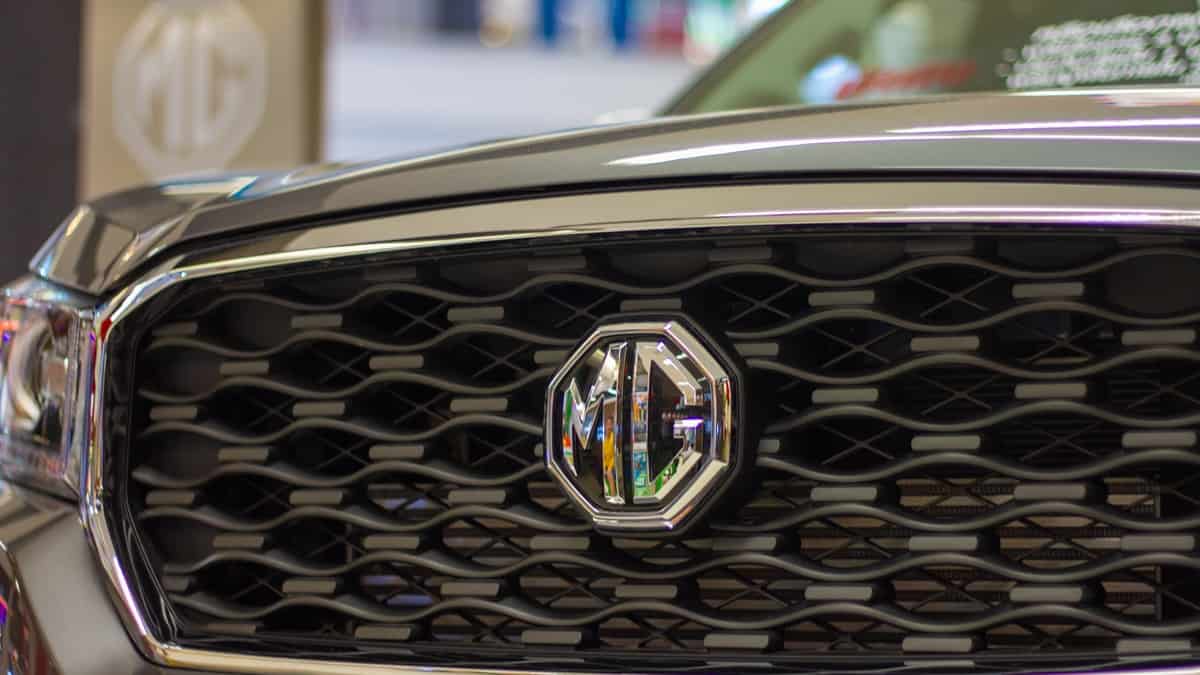
In 1924, MG was founded in the UK by William Morris, this marque embraces contemporary design and integrated technology with its manufactured vehicles. MG has been producing very affordable pure electric cars such as the MG ZS EV, a compact SUV available in three different variants MG ZS EV Excite, MG ZS EV Essence, and MG ZS EV Long Range that has a driving range of up to 440km* in a single charge and three Driving Modes (Eco, Normal and Sport). Both Essence and Long Range have a full-length panoramic stargazer sunroof and a wireless charger. Meanwhile, MG4 Electric is an all-new electric 5-door hatchback with five variants available to choose from each with different battery capacities, the MG4 Excite 51 kWh, MG4 Excite 64 kWh, MG4 Essence 64 kWh, MG4 Long Range 77 kWh, and MG4 Electric XPOWER with 64kWh lithium-ion battery size.
A Japanese marque, Nissan was established in Australia in 1977 as an affordable and reliable vehicle in the market. Nissan Australia offers a diverse range of cars from practical cars like hatchbacks, to SUVs and 100% electric vehicles with zero tailpipe emissions. In 2012, Nissan launched the Nissan Leaf, one of the pioneers of the mass-market electric vehicle is now offering the second-generation the Nissan Leaf with a 40kWh lithium-ion battery and a maximum speed of 144km/h, and the Nissan Leaf e+ with a 62kWh battery that can travel 385km distance.
Renault founded by the Renault brothers in 1998 in France is an automobile manufacturer. Entered the Australian market in the 1970s to offer affordable cars ranging from crossovers to SUVs, and hatchbacks. Recognizing the importance of electric vehicles, Renault introduced the Renault Megane E-Tech BEV Techno EV60, a stylish compact electric SUV that not only produces zero-emission but reduces noise pollution as well.
In 1904, Charles Rolls and Henry Royce established Rolls Royce in the UK by offering automotive luxury and in the early 20th century, entered the Australian market. With the signature of elegance and electric battery, Rolls Royce produced its first electric vehicle, the Rolls Royce Spectre which can travel a distance of about 530km on a full charge.
Tesla is a well-known American marque for producing electric vehicles and has been in the Australian market since 2009. Tesla is the top-selling EV brand in the country with its Model Y SUV being the best-selling electric vehicle in 2023. Model Y is available in three variants, the Tesla Model Y Rear-Wheel Drive, Tesla Model Y Long Range All-Wheel Drive, and Tesla Model Y Performance All-Wheel Drive featuring 5-seater capacity, a bigger storage space, and a travel scope of up to 533 kilometers. Tesla Model 3 with a standard range battery can travel up to 513km, meanwhile, the Tesla Model 3 Long Range can go up to 629 km.
Founded in founded in 1927, this Swedish marque, Volvo has built its reputation on producing safe and reliable cars and that can be expected too for their electric vehicles. Volvo’s range of pure electric cars are crossovers and SUVs. The brand’s first EV is the C40, a 5-seater crossover that can travel up to 507 kilometers and is available in two different variants, the Volvo C40 Recharge, a rear-wheel drive that has a twin motor powertrain, and the Volvo C40 Recharge Twin AWD a single motor powertrain. The XC40 Recharge is an SUV available in either rear-wheel drive or a twin-motor all-wheel drive that shares some features with the C40. XC40 has two available variants, the Volvo XC40 Recharge Pure Electric and the Volvo XC40 Recharge Twin Pure Electric. Volvo also produced a small electric SUV, the EX30 that has an electric range of up to 540km depending on the performance of the following variants: Volvo EX30 Single Motor Extended Plus, Volvo EX30 Single Motor Extended Ultra, and Volvo EX30 Twin Motor Performance Ultra