Tag: Electric Truck

  • Isuzu NRR-EV medium duty e-truck receives 50-state approval

    Isuzu NRR-EV medium duty e-truck receives 50-state approval

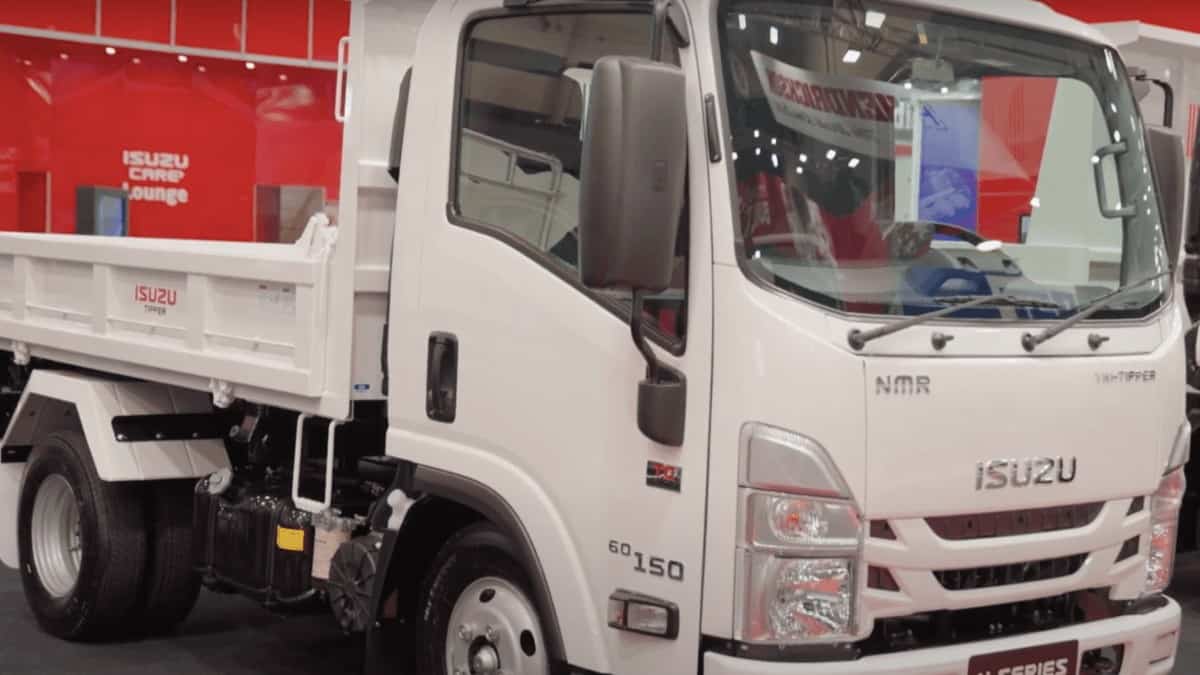
    Japanese legacy automaker Isuzu, through its local arm Isuzu Commercial Truck of America, has just secured CARB and EPA certifications for its zero-emission NRR-EV.

    This major development has made the medium-duty electric truck available across the 50 states in the US.

    Isuzu NRR-EV cleared for nationwide deployment

     Isuzu’s new NRR-EV model successfully gained crucial zero-emission certifications from both the California Air Resource Board and the Environmental Protection Agency, according to the press release on Tuesday.

    The certifications basically allow Isuzu to sell the new medium duty electric truck nationwide. In addition, it means that the American regulators validate the electric truck’s compliance with strict emissions standards and regulatory requirements.

    “For us at Isuzu, this truck showcases our commitment to innovation in delivering sustainable transportation solutions for the future. The certifications for our NRR-EV are a major step in providing customers with a medium-duty vehicle that lessens their carbon footprint and meets new fleet regulations.”

    Isuzu Commercial Truck of America President Shaun Skinner

    Modular battery technology and power

    The Japanese automaker markets the NRR-EV as a practical, medium duty truck alternative for fleets planning to cut carbon footprint.

    The NRR-EV reportedly offers a wide range of  battery configurations:

    • three 20 kWh battery packs: 60 kWh total
    • five 20 kWh battery packs: 100 kWh total
    • seven 20 kWh battery packs: 140 kWh total
    • nine 20 kWh battery packs: 180 kWh total, up to 235 miles of range with a 19,500 lb. GVWR

    Regardless of battery configuration, the electric truck yields an output of up to 150 kW and a 380 lb-ft. of torque available at 0 rpm.

    Paving the way for a greener commercial fleet

    CARB and the EPA have been pushing for zero-emission vehicle uptake nationwide as they seek to fight climate change and cut air pollution for a more sustainable future.

    In order to do this, they impose rigid targets for companies to adopt cleaner, zero-emission technologies.

    Therefore, the Isuzu NRR-EV’s CARB and EPA certifications attainment emphasize the significant role it would play in paving the way for a greener commercial fleet in the US, considering that Isuzu commercial trucks have been the most popular low cab forward trucks in the country “every year

    since 1986.”

    Isuzu plans to start assembling its  NRR-EV trucks in Charlotte, Michigan, in August 2024, followed by customer deliveries in the fourth quarter of the year.
  • Tesla Semi Factory takes shape with first render reveal

    Tesla Semi Factory takes shape with first render reveal

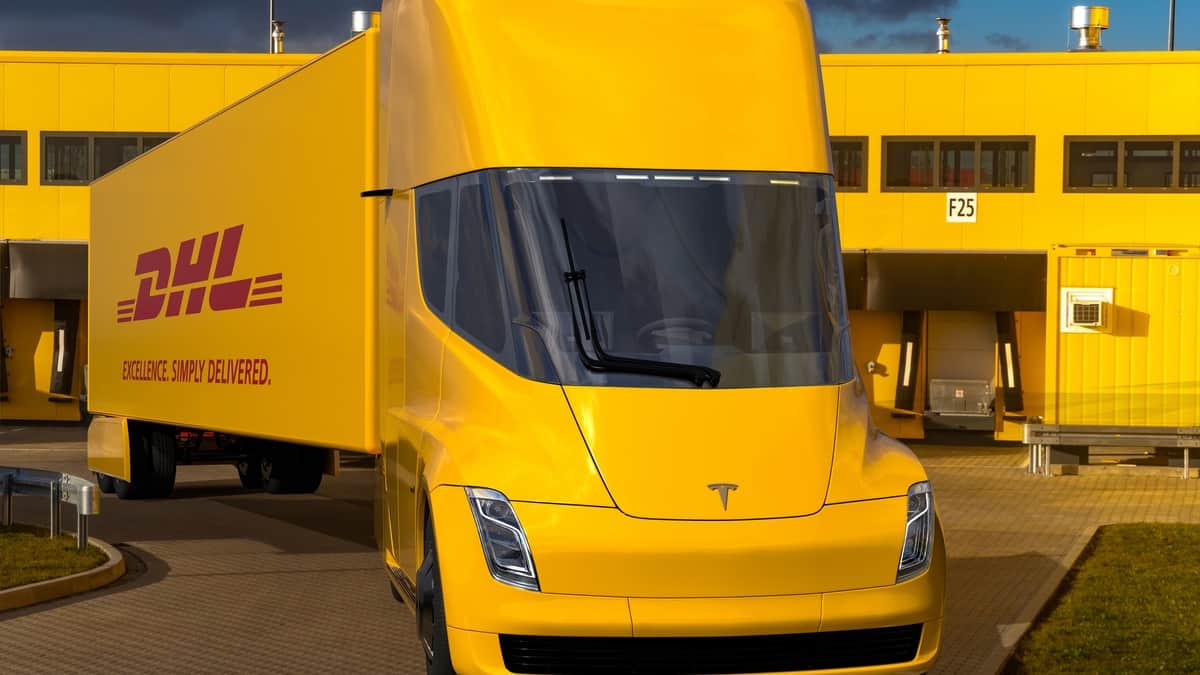
    Electric vehicle giant Tesla has just offered an early glimpse at its planned “Semi Factory” besides Giga Nevada in Texas. As the name suggests, the new facility will produce the Tesla Semi all-electric Class 8 semi-trailer truck.

    New factory render hints at big plans for Semi production

    Tesla Semi Program Head Dan Priestley released an image of the current progress at the factory site and a project render on social media platform X on Saturday.

    “Semi Factory progress and render of final building. The @Tesla construction team is awesome.”

    Dan Priestley, Tesla Semi Program Head

    As you can observe from the images, Tesla is already working on the foundation to establish what seems to be an extremely enormous building in Nevada.

    The Tesla executive’s announcement stimulated significant excitement among fans, while some pointed out the absence of solar roofs.

    For reference, Tesla announced in April 2024 that the company aims to complete the Semi Factory by 2025 to kick off production by “late 2025.”

    Tesla Semi project

    Tesla faced major delays in its Semi program despite already initiating production.

    In hindsight, it introduced the Semi way back in 2017, with plans to launch it in 2020. However, it only hit the manufacturing line in late 2022 due to several challenges that hampered the original plans. Until now, the Semi production has been limited.

    As of October 2023, Tesla had only produced around 70 Semi units for its own fleet and major client, PepsiCo. Tesla planned to expand the Giga Nevada to start Semi’s mass production.

    Tesla’s latest update suggests that the expansion plans will actually come to fruition, potentially bringing the Semi to volume production after years of delay.

    Boosting Semi truck production

    Tesla has yet to disclose more information about the upcoming Semi Factory. However, it previously announced that it aims to build as many as 50,000 Semi trucks per year.

    As mentioned, Tesla aims to start production in late 2025. Some initial customers will reportedly get deliveries by early 2026.

    The new Semi Factory can substantially aid Tesla’s efforts to boost theSemi’s production to meet the growing demand of its major customers, including PepsiCo, Costco, Martin Brower, and Walmart.

  • Tesla Semi unveils performance at ACT Expo, production to begin in 2026

    Tesla Semi unveils performance at ACT Expo, production to begin in 2026

    Electric vehicle giant Tesla made an appearance at the 2024 Advanced Clean Transportation Expo (ACT) from May 20 to 23, reassuring industry followers that the Semi project is still on track.

    Early reviews offer a glimpse into Tesla Semi’s capabilities

    Tesla Semi Senior Manager Dan Priestley emphasized Tesla’s commitment to electrifying the trucking industry, saying that the company “look forward to bringing our experience with EVs and supporting infrastructure to tackle electric heavy trucking at scale.”

    During the 2024 ACT Expo, Senior Manager Priestley announced that an extra 50 Tesla Semi units would join PepsiCo’s truck fleet. This news follows reports that Costco and Walmart have also launched pilot programs.

    Moreover, Tesla also offered hands-on and test-ride experiences at the 2024 ACT Expo. For instance, YouTube channel Out of Spec Reviews reviewer Kyle had an opportunity to test the Tesla Semi closely for the first time. The EV reviewer offered a good overview of the Tesla Semi’s features and performance, although the presentation lacked specific technical information.

    Tesla Semi’s enticing features unveiled

    Out of Spec Reviews’ Kyle demonstrated the Tesla Semi’s storage area behind the main cabin. An exterior hatch at the back of the main cabin door provides access to the said storage.

    Despite its generous cabin space, the Tesla Semi lacks dedicated storage. Therefore, the storage solution behind the main cabin will undoubtedly be useful for drivers.

    Kyle also showed the Semi’s Megawatt Charging System (MCS) port, which transmits an astounding 3.75 megawatts of power to large EVs like Tesla’s Class 8 electric truck. Future production units will reportedly feature the latest MCS v.3 design, unlike the early units’ v.2 plug.

    The presented Tesla Semi reportedly achieved an impressive efficiency of 1.7 kWh per mile over the past 1,800 miles. While it remains unclear if this rate was with or without cargo, it still aligns with Tesla’s promises for the truck’s performance when hauling freight.

    Power

    YouTube channel TFL’s Andre was able to record his experience while riding the Tesla Semi despite not being the one behind the wheel.

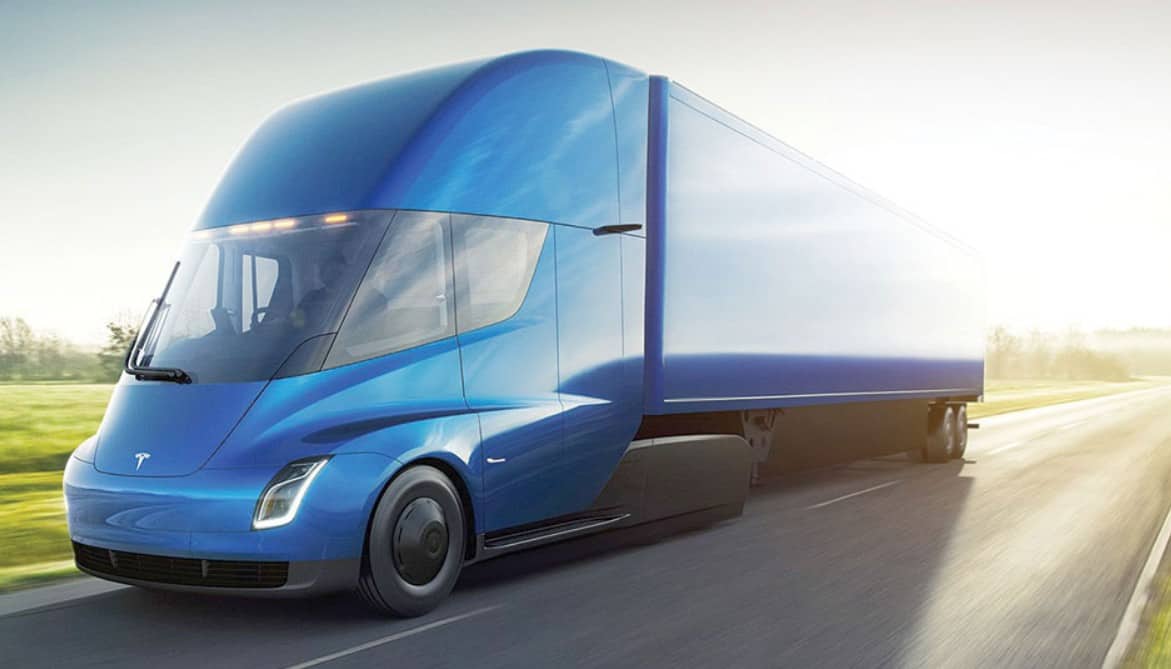
    As of now, the long-range variant remains the only version that has entered production. It features a huge 850 – 900 kWh battery pack and a tri-motor configuration that yields more than 1,000 horsepower.

    It also has a single motor “efficiency drive” axle at the rear, which operates nonstop. At the front, it has a dual-motor “torque-drive” axle to enable most of its power under heavy load when necessary.

    “I got to say, it seems very refined. Very nice as far as how the cab is built, the accessibility of it, the capability of it.” 

    TFL’s Andre 

    However, he asserted that the megawatt charging’s restrictions block the Semi’s current potential.

    “I would say for shorter trips, it’s hard to beat. For cross-country trips, it’s a different story.”

    TFL’s Andre 

    Considering these significant advancements, Tesla is now set to kick off Semi’s volume production in 2026. It aims to produce as many as 50,000 units a year. 

  • Daimler Truck North America teams up with Li-Cycle for EV battery recycling

    Daimler Truck North America teams up with Li-Cycle for EV battery recycling

    Daimler Truck North America, the German commercial automaker, has just announced the new partnership it formed with battery recycling company  Li-Cycle on Thursday.

    DTNA inks deal with Li-Cycle to recycle EV batteries

    According to the press release, DTNA and Li-Cycle seek to establish a comprehensive circular economy throughout the electric truck maker’s operations to cut carbon footprint.

    Li-Cycle will closely work together with DTNA to recycle the latter’s li-ion batteries that have already achieved the end of their life cycle. They will focus on “repairing, remanufacturing, repurposing, and recycling” li-ion battery materials.

    The partnership is a crucial part of DTNA’s efforts to maximize electric vehicle battery lifespans and diminish material waste. In effect, the company can combat environmental issues worldwide.

    “We are proud to partner with companies such as DTNA to support their sustainability and carbon reduction goals. Our environmentally friendly and safe recycling technologies can recover critical materials to help create a domestic closed-loop battery supply chain, giving new life to these battery materials and helping power the world’s transition to clean energy.”

    Ajay Kochhar, Li-Cycle President and CEO

    Partnership advantages

    With the new partnership with Li-Cycle, DTNA moves forward to ensure that its electric trucks generate a lower carbon footprint throughout their entire lifecycle.

    Li-Cycle’s battery recycling approach enables DTNA to use these recycled materials for battery production rather than mining new minerals, creating a more sustainable closed-loop system.

    It also reduces the need to dispose of used EV batteries, which can be dangerous if not handled properly.

    Li-Cycle’s four pre-processing facilities dubbed “Spokes” are already online in different locations in North America, including Kingston, Ontario; Rochester, New York; Gilbert, Arizona; and Tuscaloosa, Alabama. The Spokes produce an intermediate product called “black mass,” consisting of critical battery materials like lithium, nickel, and cobalt

    The company aims to process the black mass at its future “Hub” facilities into battery-grade end products for potential reuse. However, it announced in October last year that the development of its flagship Hub battery recycling facility in Rochester was suspended to undergo review over liquidity issues.

    Growing focus on sustainability in the electric truck market

    DTNA and Li-Cycle’s battery recycling partnership demonstrates the growing focus on sustainability in the electric truck industry.

    It shows the companies’ dedication to addressing environmental concerns through employing responsible practices. It also highlights the importance of a closed-loop system for electric vehicle battery materials.  

    DTNA reduces waste and their reliance on mining by recovering and recycling critical battery minerals. It could potentially encourage other industry players to invest in similar technologies, accelerating the adoption of efficient recycling strategies.

  • Toyota, Hexagon Purus partner on Tern Class 8 electric semi rollout

    Toyota, Hexagon Purus partner on Tern Class 8 electric semi rollout

    Japanese legacy automaker Toyota Group, through its subsidiary Hino Trucks, partnered with Tier 1 supplier Hexagon Purus for the nationwide dealer rollout of the Tern Class 8 electric semi. According to the press release, Hino Trucks will be the exclusive distributor of the new model in the United States.

    Toyota electrifies the road with Tern e-trucks

    The new Tern brand of heavy-duty electric trucks is a joint venture between Toyota Group’s Hino Trucks and Hexagon Purus. It formally launched at the  Advanced Clean Transportation (ACT) Expo on May 20, 2024.

    https://twitter.com/GNA_Consulting/status/1792779627804381443

    The partners plan to deploy the brand’s inaugural model, the Tern RC8 electric semi, in the US market through Toyota Group’s Hino Trucks. The company will give the brand access to over 200 heavy truck dealers and their customers in the country.

    “Our collaboration with Hexagon Purus introduces a highly reliable Class 8, 4×2 tractor option into the electric truck market, catering to a wide range of applications. We are excited to be the exclusive distributor for Tern with an initial distribution focus in California, where fleet electrification is imperative.”

    Glenn Ellis, Hino Trucks President and CEO 

    According to the report, the new battery-electric Class 8 tractor utilizes Hexagon Purus’ years of zero-emission drivetrain development for such vehicles. In addition, it delivers a preferred option for fleet drivers electrifying their practical routes.

    Tern RC8 electric semi

    Tern’s RC8 electric semi rides on the US-assembled XL Series 4×2 chassis developed by Hino Trucks. It also boasts Hexagon Purus’ innovative zero-emission technology. Meanwhile, Panasonic Energy supplies the battery cells initially produced in Japan before relocating production to the De Soto factory in Kansas from 2026 onwards.

    Presented below are some of the key specifications of the new Tern RC8:

    • “A 100% battery-electric platform with an industry-leading short wheelbase of 165 inches
    • A gross vehicle weight rating (GVWR) of 68,000 lbs. targeting applications of approximately 200 miles in regional city duty cycles, addressing 95 percent of use cases
    • Dual Hexagon Purus Gen3 269kWh battery packs in a 750-volt, 538 kWh configuration, providing substantial power and range for targeted duty cycles
    • Recharge rate of 241 kW
    • Peak/continuous horsepower of 680hp/494hp
    • Peak torque 38,350 ft/lbs”

    “Tern RC8 delivers the comfort, reliability and safety that drivers and fleets want, and it’s purpose-built to be a very practical truck for operators integrating zero-emission trucks into their fleets.” 

    Morten Holum, Hexagon Purus CEO  

    Serial production start

    The Tern RC8 electric semi undergoes production in Hexagon Purus’ new factory in Dallas, Texas. 

    The press release indicated that the new electric semi will start serial production in late 2024.

    The brand’s offerings will be exclusive through Hino’s dealer network, guaranteeing solid support and service.

    Notably, the Tern’s market launch aligns with California’s Advanced Clean Fleets regulation. It offers fleets an enticing choice to decarbonize their supply chain, particularly in key areas such as metro-regional routes and food and beverage logistics.

  • Daimler’s  first Autonomous Electric Semi-Truck set to debut on U.S. roads by 2027

    Daimler’s first Autonomous Electric Semi-Truck set to debut on U.S. roads by 2027

    Daimler Truck North America has just unveiled its first demonstrator electric semi-truck featuring autonomous driving technology on Wednesday.

    Partnership with Torc Robotics

    According to the press release, Daimler partnered with Torc Robotics to gain access to its autonomous driving technology. For context, Torc Robotics is an independent autonomous virtual driver tech unit under Daimler Truck.

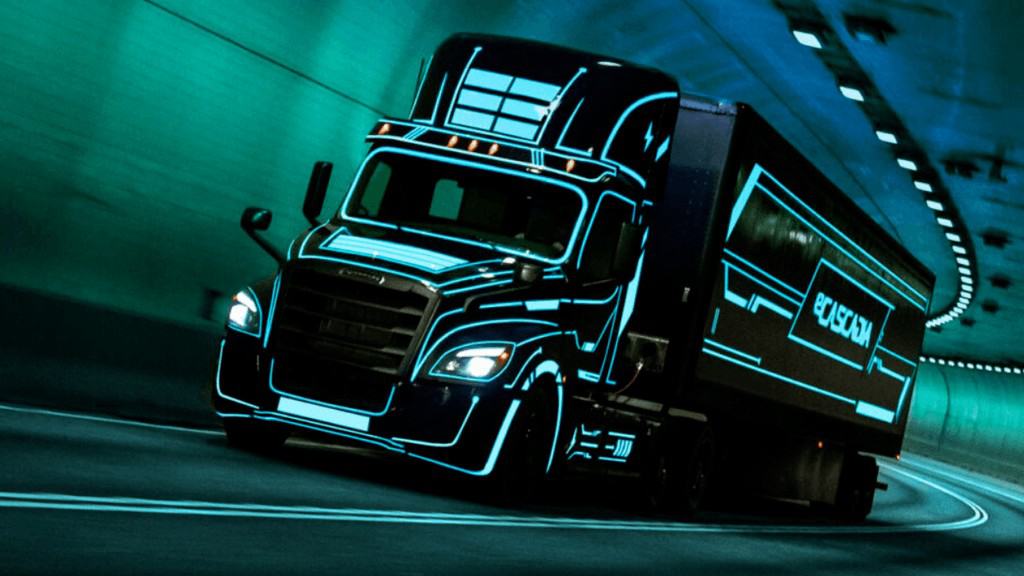
    Daimler utilized a production electric Freightliner eCascadia to develop its autonomous electric semi-truck technology demonstrator. It features Torc Robotics’ autonomous driving software, the latest Level 4 sensor, and compute technology to gradually support Level 4 autonomous driving.

    Current standards consider Level 4 as fully autonomous. Therefore, the driver can rely on the electric semi-truck to do most of the driving. Nonetheless, the driver must still be present to take over when necessary.

    Daimler merges autonomous driving with electric powertrain

    Daimler officially kicked off the production of the electric Class 8 Freightliner eCascadia in 2022. So far, it has deployed the electric semi-truck in over 55 fleets in the United States.

    The Freightliner eCascadia features the company’s Detroit ePowertrain. It offers various battery and drive axle configurations ranging from 155, 220, or 230 miles. Its battery also supports fast charging to 80% in just 90 minutes.

    Daimler equipped the eCascadia’s compact day cab configuration with an autonomous sensor suite and computer power.

    The engineering team has also designed an innovative prototype air-cooling tech for the compute stack between the driver and passenger seats.

    The autonomous system offers control interfaces and feedback on vehicle status. The engineering team placed the cameras, lidar, and radar sensors above the windscreen. Meanwhile, its internally developed sensor bar cover avoids wear and soiling. It also has four extra 12-volt batteries offer sufficient energy to ensure continuous operation and increased efficiency and safety.

    Primary objective

    Daimler primarily aims to transform this research and engineering project into a modular, scalable platform to support a wide range of trucking applications. 

    The electric truck maker seeks to provide its customers with bespoke solutions depending on their needs.

    “By combining zero-emission and autonomous technologies in one product, we are testing solutions for challenges our customers are likely to face in the future.

    We want to give them choices that allow them to do what they do best: keep the world moving today and well into the future. That takes a lot of foresight, questioning, testing, learning, improving, and co-creating with our customers years in advance to ultimately find the right solution. This truck is a great example of the beginning of that development process.”

    John O’Leary, president, and CEO of Daimler Truck North America

    Daimler implies plans to deploy the autonomous eCascadia on shorter, repeatable routes. It has started the pilot program of the new autonomous electric semi-truck demonstrator between freight centers along US highway corridors. 

  • Mining industry’s first all-electric truck trolley starts underground trial

    Mining industry’s first all-electric truck trolley starts underground trial

    The mining industry has just witnessed its first-ever electric truck trolley system take an underground mine test track at the Kristineberg in Sweden.

    Pilot project

    Swedish mining industry players Boliden, Epiroc, and ABB have teamed up to trial the revolutionary battery-electric truck trolley system on an 800-meter underground mine test track in Kristineberg. 

    The press release noted that the test track had a 13% incline, close to the 14.3% incline of most Australian underground mines.

    https://twitter.com/xevipalacios/status/1785066555489034674

    This significant milestone is undoubtedly a boost to the mining industry’s path towards an all-electric future. 

    Proponents

    ABB developed the system design and the rectifier substation for the test track. 

    Meanwhile, Epiroc’s battery-electric Minetruck MT42 SG and battery system powered the trolley. 

    ABB also provided the electric trolley solution’s DC converter, HES880 inverters, and AMXE motors to improve the power capacity.

    It also has a trolley pantograph linked to an overhead catenary line to support long-haul ramps. The electric trolley line also offers extra aid to the electric mine truck during crucial times while fully loaded. It enables further reach and battery regeneration during drift.

    “Over the past three years, we have worked in close collaboration with the ABB and Epiroc teams to bring the electric mine of the future one step closer. The most important thing for us is that the technology works in our own operations, but we also see added value that we can drive technology development so that the system can be used in other mines.”

    Boliden general manager Peter Bergman

    Significance

    This ground-breaking pilot project in Boliden’s Kristineberg mine signifies a crucial milestone for the mining industry amid the increasing efforts to cut carbon emissions and energy consumption in the overall operation.

    “We launched the ABB eMine concept of methods and solutions to bring electrification to the whole mining operation, from the grid to the wheel, and the installation at Kristineberg demonstrates the power of these capabilities.”

    ABB global business line manager Max Luedtke 

    The IEA forecasts that the demand for key minerals to support the shift to clean energy will surge by 1.5 to 7 times by 2030. Therefore, it is really crucial for the mining industry to electrify.

    According to the partners, their electric truck trolley system aims to demonstrate that it can reduce emissions, noise, vibration, and total cost/ton.

    Boliden aims to launch a full-scale, autonomous electric trolley system in the Rävliden mine with an order for four new Epiroc Minetruck MT42 SG Trolley trucks.

  • Tesla to kick off Semi mass production in “late 2025”

    Tesla to kick off Semi mass production in “late 2025”

    Tesla has just shared an update about its long-delayed Semi electric truck volume production. The electric vehicle giant now aims to ramp up the production of the Class 8 electric semi truck in late 2025.

    Volume production target

    Tesla Vehicle Engineering Vice President Lars Moravy disclosed during the recent Q1 2024 Earnings Call that the company now aims to start the Semi’s volume production later next year.

    According to VP Moravy, initial units will reach external customers by 2026.

    “We’re finalizing the engineering of Semi to enable like a super cost-effective high-volume production with our learnings from our fleet and our pilot fleet and Pepsi fleet, which we are expanding this year marginally. In parallel, as we showed in the shareholders’ deck, we have started construction on the factory in Reno. Our first vehicles are planned for late 2025 with external customers starting in 2026.”

    Lars Moravy, Tesla Vehicle Engineering VP 

    Far behind schedule 

    Tesla’s Semi program has faced numerous delays since its debut in 2017.

    The Musk-led company originally planned to launch the Semi electric truck in 2020. However, it only started initial production in late 2022.

    Despite the production onset, the Tesla Semi’s availability remains limited. As of October last year, the company had only produced approximately 70 Tesla Semis.

    Considering the limited supply, Tesla only deployed the units to its internal fleet and key customer, PepsiCo.

    https://twitter.com/TeslaEspresso/status/1783410854513528949

    Semi deliveries fall short of customer orders

    Tesla’s Semi deliveries to American multinational food giant PepsiCo have apparently fallen short of the initial 100 unit orders.

    PepsiCo ordered a total of 100 Tesla Semis in 2017. It aims to add the Class 8 electric semi truck to its fleet that hauls Cheetos, Lays, and Pepsi soft drinks to its retailers. 

    However, one of PepsiCo’s executives with knowledge of the order revealed that the company has only received 36 Semis as of today. Therefore, Tesla is 64 units short of its Semi delivery commitment to PepsiCo.

    Tesla’s plans to ramp up Semi’s production is undoubtedly good news not only for its own fleet but also for its customers, especially PepsiCo. Other would-be Tesla Semi buyers have reportedly started to use other companies’ electric trucks while waiting for the Semi. Some of them include Sysco, UPS, Schneider National, and Walmart Canada, which shifted to Daimler Truck’s eCascadia electric trucks.

  • Tesla’s Semi deliveries fall short of PepsiCo’s initial orders

    Tesla’s Semi deliveries fall short of PepsiCo’s initial orders

    Tesla is apparently short of its Semi truck deliveries to its key customer PepsiCo, as its rivals use competing electric trucks.

    PepsiCo’s Semi orders

    According to Reuters, the American multinational food giant initially paid Tesla for 100 units of Semi electric trucks in 2017. 

    PepsiCo aims to utilize the Tesla Semis to haul its Cheetos, Lays potato chips, and Pepsi soft drinks to its retailers. 

    However, PepsiCo and one of its executives with knowledge of the matter said that the company was only operating 36 Tesla Semi as of today. It indicates a notable shortage of 64 units of the Musk-led company’s promised 100 units.

    Other waiting customers

    Other would-be Tesla Semi customers are still reportedly waiting for the Musk-led company’s deliveries, including food distributor Sysco, UPS, Schneider National, and Walmart Canada. 

    Unfortunately for Tesla, these companies have started to seek other electric truck makers’ products to make up for the Tesla Semi’s shortage. As per the report, they are shifting to Daimler Truck’s electric truck models. These four companies have reportedly deployed dozens of eCascadia electric trucks on the road.

    The Tesla Semi’s delivery struggle comes amid waning sales growth due to slower-than-expected demand. In effect, the company had to launch price cuts and compromise its margins.

    Government incentives

    The Biden Administration offers significant subsidies to companies with electric truck fleets to offset their purchases and encourage more businesses to adopt clean vehicles for hauling and deliveries.

    For instance, PepsiCo gained more than $20 million in government subsidies to offset its expenditures in buying 32 of the 100 Tesla Semis it orders. It also secured federal incentives worth $40,000 per unit. 

    The shortage of Tesla Semi supply for PepsiCo’s electric truck fleet highlights the company’s challenges in its venture to become a major player in the electric truck segment.

    In hindsight, Tesla had stated it would have started the production of the Semi by 2019. CEO Musk also announced targets in October 2022 to produce a total of 50,000 Semis in 2024. However, the Tesla boss announced at an energy conference in June last year that “there just weren’t enough batteries” to hit the Semi’s volume production. 

    The Tesla Semi delivery delay impedes PepsiCo’s goal to cut carbon emissions in its operations. Nonetheless, the 500-mile Semi electric truck remains more dominant than Daimler’s 230-mile eCascadia models. The challenge remains on how Tesla would kick off the Semi’s mass production to meet the large demand for the electric truck.

  • Italy courts Tesla for a local electric truck or van production, report says

    Italy courts Tesla for a local electric truck or van production, report says

    Electric vehicle giant Tesla is reportedly in discussions with Italian government officials about a potential local production of electric trucks or vans in the country, Il Sole 24 Ore reports, citing some industrial sources.

    Discussions progress

    According to the report, Italy’s Ministry of Enterprises and Made in Italy (Mimit) has advanced its negotiations with several automakers. However, Tesla apparently has the “most serious contacts so far.”

    The discussions revolve around the possibility of constructing a new factory for electric trucks and/or electric vans.

    “According to some industrial sources, the Ministry of Business and Made in Italy (Mimit) in recent weeks has actually deepened the dialogue with a possible new automotive manufacturer, but the news is that the most serious contacts would be with Elon Musk’s Tesla for a possible production of electric trucks and/or vans, a line partly still in planning, and therefore not of cars.”

    Il Sole 24 Ore

    This news comes after Italy’s Minister for Business and Made in Italy, Adolfo Urso, announced last month that the government and the Musk-led company are in talks to build a new local factory.

    Potential investment

    The possibility of Tesla investing in local production in Italy remains unclear, especially considering the report’s indication of electric truck and/or van manufacturing. 

    As of now, Tesla only produces the electric pickup Cybertruck in Texas. Meanwhile, the Class 8 electric truck Semi undergoes production in Giga Nevada.

    In hindsight, Tesla CEO Musk previously asserted that the American EV giant could build the Tesla Semi in Giga Berlin in Europe.

    In addition, Tesla currently has no electric vans in its lineup. However, long-standing rumors claim the company is developing a van-like electric people-mover for Elon Musk’s The Boring Company.

    Italy’s targets

    Italy set a target of producing at least 1.3 million vehicles per year. Of that total, passenger cars are expected to account for one million units. Meanwhile, vans will make up the other 300,000 units.

    The achievement of this target is crucial for the country to preserve its automotive industry amid the challenges brought on by the shift to electric vehicles.

    https://twitter.com/pablo9948967714/status/1772633574656655704

    Stellantis is currently the only major automaker in the country. However, its local production output last year was insufficient for Italty to achieve its automotive targets. 

    “We are aware that it is impossible for Stellantis alone to reach the target of one million cars produced in Italy.”

    Italy Industry Minister Adolfo Urso

    Therefore, the government is trying its best to court major companies like Tesla to hit its goals. Notably, it also expects major investments from three Chinese electric vehicle players, BYDGreat Wall, and Chery. According to the report, Chery and the government officials have already reached a more advanced discussion in February. In fact, Mimit is already inspecting former industrial locations as potential sites for Chery’s local factory.

    As for Tesla, it remains unclear if there would actually be an investment for local production in Italy. For context, the Musk-led company seems also near to achieving its long-standing dream of penetrating the Indian market with lower import taxes in exchange for a local factory.