Tag: Google

  • AI boom straining power grid: Tech giants seek sustainable solutions

    AI boom straining power grid: Tech giants seek sustainable solutions

    The rapid rise of Artificial Intelligence (AI) is bringing an alarming challenge: a surge in power consumption.

    https://twitter.com/bull_japanese/status/1804302975575449654

    The tremendous computing power necessary to train and run intricate AI models is straining the capacity of the electrical grids.

    As a result, tech companies scramble to come up with solutions to ensure that AI innovations will not cause blackouts and environmental strain in the future.

    Tech companies grapple with rising energy needs

    The intensifying AI race will certainly demand more electricity than the capacity of the Columbia River, which has aided the American West with hydroelectric power since FDR’s New Deal era.

    It also boosts fossil fuel consumption, which results in the delay of the retirement of several coal-fired plants.

    “Coal plants are being reinvigorated because of the AI boom. This should be alarming to anyone who cares about the environment.”

    Tamara Kneese, a project director at the nonprofit Data & Society

    In response, tech giant Microsoft is investing in atomic fusion near the river’s banks in Central Washington. For context, atomic fusion is the collision of atoms that powers the sun. The project is expected to harness fusion by 2028, demonstrating the company and its partners’ commitment to depend on renewable energy.

    Moreover, other tech companies are also exploring other solutions, such as small nuclear reactors hooked to individual computing hubs and machinery. These reactors accumulate power from geothermal energy by boring 10,000 feet into the Earth’s crust.

    These efforts are crucial to offsetting the adverse environmental effects of AI innovations, especially amid the surge of data centers across the world.

    Surge of data centers forcing reliance on Fossil Fuel

    Tech companies are building massive data centers to power AI, and the energy consumption is so high it could strain the electricity grid. These data centers, despite being from clean energy companies, are turning into major energy guzzlers.

    The IEA asserted that a ChatGPT-powered search consumes nearly tenfold the amount of energy as a Google search.

    Ironically, tech giants like Google and Amazon aim to be carbon neutral by 2030. However, the growing demand for energy for their data centers is leading to more use of fossil fuels, which goes against their sustainability goals.

    “They are starting to think like cement and chemical plants. The ones who have approached us are agnostic as to where the power is coming from.”

    Ganesh Sakshi, Mountain V Oil & Gas CFO

    Innovative Sustainable Solutions

    Despite AI’s alleged adverse environmental effects, tech giants are boldly pushing forward with their belief that breakthroughs in energy, like fusion power, are within reach. Big investors in the field share this confidence, like tech leaders Sam Altman and Bill Gates.

    AI industry players also argue that such innovations are better for the environment than curbing electricity usage. They contend that AI can optimize the power grid, improve nuclear technology, and track emissions.

    Microsoft is the most transparent company in terms of energy use, while its major competitors, Google, Amazon, and Meta, omitted to share detailed information in The Washington Post interview.

    “If we work together, we can unlock AI’s game-changing abilities to help create the net zero, climate resilient and nature positive works that we so urgently need.”

    Microsoft 

    The AI race continues to create an enormous energy burden worldwide, threatening blackouts and environmental consequences. Tech giants are scrambling for sustainable solutions, exploring fusion power, small nuclear reactors, and geothermal energy, among others. Despite the challenges, there’s optimism that breakthroughs in clean energy can support AI’s potential for environmental interest.

  • Waymo robotaxi service to expand coverage with seven new Bay Area cities

    Waymo robotaxi service to expand coverage with seven new Bay Area cities

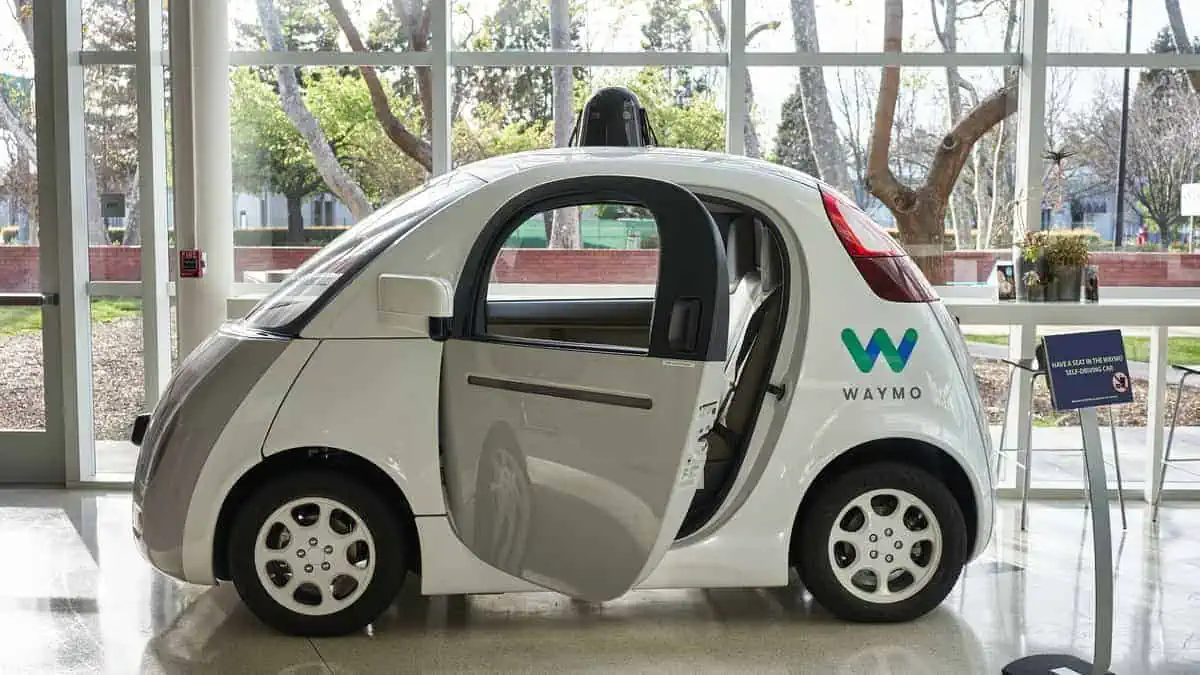
    Autonomous car tech company Waymo is gearing up to launch its paid driverless services in seven new cities in the San Francisco Bay Area in California.

    Waymo to expand operation in 22 new cities 

    Waymo announced Friday its plans to start testing its fully autonomous passenger cars in seven new Bay Area cities in the “coming weeks,”  San Francisco Chronicle reported. 

    The move came after the company recently gained the necessary approval of the California Public Utilities Commission (CPUC) to expand its robotaxi services to Los Angeles and other areas in the San Francisco peninsula.

    The CPUC gave Waymo the green light to expand its pilot program to as many as 22 cities in the San Francisco peninsula without restrictions. 

    Waymo plans to start the expansion push by launching operations in the following seven new cities this month:

    • Brisbane
    • Burlingame
    • Colma
    • Daly City
    • Millbrae
    • San Bruno
    • South San Francisco 

    Initial coverage

    The initial coverage of the testing expansion will only be exclusive to Waymo employees, according to the report.

    Nonetheless, the company plans to gradually offer its services to public customers and take paid rides.

    You can check Waymo’s new operating area in California in the photos attached to the X post below:

    “Expanding our service across the Peninsula will take time. We’ll continue taking a careful and incremental approach, following our safety framework and working closely with city officials, local communities, and first responders.”

    Waymo

    Despite these significant advancements in Waymo’s robotaxi services, the company continues to struggle with legal barriers.

    Numerous authorities remain apprehensive about autonomous vehicles, including the following:

    • The City of South San Francisco
    • San Mateo County
    • The Los Angeles Department of Transportation
    • San Francisco County Transportation Authority

    San Francisco Taxi Workers Alliance has also been protesting against the expansion of Waymo’s driverless cars.

    Earlier this year, California also introduced a new bill that could potentially grant individual communities more control over where driverless cars can operate. It poses a significant barrier against Waymo’s expansion plans in the state.

    Nonetheless, Waymo strives to pursue its expansion plans. It will start deploying its robotaxis without a human driver on San Francisco Peninsula city streets in the coming weeks.

  • Google Maps Integrates AI to Help EV Drivers Locate Chargers

    Google Maps Integrates AI to Help EV Drivers Locate Chargers

    American multinational tech company Google has just announced upcoming updates for its Google Maps and Search aimed at helping electric vehicle owners easily locate a charging station. Unsurprisingly, the system will heavily rely on artificial intelligence (AI).

    Google Maps to Leverage AI in Improving EV Charging Experience

    Google indicated in its recent blog that it will assign AI to summarize customer reviews of electric vehicle chargers in “the coming months.”

    This comprehensive summary will enable the system to offer drivers more precise directions to specific chargers, including those sitting in multi-level parking garages or more multi-level parking areas. Apart from providing directions, the app will also display the charger’s speed and availability.

    Google will also include more prompts in the app to urge EV drivers to submit a review after using a certain charger. The system will then feed the customer reviews into the algorithm to aid future AI-powered summaries generation.

    Google Maps will request its users share key information about their experience with a particular charger stall, such as whether the session was successful. It will also ask about the charging plug type they utilized.

    Moreover, Google Maps also disclosed that it will consider EV charger’s availability when users seek places to stop in overnight. It will add a charger filter to the travel search tool, enabling EV drivers to locate areas with charging plugs.

    Benefits

    Fast-charging stations tend to sit in some far-off corner of a parking garage. Some are even hidden behind buildings or in multi-level garages. Therefore, finding them takes too much time and effort.

    With Google Maps’ upcoming feature updates, EV owners using the web mapping service can benefit from an easier and faster approach to finding charging stations. 

    Google indicated that EV drivers may get directions like “Enter the underground parking lot and follow the signs toward the exit. Just before exiting, turn right.” 

    In hindsight, Google has previously explored using AI to enhance EV owners’ charging experience with route planning and plug location. With these new updates and the company’s unprecedented access to people and data, Google Maps may highly likely advance as the super app for electric vehicle charging. 

  • Google Maps to improve electric vehicle charging experience with a potential upgrade

    Google Maps to improve electric vehicle charging experience with a potential upgrade

    Google Maps, one of the leading web mapping platforms, may soon display Plug and Charge locations to enable a more seamless charging experience for electric vehicle owners, Android Authority reports, citing an APK teardown.

    For context, an APK teardown aids people in predicting new features that may be introduced on a service based on “work-in-progress code.”

    APK teardown hints at Plug and Charge locations

    Google Maps’ recent update hints that the app may soon offer a new convenience feature for electric vehicle drivers. The software update version 111.15.103’s APK teardown revealed that the app seems to be on track to display charging stations with Plug and Charge capabilities. 

    The potential inclusion of Plug and Charge locations in Google Maps will significantly aid owners in easily determining where stations to go in order to benefit from the more convenient sessions, even without using a mobile app or charging a subscription card.

    Presented below are the strings Android Authority spotted:

    <string name= “CAR_PLUG_AND_CHARGE_BODY”> “Charging stations with plug and charge let you charge more conveniently, without using your phone or charging card. You can set up plug and charge in your vehicle’s settings and payment app.” </string>

    <string name=”CAR_PLUG_AND_CHARGE_TITLE”>Plug and charge</string>

    <string name=”CAR_SEARCH_PLUG_AND_CHARGE”>Plug and charge</string>

    What is Plug and Charge technology?

    Plug and Charge technology is basically a streamlined electric vehicle charging method, enabling owners to charge without an app or charging card. It allows the car itself to manage the payment via the in-car systems.

    BMW also reportedly asserted that car authentication does not necessitate an internet connection, making Plug and Charge useful for secluded areas like underground parking lots.

    However, it is only currently available on several models from Audi, BMW, Mercedes-BenzPorscheFord, and General Motors, among others. 

    Other improvements

    Google currently has multiple electric vehicle-related features that ease owners’ charging experience amid the growing issues associated with public charging infrastructures.

    Google Maps aims to save parking location on Android Auto to let drivers know the vehicle’s location when the destination is a different area, Auto Evolution noted. Basically, drivers can use the app for walking directions, enabling them to continue utilizing it even after leaving the vehicle.

    In addition, Google Maps will also offer Immersive Views for routes. It will be initially limited to some regions, enabling owners to prepare for a trip to an unfamiliar destination. It will also soon include a visual update on mobile devices, terminating the location data and directions UI from dominating the entire screen. 

    Going back, Google’s initiative to support Plug and Charge technology uptake may soon encourage other electric automakers to also offer it through their electric vehicle models. By doing so, electric vehicle owners may soon benefit from a more streamlined charging process. However, it must be noted that there remains a possibility that the feature may not appear on the stable version of Google Maps. APKs tend to have strings of working features, but they are not guaranteed to reach public release. 

  • Tesla is the most searched auto brand in the US, Google data shows

    Tesla is the most searched auto brand in the US, Google data shows

    American electric vehicle giant Tesla has once again proven its strong presence in its home market and even worldwide. The Musk-led automaker advanced as the most wanted car brand for both American and global buyers, the latest study of Google search data revealed.

    The study utilized Google search data to determine the annual search volume for “buy + [car brand]’ and ‘[car brand] + for sale” in every country and USA state from January 2022 to December 2022, involving 203 different car brands.

    “…buy + [car brand]’ and ‘[car brand] + for sale’ search terms (allowing for native language translations), for 203 different car manufacturers.”

    British automotive online marketplace Auto Trader

    “Tesla for sale” hits 60,000 searchers in the US every month 

    British automotive online marketplace Auto Trader has just published a new study that evaluated Google search data of customers looking to buy cars from certain brands.

    Unsurprisingly, Tesla advanced as the most searched car brand in half of the US states, particularly in several most populous ones such as California and NY.

    “Tesla came out as the car make people are looking to buy the most in the USA, topping the tables as the most searched for car for sale in 25 of the 50 states, including Pennsylvania, Illinois and Arizona. There are over 60,000 searches for ‘Teslas for sale’ in the USA each month and Tesla’s popularity is good news for the EV market, showing that there is a sustained appetite for electric vehicles in major auto countries.”

    Auto Trader 

    Impressively, Tesla’s popularity did not stop there, as it also dominated the ranking in significant regions, including North AmericaAsia, and Europe.

    True enough, the study revealed that Tesla was the most searched car brand in 39 nations included in Auto Trader’s survey.

    “The unique study from Auto Trader also looked further afield, analyzing global search data to see which cars people want to buy the most in different countries all over the world. Tesla, Jeep, Toyota, and BMW are amongst the most popular global brands. Tesla is the most searched for car brand for sale in 39 countries, including the USA, Canada, France, Spain, Australia and the United Arab Emirates.”

    Auto Trader 

    Below are the global rankings:

    RankBrandNo. of countries where this car brand is searched the most to buy
    1Tesla39
    2Jeep27
    3BMW20
    4Toyota18
    5Mercedes11
    6Mercedes12
    7Lamborghini8
    8Ferrari6
    9Land Rover3
    10Hyundai2

    However, it must be noted that these results are primarily under the implied premise that people who search on Google are representatives sample. However, more data would be necessary to support that.

    For instance, some customers will go to dealerships and might actually buy a car they never thought of buying. Some also visit used car stores and pick the best options. 

    Meanwhile, Tesla generally relies on its online stores to sell its EVs and other products, making it more appealing to computer-savvy purchasers. In effect, there would really be an overabundance of Tesla buyers online.

    See Also:

    Nonetheless, the results demonstrate how electric vehicle adoption continues to gain traction in the global market. It ultimately indicates a growing interest in EVs, so global automakers must really start joining the shift.

  • Google’s Waze to guide electric vehicle drivers to charging stations

    Google’s Waze to guide electric vehicle drivers to charging stations

    Need to get to your destination as quickly as possible?? Opt for Waze, the Google-owned app prioritizes speedy travel from point A to B. With its latest updates, Waze is even more beneficial for electric vehicle drivers. 

    Waze, once known as FreeMap Israel, is a Google-owned company that offers satellite navigation software for smartphones and other GPS-enabled devices. If you want to get to your destination as fast as possible, Waze, also owned by Google, is a better option than Google Maps for everyday travel for electric vehicle drivers. 

    Waze has made it even more convenient for EV drivers to find charging stations along their routes. With just a few taps on the app, you can specify your car’s plug type, and the app will show you nearby charging stations that are compatible with your vehicle. The upgraded experience will feature essential details, including the number of charging ports, charging speed, plug type, hours of operation, and on-site directions for finding the station. As with all information in the Waze app, the charging station data is crowdsourced and regularly updated by local Map Editors.

    This feature ensures you can charge your car without altering your route, even if your battery runs low. Charge your car without changing your plans. Waze is devoted to providing an effortless and convenient experience for electric vehicle drivers. This feature points you to charging stations that are conveniently located along your route or require only a small detour. PCMag has received confirmation from a Waze spokesperson that US users will be able to take advantage of this feature by mid-April. 

    If you are an EV owner, you’ll want to check out the new feature that has just been released. Give it a try today!

  • Global companies that made the largest renewable energy investments in 2022

    Global companies that made the largest renewable energy investments in 2022

    Major industry players across the world had a record-breaking renewable energy investment of 36.7 gigawatts (GW) in 2022, representing a year-on-year growth of 18%, as per BloombergNEF.

    Remarkably, that growth was achieved despite the global supply chain constraints, energy crisis, and increasing interest rates.

    Power purchase agreements

    The 1H 2023 Corporate Energy Market Outlook published by BloombergNEF reported the clean energy purchase of 167 significant firms in 36 global markets through power purchase agreements (PPAs). It includes Amazon, Ford, and Google, among many others.

    For context, Electrek explained that a PPA is a “contract between an electricity generator and a power purchaser, such as a utility company and in this case, large commercial energy user.”

    Overall, major international firms have entered PPAs for 148 GW of renewable energy since 2008. It exceeds France’s overall capacity to produce electricity, as per the report.

     “Corporate clean energy buying has been an unwavering constant even as other aspects of ESG investing have come under scrutiny. Companies can access clean energy at scale in most major countries, the economics make sense, and amid turbulent energy markets, PPA’s have become useful risk-mitigation tools for CFO’s.”

    Kyle Harrison, BloombergNEF’s Head of Sustainability Research

    Meanwhile, US firms have widely employed the virtual PPA concept, which is relatively easier to sign. Instead of directly transmitting its electrons to the consumer, a clean power project sells straight into the wholesale market to profit from the spot price. Moreover, this concept also allows buyers to secure themselves against increases in electricity prices.

    Top corporate clean energy buyers – 2022

    Leading technology firms made the largest commitment to clean energy last year. American multinational tech giant Amazon dominated the ranking with 10.9 GW of PPAs signed in 2022.

    Social media platform Meta, previously known as Facebook Inc., ranked second with 2.6 GW.

    The top five were completed by Google (1.6 GW), Microsoft (1.3 GW), and Codelco (1 GW).

    Below are the top 10 firms with the largest clean energy investment:

     SolarWind
    Amazon8.7 GW2.2 GW
    Meta1.8 GW0.8 GW
    Google1.4 GW0.2 GW
    Microsoft0.8 GW0.5 GW
    Codelco0.8 GW0.2 GW
    Ford Motor0.7 GW
    Ineos0.4 GW0.2 GW
    Teck Resources0.5 GW0.1 GW
    Borealis0.6 GW0.6 GW
    Norsk Hydro0.5 GW0.5 GW
    Source: BloombergNEF

    As of now, the top 1 Amazon has already accumulated 24.8 GW of PPAs. That considered, the multinational tech giant remains the world’s 7th-biggest holder of the clean energy portfolio.

    In addition, the global corporate renewable energy initiative RE100 enlisted 56 new firms last year, aiming to generate all of their energy from renewable sources. It is also worth noting that the 397 RE100 firms have bought a total of 249 TWh of clean power up to this point. However, BNEF projects that they will need a further 290 TWh in 2030 to achieve their objectives.

    That said, the demand for renewable will further increase in the coming years. It will also be boosted by firms like Google and Microsoft, which also committed to 100% sustainable energy.

  • Google adds new features for EVs with built-in Maps in ‘vehicle Operating System ecosystem’

    Google adds new features for EVs with built-in Maps in ‘vehicle Operating System ecosystem’

    Search giant Google would release new features that enable electric vehicles with built-in Google Maps to generate a route that contains charging stops and filters for speed of charging location. Moreover, charging locations will appear in search results.

    It is noteworthy that models from Honda, General Motors, Polestar, and Volvo have joined the list of EVs equipped with Google’s vehicle operating system ecosystem. Now, the EVs produced by those companies will include more features with the new update announced at Google’s Live from Paris event on February 8.

    The new update comes three months after Google introduced filters for fast charging locations and EV plug compatibility in the smartphone app.

    Google Maps’ new features for EVs

    The new features, versions of which were added to the Maps mobile app in November, are meant to aid EV drivers who experience range anxiety.

    “From our experience testing electric vehicles at EV Pulse, the biggest cause of range anxiety isn’t the actual range of the vehicle, but rather not knowing where to charge or if the charging station will be available.”

    Chad Kirchner, VP of content at EV Pulse

    Below are the key features in Google Maps’ latest update for EVs:

    • Very fast charging filter – Once the update is released, it will be simpler for drivers to locate nearby charging stations with chargers of 150 kilowatts or even greater capacity using Maps on their car’s digital display.
    • Adding charging stops to shorter trips – Maps will also recommend the optimal charging station based on the following relevant factors: traffic flow, the EV’s charge level, and the amount of energy it anticipates the EV to consume.
    • Onsite charging stations – Furthermore, the built-in Maps will now also be able to inform drivers if certain supermarkets offer to charge stations on-site. EV drivers just need to type “Supermarket” into the search box and find the tiny charging station symbol below the address.

    Apart from those, EV drivers can also search for compatible plugs on Maps and filter the results based on the type of charger, the payment network, and the charging speed.

    As for the release schedule, Google announced it would release the new features in the coming months.

    Indeed, the new features will be beneficial for EV drivers, particularly those who usually use public chargers. It offers them ease and peace of mind as they will just need to enter their destination while Google Maps handles the rest. Moreover, this new update advances Google’s position to rival technologies that automakers like Ford currently uses in their cars.

  • Guide: EV mobile apps for locating the nearest charging stations

    Guide: EV mobile apps for locating the nearest charging stations

    Range anxiety has been among the top concerns of drivers and potential EV buyers, given that the current charging network does not yet match the growing number of EVs on the road.

    Numerous approaches and strategies have been formulated to address the said charging concerns, including using apps to easily locate the nearest station in times of need.

    Below are the apps you can use to boost your confidence while driving an electric car.

    Top mobile apps for locating EV charging stations

    Google Maps

    You can use Google Maps to locate the nearest EV charging station by selecting the option for electric vehicles in the settings. You need to register the plug type of your EV so the app can bring you to the right station.

    Remarkably, the app allows you to easily update your EV information or add/remove the plug types you have registered.

    You can also type “electric vehicle charging” in the search box at the top of the main map display. If you need to add a stop while you are already on the road, you can follow the steps below:

    · simply click the magnifying glass symbol

    · find the “electric vehicle charging”

    · select a location from the list that shows on the map

    Now, information about each charging location, including the number of chargers accessible, will be displayed in the app.

    Apple Maps

    You must first install the necessary app for your EV, such as the Tesla app, so Apple maps can interact with it to locate the ideal charging station. You can choose your specific type of EV by following the steps below:

    · click on your profile photo

    · choose Vehicles

    · select Connect Your Electric Vehicles

    Remarkably, Apple Maps can also interact with your EV’s own app to monitor its battery levels. If you are already driving, the app can instantly point you to the nearest charging station if you need a stop.

    A Better Routeplanner (ABRP)

    A Better Routeplanner is available for both Android and iOS. You can get a complete route plan with charge stops and distance traveled by just choosing your car model, entering your destination, and pressing the plan button.

    When you’re ready to drive, simply switch to the driving mode and use the ABRP as a real-time plan follow-up tool and even a navigator. You can then make any necessary changes to your original plan and receive continuously updated information about your route.

    EV Navigation

    EV Navigation is available for both Android and iOS. The app allows you to enter data about your EV, including the type, passenger count, tire pressure, and among others, to determine the range you have with your current charge.

    The app can also provide details about each stop, such as the number of outlets available, and even perform calculations to ensure that you stop for recharging for the shortest amount of time.

    PlugShare

    PlugShare is available for both Android and iOS users. It claims to be a full toolset for EV drivers. The app provides the following data to guide you in times of charging needs:

    · Find nearby charging outlets

    · Inform you of the station’s level of activity

    · Allow you to pay for charging directly through the app and more

    It also boasts a community involvement feature that allows you to review ratings for the charging stations. Most importantly, the app will instantly direct you to the ideal station near you whenever you need a stop.

    ChargePoint

    ChargePoint is also available for both Android and iOS users. It covers the company’s over 160,000 charging points and even its rival charging networks. The app does not allow step-by-step navigation. Nonetheless, the app offers an easy way to locate the nearest charging stations and provides updates on the availability of charging points.

    Interestingly, the app can also be configured to notify you through ping when a specific charging point becomes available. The following added features are available if you use ChargePoint chargers:

    · Initiate the charging process by simply tapping your phone

    · Readings of your EV’s charging activity in great detail

    · Charging price

    https://twitter.com/MadHominem/status/1452779045645660175

    Your Car’s App (Probably)

    Nowadays, the automaker’s branded apps are included in most EVs and many gas-powered cars. The app offers tools to locate the nearest charging stations. It will also regularly update you with your EV’s remaining battery life and the projected distance it can go.

    For instance, Ford offers the FordPass app, which is available for both Android and iOS users. You can locate the ideal charging station by simply selecting “View Chargers” from the home display and setting the appropriate filter.

    You can also search through your car’s dashboard by following the steps below:

    · Access the navigation screen

    · Select “Where To?”

    · Select “Chargers” from the displayed options

  • Google Maps for Android sets up EV charging stops

    Google Maps for Android sets up EV charging stops

    When Android Automotive started in 2021, the Google Map app for that in-car encounter added the ability to plan ahead of time where to stop and charge up during a more extended trip. 

    This was ideal for Android Automotive, which was at first (albeit coincidentally) only accessible in electric vehicles.

    Android Automotive is not for all EVs

    Not all EVs support Android Automotive, so drivers must rely on substitute (often built-in) apps to locate charging points

    Meanwhile, the Google Maps app for Android phones does not currently allow you to plan a route full of charging points, though Maps did add a way to input your car’s engine type last year to help you choose the most environmentally friendly course.

    Google Maps ver. 11.65 features

    With Google Maps 11.65, we see new indications of automatic routing based on EV charging points coming to the Android mobile app, eliminating the need for Android Automotive.

    • Your battery will be dead by the time you arrive.
    • To reach the destination, a charging stop is required.
    • The trip is too long for auto-add charging to stop. After you start, add stops.
    • There is no internet. It was charging stops because it couldn’t load.
    • There need to be more charging points to get you to your location.
    • The UI will look similar to what is currently available in EVs with Android Automotive but scaled down for phone use.
    https://twitter.com/NocturnalCLD/status/1206855904622190593

    Supports customization and plug methods

    It needs to be clarified how the mobile version of Google Maps will determine your approximated battery life, whether you’ll have to enter your vehicle’s total capacity or tell it what car you’re driving. 

    You can now specify that you drive an electric vehicle in the app and which plug method(s) your vehicle supports.